 Tom Jin
You just opened your doors — or maybe you have been open for years — and the seats are not full enough. So you look into marketing. Google Ads? $15 per click for "restaurant near me." Facebook campaigns? Budget drained in a week. An agency? $2,000/month retainer before a single customer walks in.
But it gets worse. While you are researching digital ads, your competitor down the street — the one with the line out the door — is spending less than $100 a month on marketing.
They are not running secret algorithms. They are using tactics so simple most business owners overlook them entirely. A $47 yard sign at the right intersection. A $12 stack of referral cards. A free Google Business Profile post that shows up when someone searches "best lunch near me."
Here's the thing: according to restaurant industry data, small businesses that combine 3 or more low-cost local tactics see customer acquisition costs 60-70% lower than those relying solely on digital ads. The math is not even close.
This is not a list of vague "get creative!" advice. These are 15 specific, proven tactics — each under $100 — with real costs, expected returns, and step-by-step execution. I have used most of them myself across 30 years of running businesses.
1. Yard Signs at High-Traffic Intersections ($3–$8 Each)
This is the one nobody talks about because it feels too simple. A corrugated plastic yard sign — the kind you see for political campaigns and garage sales — costs $3 to $8 from any online print shop.
Place 10 of them near busy intersections, construction sites, and neighborhood entrances within a 2-mile radius of your business. Bold text. One message. Your phone number or a short URL.
A single well-placed yard sign can generate dozens of calls. At a $35 average ticket, converting just 4 visitors from a $47 batch of signs means $140 in revenue from a $47 investment — a 3x return in the first week alone.
And that's not all: unlike digital ads, yard signs keep working 24/7 for months until weather takes them out. No click costs. No algorithm changes. No ad account suspensions.
Pro tip: Include a QR code that links to your online ordering page. Now that $8 sign becomes a 24-hour ordering portal.
2. Door Hangers in Your Immediate Neighborhood ($60 for 500)
Door hangers have a dirty secret: they work better than direct mail because they cannot be thrown away with the junk mail pile. Someone has to physically pick it up to open their door.
Print 500 door hangers for about $60. Include a compelling offer — "Free appetizer with your first visit" or "$5 off your order of $25+." Walk the streets within a 1-mile radius of your business.
Industry data suggests door hangers see a 1-5% response rate for local businesses. At 2%, that is 10 new customers from a $60 investment. With a $35 average ticket, you just turned $60 into $350.
Here's the kicker: those 10 new customers are not one-time visitors. If your food is good and your loyalty program captures them at checkout, each one could be worth $1,200+ in lifetime value.
3. Cross-Promotion With Neighboring Businesses ($0)
Walk into the hair salon, gym, or dry cleaner next door. Propose a simple swap: you put their flyers on your counter, they put yours on theirs.
Cost: zero. Not "almost zero" — literally zero dollars.
But it gets better. Take it further by creating a joint offer: "Show your receipt from [Partner Business] and get 10% off." Now you are both incentivized to send customers to each other. This is how Diva Nail Beauty built referral traffic across 4 locations — by cross-promoting with nearby restaurants and boutiques, tracked through their POS system.
The key is choosing partners whose customers overlap with yours but who are not competitors. A nail salon and a restaurant. A gym and a smoothie shop. A bookstore and a coffee shop.
4. Google Business Profile Posts ($0)
Most business owners set up their Google Business Profile and forget it exists. That is a mistake worth thousands in missed traffic.
Google lets you post updates, offers, events, and photos directly to your business listing — for free. These posts show up when someone searches for your business or browses businesses in your area. Industry research suggests businesses that post weekly to their Google profile see significantly more customer actions (calls, direction requests, website visits) than those that do not post.
Post your daily specials. Post a photo of your best dish. Post an event. Post a limited-time offer. Treat your Google Business Profile like a social media account that directly drives foot traffic.
Here's where your POS helps: if you are running KwickOS, you can pull your top-selling items and daily specials directly from your sales data to decide what to feature. Let the numbers tell you what to promote.
5. Review Generation With Table Tents ($15)
Online reviews are the single most important trust signal for local businesses. And yet most restaurants have fewer than 30 Google reviews while the top competitor in town has 300+.
The fix is embarrassingly simple: ask.
Print table tents or small cards with a QR code linking directly to your Google review page. Place them on every table. Add a line to the bottom of every receipt. Train servers to say "If you enjoyed your meal, we'd love a quick Google review."
Cost: $15 for 50 table tents from any print shop. Expected result: 10-20 new reviews per month if you have decent foot traffic. And those reviews compound — a restaurant with 200+ reviews and a 4.5+ rating shows up higher in local search than a competitor with 15 reviews and a perfect 5.0.
At checkout, this is also the perfect moment to enroll customers in your loyalty program. When someone is happy enough to leave a review, they are happy enough to sign up for points. KwickOS captures their phone number or email right at the POS terminal — no paper cards, no forgotten sign-up sheets.
6. Referral Cards ($25 for 250)
Your best marketing channel is your existing customers. A referral card program turns every satisfied diner into a salesperson.
Print simple cards: "Give this to a friend. They get $10 off their first meal. You get $10 off your next visit." Hand one to every customer with their receipt.
The psychology is powerful: your customer is handing a personal recommendation to someone they know. That carries more weight than any Facebook ad.
Track redemptions through your POS. With KwickOS, referral codes tie back to specific customers, so you know exactly who your top referrers are — and you can reward them with bonus loyalty points or a free gift card as a thank-you.
7. Community Event Sponsorship ($50–$100)
Little League teams need sponsors. School fundraisers need food donors. Church events need catering. Community Facebook groups need giveaway prizes.
For $50 to $100, you can sponsor a local team (your name on their jerseys or banner), donate food to a school event (and get a shoutout to 500 families), or provide gift cards as raffle prizes at a community gathering.
This is not charity — it is strategic marketing. Every gift card you donate as a raffle prize brings a new customer through your door. And according to industry data, gift card recipients spend 20-40% more than the card value on their visit. A $25 gift card donated to a school raffle often generates $35-$40 in total spending.
And that's not all: e-gift cards make this even easier. Generate digital gift cards through your POS, email them to event organizers, and skip the printing entirely. KwickOS handles gift card creation, tracking, balance management, and redemption at checkout — all built in.
8. Handwritten Thank-You Notes ($20 for Supplies)
When was the last time you received a handwritten note from a business? Exactly. That is why this works.
Buy a box of simple thank-you cards and stamps — $20 total. After a large catering order, a private event, or a particularly good week of new customers, write a short note: "Thanks for choosing us. We loved serving your group and hope to see you again soon."
This tactic does not scale, and that is the point. It works because it does not scale. The personal touch creates a loyalty bond that no automated email can match. T. Jin China Diner sends handwritten notes to every corporate catering client — and those clients now represent recurring weekly orders across 15 locations.
9. Sidewalk A-Frame Signs ($35–$80)
An A-frame chalkboard sign on the sidewalk in front of your business is old-school marketing that still moves the needle. The key is not listing your full menu — it is writing something that stops foot traffic.
"Soup of the day: the one your grandma wishes she made."
"Free Wi-Fi. Pretend to work. Stay for tacos."
"Come in. We have AC and margaritas."
Humor works. Specificity works. A daily-changing message works better than a static one because regulars will start reading it as a habit.
A reusable chalkboard A-frame costs $35 to $80 and lasts for years. The chalk is free. The foot traffic it drives is measurable — just ask new customers how they found you.
10. Receipt Marketing ($0 — Already Paid For)
You are already printing receipts. Why not make them work harder?
Add a promo to the bottom of every receipt: "Come back this week and get 15% off with this receipt." Or: "Show this receipt for a free dessert on your next visit."
KwickOS lets you customize receipt messages per location, per time of day, and per order type. Lunch receipts can promote dinner specials. Dine-in receipts can push online ordering. First-visit receipts can promote your loyalty sign-up with bonus points for enrollment.
This is not glamorous marketing. But it is hitting 100% of your existing customers at the exact moment they are most satisfied — right after a meal they just paid for.
11. Local Facebook Group Engagement ($0)
Every town has Facebook groups: "[Town Name] Eats," "Best Restaurants in [County]," "[Neighborhood] Community." These groups have thousands of active members asking for restaurant recommendations daily.
Do not spam them with ads. Instead, be helpful. When someone asks "Where can I get good pho near downtown?" — answer them. When someone posts about a neighborhood event, offer to participate. When the group admin runs a "favorite local business" thread, make sure your regulars know about it.
This costs nothing but 10 minutes a day. And because these recommendations come from real group members (your loyal customers), they carry more trust than any paid ad.
12. Window Decals and Stickers ($30–$50)
Your storefront window is billboard space you already own. A vinyl decal advertising your best offer — "Lunch Combo $9.99" or "Now Hiring" or "Order Online: kwickmenu.com/yourstore" — costs $30 to $50 and lasts a year.
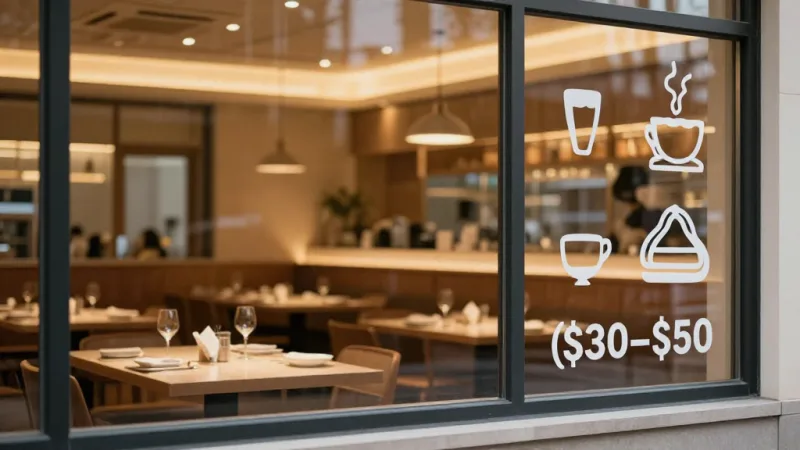
Layer multiple messages: one for your signature dish, one for online ordering, one for gift cards. Every person who walks or drives past sees it. For businesses on busy streets, that is hundreds or thousands of impressions daily at a one-time cost.
Include your gift card promotion on the window, especially during holidays. "Gift Cards Available — The Gift They'll Actually Use" is a message that converts foot traffic into gift card sales, which industry research shows bring in new customers who spend above the card value.
13. Customer Photo Wall or Instagram Spot ($40–$75)
Create one spot in your restaurant that is specifically designed to be photographed. A neon sign with a clever quote. A mural. A flower wall. A branded backdrop with your logo.
Cost: $40 for a custom neon-style LED sign from an online shop, or $75 for a local artist to paint a small mural. The return is unlimited free social media exposure every time a customer posts a photo and tags your location.
Here's the thing: this is free, perpetual, user-generated advertising. Every tagged photo reaches that customer's followers — people who trust their friend's recommendation more than any ad you could buy.
Tiger Sugar understood this instinctively. Their visually striking drinks and minimalist store design generate massive user-generated content. Customers line up not just for the drink — but for the photo. Their 2 self-ordering kiosks (running KwickOS) keep the line moving fast enough that the photo-driven foot traffic converts to actual orders without bottlenecks.
14. Parking Lot Flyers at Complementary Businesses ($10)
Print simple quarter-page flyers with an offer. Visit the parking lot of a nearby gym, movie theater, or shopping center. Place a flyer under each windshield wiper.
Yes, this is old-school. Yes, it still works. The key is targeting locations where your ideal customers already are. The movie theater parking lot at 5 PM is full of people who will be hungry in two hours. The gym parking lot has health-conscious customers who might want your new salad menu.
500 quarter-page flyers cost about $10 at a print shop. Even a 1% response rate means 5 new customers — $175 in revenue from a $10 investment.
But it gets worse if you do not have a way to capture those new customers. A first-time visitor who comes in for a $5-off flyer deal and leaves without joining your membership program is a one-time transaction. KwickOS prompts every new customer to enroll in loyalty at checkout — turning a $10 flyer investment into a long-term customer relationship worth hundreds.
15. "Secret Menu" Word-of-Mouth Campaign ($0)
Create 2-3 items that are not on your regular menu. Tell your servers to mention them only when customers ask for recommendations. Post about them once on social media, then never again.
Scarcity and exclusivity drive word-of-mouth. When a customer discovers your "secret" spicy fried chicken sandwich and tells their friends, those friends come in specifically to try it. They feel like insiders. They tell more friends.
Cost: $0 (you are already buying ingredients). Revenue impact: impossible to predict, but the viral potential of a "secret menu" item is exponentially higher than any standard menu promotion.
Rockin' Rolls Sushi Express runs limited-time secret rolls across their 3 locations. Customers who discover them order through the 49 iPad self-ordering stations and share photos online — driving traffic to all locations simultaneously.
The Math That Changes Everything
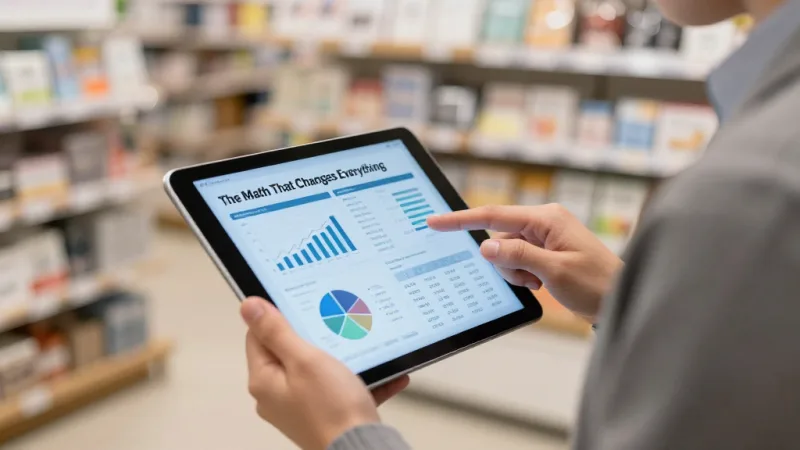
Let us add it all up. If you implemented just 5 of these 15 tactics:
| Tactic | Cost | Est. Monthly Revenue |
|---|---|---|
| Yard signs (10 signs) | $47 | $350–$700 |
| Door hangers (500) | $60 | $350 |
| Google Business posts | $0 | $200–$500 |
| Referral cards (250) | $25 | $250–$500 |
| Review generation | $15 | $300–$600 (long-term) |
| Total | $147 | $1,450–$2,800 |
$147 invested. $1,450 to $2,800 in monthly revenue generated. That is a 10x to 19x return — numbers that would make any digital marketing agency jealous.
And here is what the spreadsheet does not capture: compounding. Every new customer who joins your loyalty program, buys a gift card for a friend, or leaves a Google review is creating future revenue that costs you nothing to acquire. After 6 months of consistent low-budget marketing, your customer base grows organically — and you can start reducing even these minimal spend levels.
Why Your POS Is Your Secret Marketing Weapon
Every tactic on this list becomes more powerful when your POS system captures the data.
Referral cards? Track which customers refer the most and reward them with loyalty points. Door hanger offers? See exactly how many redeemed through your POS reporting. Review generation? Follow up with customers who gave 5-star reviews and invite them to your membership program. Gift card donations? Track redemptions and measure the lifetime value of each raffle winner.
This is where KwickOS turns small-budget tactics into a system. The built-in CRM captures every customer interaction. The loyalty engine rewards repeat behavior automatically. The marketing tools show you exactly which tactics are driving revenue — so you double down on what works and cut what does not.
And because KwickOS is processor-agnostic, you are saving $3,000 to $8,000 per year on processing fees — money you can redirect straight into these low-budget marketing tactics. That Toast processing premium you are paying? It could fund your entire annual marketing budget with money left over.
The hybrid local+cloud architecture means your POS keeps working even if internet drops — so you never miss capturing a customer, a loyalty enrollment, or a gift card sale during your busiest marketing-driven rush.
Turn $100 Into Thousands in Revenue
KwickOS gives you the POS, loyalty, gift cards, and CRM tools to make every low-budget marketing dollar work harder. See how it fits your business.
Get a Free Demo