
 Ming Ye
You've been pouring 70-hour weeks into your restaurant, your retail shop, your salon. You've survived the pandemic, inflation, staffing shortages. You've built something real.
Now imagine this: two restaurant owners, both doing $1.2 million in annual revenue. Both profitable. Both in the same market.
Owner A sells for $340,000. Owner B sells for $1.2 million.
Same revenue. Same city. A $860,000 gap.
Here's the thing: the difference has nothing to do with the food, the location, or the customers. It has everything to do with how the business was built — whether it was designed to run without the owner, or whether the owner was the business.
This guide shows you exactly what separates a $340,000 exit from a $1.2 million exit, and the specific steps you can take today — even if you have no plans to sell for another decade.
Why "Build to Sell" Is the Best Strategy Even If You Never Sell
Let's get one thing straight. Building to sell doesn't mean you're planning to bail. It means you're building a business that runs on systems instead of your personal heroics.
A business built to sell has:
- Clean, auditable financials that any accountant can verify
- Documented processes that new employees can follow without you
- Technology that captures data, automates operations, and transfers to new ownership
- Revenue streams that don't depend on the owner's personal relationships
- Customer retention systems — like loyalty programs and gift cards — that create predictable, repeating revenue
But it gets worse: most small business owners discover these requirements when they try to sell. By then, it's too late to fix a decade of cash-register-only bookkeeping, handshake employee agreements, and zero documented SOPs.
The owners who build to sell from the start? They also run more profitable, less stressful businesses every single day. The exit strategy is the bonus.
The Valuation Math That Changes Everything
Buyers value small businesses using a simple formula: Seller's Discretionary Earnings (SDE) × a multiple.
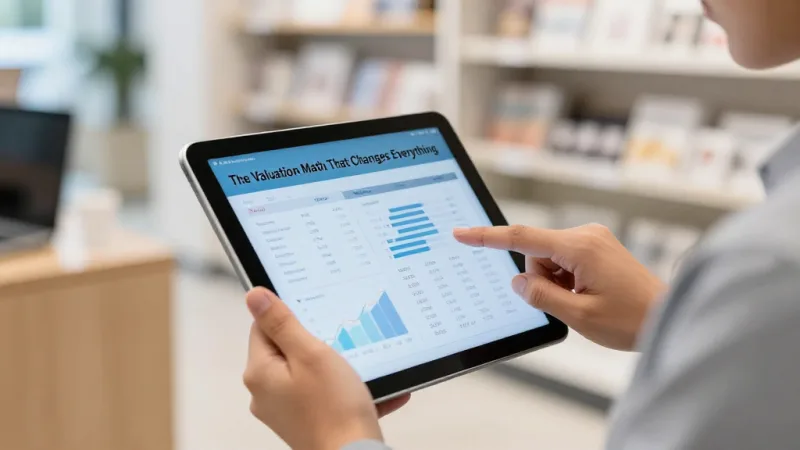
SDE is your net profit plus owner's salary plus any personal expenses run through the business. The multiple depends on how attractive your business is to a buyer.
According to industry data, here's what those multiples look like:
| Business Type | Low Multiple | High Multiple | What Drives the Difference |
|---|---|---|---|
| Independent Restaurant | 1.5x SDE | 3.0x SDE | Systems, brand, location, lease terms |
| Multi-Location Restaurant | 2.5x SDE | 4.5x SDE | Scalability, management team, tech stack |
| Retail Store | 2.0x SDE | 4.0x SDE | Inventory systems, e-commerce, customer data |
| Salon / Spa | 1.5x SDE | 3.5x SDE | Membership revenue, stylist retention, booking system |
Here's what that means in real dollars. A restaurant with $200,000 SDE at a 1.5x multiple sells for $300,000. The same restaurant at a 3.0x multiple? $600,000. That's $300,000 you either earn or leave on the table.
And that's not all: the gap gets even wider for multi-location operators. Crafty Crab Seafood, which runs 19 locations with 152 terminals on a centralized system, demonstrates exactly the kind of operational maturity that commands premium multiples — one-click menu sync, unified reporting, and a management structure that doesn't collapse when the founder takes a vacation.
The 6 Pillars of a Sellable Small Business
1. Financials That Tell a Clear Story
Nothing kills a deal faster than messy books. Buyers want 3 years of clean P&L statements, balance sheets, and tax returns. They want to see revenue trends, consistent margins, and no unexplained cash transactions.
Here's where your POS system becomes your most valuable exit tool. A modern POS captures every transaction, every discount, every void, every refund — and stores it in a format that your accountant and the buyer's accountant can both audit.
KwickOS merchants processing over $2 million per day collectively have this data automatically. Every checkout, every gift card redemption, every loyalty point earned and redeemed — it's all there, timestamped and auditable. That's the kind of financial transparency that makes buyers confident enough to pay premium multiples.
What you should do right now:
- Run all revenue through your POS — no side registers, no cash-only specials
- Reconcile daily sales reports with bank deposits monthly
- Separate personal expenses from business expenses completely
- Use your POS reporting to generate monthly P&L summaries
2. Systems That Run Without You
A buyer is not buying you. They're buying a machine that makes money. If you are the machine, the business is worth your salary. If the machine runs itself, the business is worth a multiple of its profits.
This is where most small business owners fail. They know every recipe by heart but nothing is written down. They manage the schedule in their head. They negotiate with vendors based on a 15-year personal relationship.
But it gets worse: when a buyer does due diligence and realizes the owner handles all ordering, all scheduling, all customer complaints, and all vendor negotiations personally, the multiple drops immediately. The buyer knows they'll need to hire 2 to 3 people to replace what the owner does for "free."
The fix is systemization:
- Document every process — opening checklists, closing checklists, prep procedures, customer complaint resolution, vendor ordering
- Automate repetitive tasks — let your POS handle loyalty point tracking, inventory reorder alerts, employee scheduling, and e-gift card sales
- Cross-train employees — no single point of failure for any role
- Build a management layer — a GM or shift leads who make daily decisions without calling you
T. Jin China Diner illustrates this perfectly. With 15 stores and 75 terminals managed remotely through a unified platform, the founder can monitor all locations without physically being in any of them. That's a business that runs without its owner — and a business buyers will fight over.
3. Technology That Transfers
Here's the part most business brokers won't tell you: your technology stack directly affects your valuation.
A buyer looking at two identical restaurants will pay more for the one running modern, integrated technology. Why? Because modern tech means:
- Accurate data for decision-making from day one of ownership
- No painful migration or staff retraining needed
- Operational systems the buyer can trust immediately
And that's not all: your POS contract matters too. If you're locked into a 3-year Toast contract with mandatory processing at 2.99% + $0.15, the buyer inherits that cost — and subtracts it from what they're willing to pay. On $40,000/month in card sales, that's roughly $4,768/year in excess processing fees that a processor-agnostic system would eliminate.
A processor-agnostic platform like KwickOS lets the new owner choose their own processor from day one, potentially saving $3,000 to $8,000 per year. Buyers notice this. Smart buyers calculate the present value of that savings over 5 years and add it to what they're willing to pay for the business.
What to prioritize in your tech stack:
- Processor-agnostic POS — freedom transfers to the buyer
- Cloud + local hybrid — 1ms local speed with cloud backup means no data loss during ownership transition
- Integrated modules — POS, KDS, online ordering, digital gift cards, loyalty/membership, inventory, scheduling all in one platform
- Multi-language support — broadens the pool of potential buyers who might serve different demographics
4. Revenue Diversification
A restaurant that only makes money from dine-in lunch and dinner is fragile. A restaurant that earns from dine-in, takeout, delivery, catering, gift card sales, membership fees, and merchandise is resilient.
Buyers pay higher multiples for diversified revenue because it reduces risk. If one channel dips, others compensate.
Here's the thing: some of these revenue streams also create deferred revenue — money that's already been collected but hasn't been spent yet. Gift cards are the classic example. According to industry research, 10% to 19% of gift card value is never redeemed (called "breakage"). That's pure profit sitting on your balance sheet, and it makes your financials look better to buyers.
Loyalty and membership programs add another dimension. They demonstrate customer stickiness — repeat visit rates, average spend per member, lifetime value. When a buyer sees that 40% of your revenue comes from loyalty members who visit 3x more often than non-members, they see predictable future revenue. And predictable revenue commands premium multiples.
Revenue streams to build before you sell:
- Online ordering through your own platform (not just third-party apps taking 25% commissions — consider KwickDriver at $2 + $6.99 instead)
- E-gift card program with automated holiday campaigns
- Tiered loyalty program with documented member spend data
- Catering or private events with recurring corporate accounts
- Retail or merchandise channel through your POS
5. A Customer Base That's Documented
If your customer relationships live in your head, they walk out the door when you do. If they live in a CRM, they stay with the business.
Your POS should be capturing customer data with every transaction:
- Purchase history and frequency
- Average spend and preferred items
- Contact information (email, phone)
- Loyalty tier and points balance
- Gift card purchase and redemption patterns
This data is worth real money to a buyer. It tells them exactly who the customers are, how often they come back, and what drives repeat visits. Diva Nail Beauty, running 4 stores with automated commission tracking and customer profiles in the POS, can hand a buyer a complete picture of their client base — not a Rolodex and a prayer.
A business with 5,000 documented customer profiles and a 35% repeat visit rate is worth dramatically more than one where the owner says "we have great regulars" but can't name them, quantify them, or prove they'll come back after the sale.
6. A Lease That Doesn't Kill the Deal
This isn't technology-related, but it kills more deals than any other single factor. A buyer won't pay a premium for a business with 18 months left on the lease and no renewal option.
What buyers want:
- At least 5 years remaining on the lease (or a signed renewal option)
- Assignable lease (the right to transfer to a new owner without landlord veto)
- Reasonable annual rent escalation (3% or less)
- No personal guarantee that expires when you sell
If your lease is coming up for renewal, negotiate these terms now — even if you're not planning to sell for years. A strong lease is free insurance on your valuation.
The Exit Timeline: What to Do and When
Whether you're 10 years from selling or 2, here's the preparation timeline:
3+ Years Out
- Install a modern, processor-agnostic POS system with integrated reporting
- Launch gift card and e-gift card programs to build deferred revenue
- Start a loyalty/membership program and track all customer data
- Begin documenting every SOP (use video if writing feels overwhelming)
- Hire or promote a GM who can run daily operations
2 Years Out
- Clean up financials — remove all personal expenses, normalize owner's salary
- Eliminate any cash-register-only transactions — everything through the POS
- Diversify revenue with at least 2 channels beyond dine-in (delivery, catering, online, retail)
- Renegotiate your lease for maximum remaining term
- Run the business without you for 2-week stretches to prove it can operate independently
1 Year Out
- Get a professional business valuation
- Compile a buyer's package: 3 years P&L, POS analytics, customer data summary, SOP manual, lease details
- Ensure all technology contracts are transferable (another reason processor-agnostic matters — no locked contracts to transfer)
- Interview business brokers or plan your own sale
- Optimize loyalty program metrics — the higher your member retention rate, the higher your multiple
6 Months Out
- Finalize the asking price based on valuation and market comparables
- Step back from daily operations completely — let the team run it
- Market the business through brokers, industry contacts, and targeted outreach
- Prepare for due diligence: every number, every contract, every document organized and accessible
The Technology Audit: Is Your Tech Stack Adding or Subtracting Value?
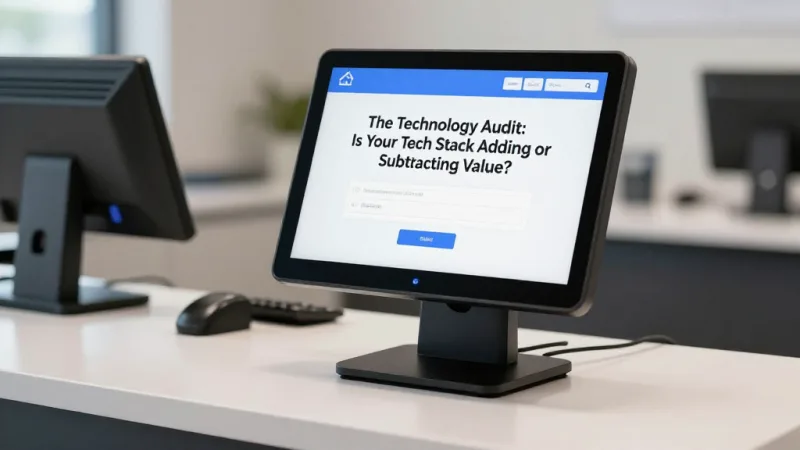
Run through this checklist. Every "no" answer is likely reducing your business valuation:
| Question | Yes = Value Add | No = Value Loss |
|---|---|---|
| Can you choose your own payment processor? | $3,000-$8,000/yr saved | Locked into overpriced processing |
| Does your POS work offline? | Zero revenue risk from outages | Buyer sees operational fragility |
| Is all customer data in the POS CRM? | Transferable customer relationships | Customers leave with the owner |
| Do you have integrated gift card and loyalty? | Deferred revenue + predictable repeats | Missing revenue streams |
| Can you generate 3 years of sales reports instantly? | Due diligence confidence | Buyer doubts your numbers |
| Are employee records (attendance, performance) in the system? | Workforce data transfers | Buyer inherits unknowns |
KwickOS covers all six checkboxes with one platform — POS, gift cards, loyalty, CRM, inventory, scheduling, KDS, online ordering, and reporting. That's not a sales pitch. It's a valuation strategy. Every integrated module eliminates a question mark for the buyer, and question marks cost you money at the negotiating table.
Compare your current setup against what buyers expect using our POS comparison calculator.
What Buyers Actually Look for (From Brokers Who Close Deals)
According to industry data from business brokers, here's what matters most to buyers, ranked by impact on valuation:
- Trending revenue growth (even 5-8% annual growth commands significantly higher multiples)
- Owner independence — the business operates without daily owner involvement
- Documented processes — new owner can follow existing SOPs
- Repeatable customer base — proven through loyalty data and visit frequency
- Modern technology — buyer doesn't need to rip and replace the tech stack
- Lease security — 5+ years remaining with favorable terms
- Clean financials — 3 years, professionally prepared, POS-verifiable
- Diversified revenue — not dependent on one channel or one customer
Notice something? Technology touches almost every item on this list. Your POS generates the financial data (1, 7). It enables owner independence through automation (2). It stores the SOPs and process logic (3). It tracks customer behavior (4). It is the modern technology (5). And it supports revenue diversification through integrated online ordering, gift cards, and loyalty (8).
Your POS is not just a cash register. It's the foundation of your exit strategy.
Build a Business Worth Buying
KwickOS gives you the systems, data, and freedom that buyers pay premium multiples for. Processor-agnostic. Fully integrated. Built to transfer.
Get a Free Demo