 Ming Ye
Picture the first table of your Friday dinner rush.
A four-top sits down. The server greets them, they ask about the salmon special, and the server says — with total confidence — "Oh, that sold out at lunch." Except it didn't. It's the branzino that's 86'd. The salmon is fine. The table orders something cheaper because the server sounded unsure, the kitchen gets a modifier the line already changed an hour ago, and forty minutes later you're comping a dessert to smooth it over.
Here's the thing: none of that was a talent problem. Your server is good. It was an information problem — and it cost you a higher check, a happy table, and a comp, all before 7 PM.
But it gets worse. Multiply that one preventable miss across every server, every station, and every shift for a month. The comps add up. The one-star reviews mentioning "our server didn't know the menu" add up. The turnover from a team that feels disorganized adds up. Industry research suggests the average full-service restaurant gives away 2 to 4 percent of revenue in comps and voids, and a meaningful chunk of that traces back to staff who simply didn't have the right information when the guest asked.
And that's not all: the fix costs you nothing but ten minutes. Restaurants that run a disciplined daily pre-shift consistently report calmer floors, fewer complaints, and higher average checks — one operator we work with cut service-related comps by nearly a quarter after committing to a real pre-shift routine. This guide gives you the exact framework: the agenda, the specials script, the role-play drill, and the reinforcement habits that make it stick.
Why Skipping Pre-Shift Costs More Than the 10 Minutes It Saves
Most owners skip pre-shift for one reason: labor math. "I'm not paying eight people to stand around for ten minutes." Fair. That's roughly $25 to $35 in labor per shift, or about $9,000 a year if you run it twice daily.
Now do the other side of the math. A single unsold special, one wrong answer that downsells a table, one comp to fix an avoidable mistake — that's easily $15 to $40 of lost margin per shift, every shift. The pre-shift doesn't cost you ten minutes of labor. It buys back the margin those ten minutes protect. The return isn't close.
There's a second cost that never shows up on a P&L: consistency. When a guest gets a great answer from one server and a blank stare from another, your brand feels random. A pre-shift is how you make the fifteenth table of the night get the same sharp service as the first. For multi-location operators like Crafty Crab Seafood (19 stores, 152 terminals), that consistency is the whole game — a daily huddle at every location is what keeps 19 dining rooms feeling like one brand.
The 10-Minute Pre-Shift Framework
A pre-shift only works if it's short, predictable, and always the same shape. Staff should be able to recite the segments in their sleep. Here's the framework that fits in ten minutes without feeling rushed:
| Segment | Time | What Happens |
|---|---|---|
| 1. The Number | 1 min | Yesterday's win + today's covers, reservations, big parties, weather |
| 2. The 86 List | 1 min | What's out, what's low, any menu or price changes since last shift |
| 3. The Specials | 3 min | Taste or describe each special; the exact selling line to use |
| 4. The One Goal | 1 min | A single, measurable focus for the shift (see below) |
| 5. The Drill | 2 min | 90-second role-play or upsell rehearsal |
| 6. The Close | 1 min | Name one person's win, one line of energy, doors open |
Three rules make this framework actually work. Stand up — the moment people sit, the meeting doubles in length. Start on time — if it drifts, it dies within two weeks. And keep it on one card — write the whole thing on a single index card or one screen so it can never sprawl into a twenty-minute gripe session.
The Six-Point Agenda, In Detail
1. The Number: Start With a Win
Open with something that happened yesterday that was good — top seller, a five-star review that named a server, a record night at the bar. It takes fifteen seconds and it sets the tone that this team is winning. Then give them today's reality: how many covers you expect, the big reservations, the 7:30 party of twelve, and whether the patio is in play. People perform better when they can see the shape of the night before it hits them.

2. The 86 List: Kill Surprises Before They Reach a Table
This is the single highest-ROI minute in the whole meeting. Every item that's out, every item running low that might sell out mid-shift, and any change to the menu or pricing since the last crew worked. The goal is simple: no server should ever learn an item is 86'd from a guest.
This is also where your POS earns its keep. On KwickOS, when the kitchen marks an item 86'd, it disappears from every terminal, every online ordering screen, and every self-service kiosk in real time — so the pre-shift reinforces what the system already enforces. But the verbal callout still matters, because it's the difference between "the system won't let me ring it" and a server who can gracefully redirect the guest to something better before disappointment sets in.
3. The Specials: Turn Servers Into Sellers
Don't read the specials. Sell them the way you want your team to sell them. If you can, put a taste in front of the crew — a server who's actually eaten the special describes it with real conviction, and that conviction is worth two or three extra orders a night. If a tasting isn't possible, give them the description you want them to use, word for word:
"Tonight's special is a pan-seared Gulf snapper over saffron risotto with a charred lemon — it's the one dish I'd order if I were sitting where you are." That's a selling line. "We have snapper" is not.
Tie the special to a number so it becomes a game: "We have 24 portions of the snapper. Let's sell out by 8:30." Now every server has a target they can see on the checkout screen, and the pre-shift has turned a menu item into a shared mission.
4. The One Goal: A Single Focus, Measurable by Close
This is where most pre-shifts fall apart — they try to fix ten things at once and change nothing. Pick one focus per shift, make it measurable, and make it visible on the POS by the end of the night. Rotate it so the team builds a different muscle each day:
- Gift card push: "It's July — we're seeding the holiday season now. Every check over $60, offer an e-gift card at the table. Ask for the sale." E-gift cards sell fastest when a server simply mentions them, and your POS can text or email the card to the guest before they've left the parking lot.
- Loyalty enrollment: "Today's game is loyalty sign-ups. At checkout, every new guest gets asked to join — it's ten seconds and they earn points on tonight's visit." A guest who joins the loyalty or membership program on visit one is dramatically more likely to come back, and the enrollment happens right at the payment screen.
- Appetizer attachment: "Every table gets an app suggestion — one specific dish, by name, not 'would you like to start with anything.'"
- Review generation: "The receipt has a QR code to leave a review. If a table loved their meal, point them to it."
The magic is measurability. Because gift card sales, loyalty enrollments, and add-on attach rates all live in your POS reporting, you can pull the number at close and announce it: "We sold 14 e-gift cards tonight, up from 3 yesterday." That closes the loop, and it's what makes tomorrow's goal land instead of getting shrugged off.
5. The Drill: A 90-Second Rehearsal That Sticks
Knowing something and being able to say it under pressure are different skills. A quick role-play bridges the gap. Pull two people, give them a scenario, and let them run it for ninety seconds while the team watches:
- "A table asks what's good but seems price-conscious — sell the special without making them feel judged."
- "A guest asks about the branzino, which is 86'd — redirect them without an apology spiral."
- "A four-top finishes and you're closing out — offer the loyalty program and a gift card in one smooth breath."
Ninety seconds of live rehearsal beats ten minutes of lecture. People remember what they practiced with their own mouth, not what they heard. Rotate who's on the spot so nobody dreads it and everybody sharpens.
6. The Close: Name a Name
End every pre-shift by naming one specific person for one specific thing they did well. Not "great job everyone" — that lands on no one. "Marcus, that table last night that came in furious about a wait and left promising to come back? That was you. That's the standard." Public, specific recognition is the cheapest and most powerful retention tool you have. Then one line of energy, and open the doors.
Specials Training: The Part Everyone Gets Wrong
A special that servers can't describe is a special that doesn't sell. The most common failure is treating the specials segment as an announcement instead of a training moment. Three fixes:
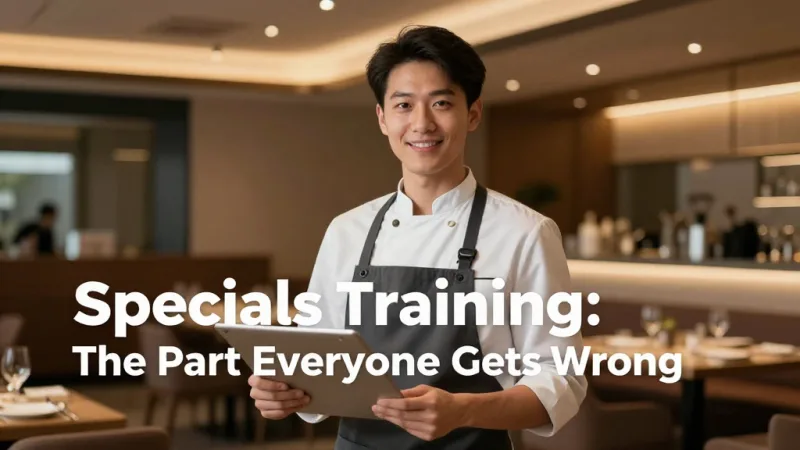
Taste, don't tell. Even a two-bite portion transforms how a server sells. This is exactly how Shogun Japanese Hibachi gets new staff floor-ready in under five minutes — hands-on beats hand-outs, whether it's learning the POS or learning the menu.
Give the "one line." Every server should leave pre-shift with a single, repeatable sentence per special. Ambiguity kills sales; a rehearsed line closes them.
Connect it to the check. Remind the team that the special usually carries a better margin than the standard menu, and that pairing it with a suggested wine or app is where the check really grows. If you want the deeper mechanics of that, our guide on server upselling training breaks down the exact phrases that add several dollars to every ticket.
Where Your POS Makes Pre-Shift Easier
A pre-shift meeting sets the intention. Your point-of-sale system is what turns intention into a measurable result by the end of the night — and the tighter the two are linked, the faster the habit compounds.
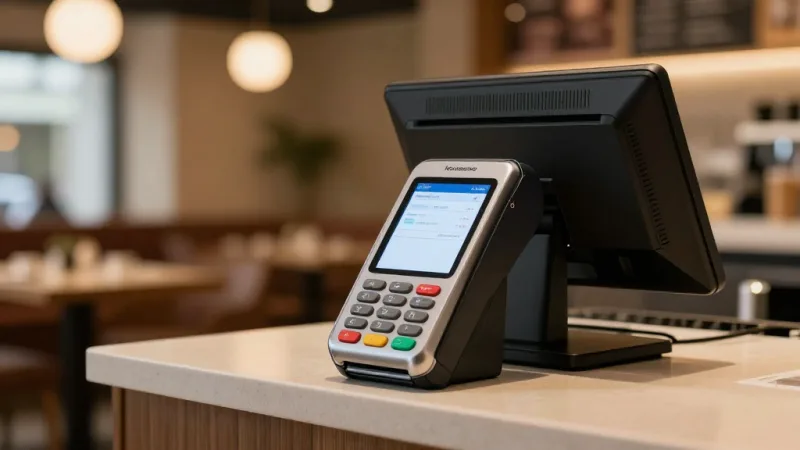
- Real-time 86'ing means the specials and availability you announce are enforced at every checkout terminal, kiosk, and online ordering screen the instant they change — no server rings in something the kitchen can't make.
- Gift card and e-gift card sales happen right at the payment screen. When the shift goal is a gift card push, servers can sell a physical or digital card in the same flow as closing the check, and the card is delivered to the guest by text or email instantly.
- Loyalty and points enrollment lives at checkout too. A guest joins the loyalty or membership program in seconds and earns points on the visit in front of them — the enrollment your pre-shift goal asked for actually happens where the transaction closes.
- End-of-shift reporting gives you the number to celebrate tomorrow: specials sold, gift cards moved, loyalty sign-ups, attach rates. That number is what makes the next pre-shift land instead of drift.
Because KwickOS runs hybrid local-plus-cloud, those checkout, gift card, and loyalty actions keep working at 1ms local speed even if the internet drops mid-rush — so a pre-shift goal never dies because the network did. If you're weighing platforms on this exact capability, our comparison pages lay out how processor-agnostic, offline-capable POS stacks up against the locked-in alternatives.
Common Pre-Shift Mistakes to Avoid
- Letting it run long. Past twelve minutes, you're not training — you're venting. Protect the ten.
- Making it all criticism. If pre-shift is where people get scolded, they'll show up late on purpose. Lead with a win, close with a name.
- Reading, not rehearsing. Announcements don't change behavior. Tasting and role-play do.
- Setting no goal, or five. One measurable focus per shift. Everything else is noise.
- Skipping it when you're busy. The busiest nights are exactly when the ten minutes pays the most. Never skip on a Friday.
The Bottom Line
A pre-shift meeting is the highest-leverage ten minutes in your entire operation. It costs a few dollars of labor and returns fewer complaints, higher checks, smoother service, and a team that feels like a team instead of a collection of shifts. The framework is simple: one number, the 86 list, the specials sold not read, one measurable goal, a ninety-second drill, and a close that names a name.
The restaurants that do this every single day — not when they remember, every day — are the ones where the fifteenth table gets the same sharp service as the first. That consistency is a brand, and a brand is what turns a first visit into a loyalty member with points on the board and a gift card in their pocket. It all starts in the ten minutes before the doors open. Want to see how the right platform makes those ten minutes measurable? Explore how KwickOS serves restaurants across every category, or if you build restaurant technology for a living, our partner program puts this operating model in front of the merchants you serve.
Turn Pre-Shift Goals Into Measurable Wins
KwickOS ties checkout, gift cards, loyalty, and real-time menu availability into one platform — so the goal you set at pre-shift shows up in tonight's numbers.
See KwickOS for RestaurantsFrequently Asked Questions
How long should a restaurant pre-shift meeting be?
A pre-shift meeting should run 8 to 10 minutes. Long enough to cover the 86'd list, specials, one focus goal, and a quick role-play; short enough that staff stay engaged and you're not paying an entire team to stand around. Start on time, stand up (never sit), and end on a positive note. Anything past 12 minutes and attention drops off sharply.
What should you cover in a pre-shift meeting?
Cover six things: (1) yesterday's win and today's reservations or covers, (2) the 86'd list and any menu changes, (3) the specials with a tasting or description, (4) one single focus goal for the shift such as a gift card or loyalty push, (5) a 90-second role-play or upsell drill, and (6) a positive close that names people. Keep it to one agenda card so it never sprawls.
Do pre-shift meetings actually reduce customer complaints?
Yes. When every server can accurately describe the specials, knows what's 86'd before a table orders it, and understands the shift's focus, guests get fewer wrong answers and fewer disappointments. Operators who run consistent daily pre-shifts commonly report a noticeable drop in service complaints and comps, because most complaints trace back to a preventable information gap the meeting closes.
How do you make pre-shift meetings engaging instead of boring?
Rotate who runs it, taste the specials together instead of just reading them, run a fast two-person role-play, and always name a specific person for something they did well yesterday. Tie the shift goal to a concrete number staff can see on the POS dashboard by close, and celebrate hitting it. Recognition and a clear game make people show up early instead of dreading it.
Who should run the pre-shift meeting?
The manager or shift lead owns it, but the best restaurants rotate segments. Let a server present the specials one day, a bartender pitch the cocktail push the next. Ownership builds buy-in and gives you a bench of future leaders. The person running it should have the day's numbers, the 86'd list, and the focus goal ready before the team gathers so no time is wasted.