 Ming Ye
Here is a number that should make you uncomfortable: most restaurant operators cannot tell you the contribution margin of their own happy hour. They know it "brings people in." They know the bar looks busy. But ask them what a discounted $9 cocktail actually earns after pour cost — and whether the table that ordered it spent enough on food to matter — and you get a shrug.
That shrug is expensive.
Because a badly designed happy hour does not just fail to make money. It actively trains your most price-sensitive customers to only visit when everything is cheap, cannibalizes your full-price evening business, and burns labor and inventory for a crowd that nurses two discount beers and leaves. You are not filling a slow daypart. You are subsidizing it.
But here's the thing: the fix is not to kill happy hour. The fix is to engineer it. When you build happy hour around contribution margin instead of gut feel — and let your POS enforce it automatically — that dead 3-to-5 PM window becomes one of the most profitable shifts you run. This guide shows you exactly how, with real numbers.
The $1 Beer That Sells $47 in Food
Let us start with the single most important idea in happy hour economics, because everything else builds on it.
The discount is the hook. The food is the profit.
Picture a four-top that walks in at 4:15 PM on a Tuesday — a daypart that would otherwise be empty. They come for the $5 draft special. That $1-off beer costs you almost nothing in lost margin: a beer that costs you $1.10 and normally sells for $6 still returns $3.90 at $5. You "gave up" a dollar.
Now watch what that dollar buys. Because the table is relaxed, unhurried, and it is not dinner yet, they graze. A $16 flatbread. $14 truffle fries. A $12 wings basket. A second round. By the time they leave, that four-top has spent $47 on food alone — food carrying a 68% to 70% contribution margin — plus eight discounted drinks that each still cleared margin.
The $1 you "lost" on the first beer generated a $47 full-margin food ticket that would not have existed at all, because at full price that table simply does not come in at 4:15 on a Tuesday. That is the entire game. Miss it, and happy hour is a giveaway. Understand it, and happy hour is a customer-acquisition engine that pays for itself on the first round.
Why Fixed Costs Change the Whole Equation
The reason happy hour can be aggressively priced and still profitable comes down to one accounting reality most owners never internalize: between 3 and 5 PM, almost all of your costs are already sunk.
Your rent is being paid. Your insurance is running. Your opening bartender and prep cook are on the clock whether they serve two people or forty. The lights are on. The POS is booted. None of that changes when a table sits down.
So the only real cost of an off-peak sale is the cost of goods — the liquor, the food, the garnish. Everything above COGS drops toward the bottom line. This is why a 25%-off cocktail during a dead daypart is a fundamentally different financial event than a 25%-off cocktail during your Friday rush, when every seat has an opportunity cost.
| Item | Menu Price | Happy Hour Price | Cost | Contribution Margin |
|---|---|---|---|---|
| Draft beer | $6.00 | $5.00 | $1.10 | $3.90 |
| House cocktail | $12.00 | $9.00 | $2.64 | $6.36 |
| Wine by the glass | $11.00 | $8.00 | $2.20 | $5.80 |
| Flatbread (full price) | $16.00 | $16.00 | $4.80 | $11.20 |
Look at that flatbread. Full price, 70% margin, ordered because the discounted drinks got the table in the door. That single item out-earns three discounted cocktails combined. The lesson writes itself: discount the traffic driver, never the profit center.
The Three-Step Happy Hour Reverse Engineering Method
Stop setting happy hour prices by copying the bar down the street. Build them from your own cost structure using three steps.
Step 1: Set a contribution-margin floor
Decide the minimum margin you will accept on any discounted item. A good rule: no drink discount may drop the item below 60% contribution margin. Work backward from cost. If a cocktail costs you $2.64, a 60% margin floor means it never sells below $6.60 — so a $9 happy hour price is comfortably safe. This one rule prevents the death-spiral discounts ("dollar drafts!") that fill the room and empty the register.
Step 2: Engineer the food to carry the shift
Your happy hour food menu should be small, fast, shareable, and high-margin. Think blistered shishito peppers (food cost under 20%), house-made chips and dip, sliders, and flatbreads. Keep these at or near full price — the drink discount is doing the traffic work, so the food does the profit work. Never run a "half-price everything" happy hour; you are handing away the exact items that make the daypart worth running.
Step 3: Add the low-COGS upsell layer
This is where operators leave the most money. Build in optional add-ons that feel indulgent to the guest but cost you almost nothing: a $4 "make it a double," a $6 premium spirit upgrade, a $5 extra-topping on the flatbread. On a busy happy hour, capturing even one $5 upgrade per table across 40 tables is $200 in near-pure margin per session — over $50,000 a year from a prompt on the POS screen.
The Math on a Real Happy Hour Session
Let us put it together for a bar-forward restaurant running happy hour 3–5:30 PM, five days a week, that previously sat nearly empty during that window.
| Metric | Before (empty daypart) | After (engineered happy hour) |
|---|---|---|
| Tables per session | 4 | 38 |
| Avg drinks per table | 1.5 | 3.2 |
| Avg food spend per table | $6 | $31 |
| Contribution margin per session | $78 | $1,140 |
| Sessions per week | 5 | 5 |
| Annual contribution margin | $20,280 | +$296,400 |
That is not a rounding error. That is over a quarter of a million dollars in annual contribution margin conjured out of a daypart you were already paying rent and labor to keep open. And it came almost entirely from full-price food and near-pure-margin upsells riding on the back of modest drink discounts.
And that's not all: those 38 tables are 38 chances to capture a customer for life — through the checkout screen, a loyalty enrollment, or a bonus gift card. More on that in a moment.
Where the Money Leaks: Manual Pricing
Here is the failure mode that quietly wrecks otherwise-good happy hours: humans running the prices.
A bartender turns happy hour pricing on at 3 PM. The rush hits. At 5:30 they are slammed and forget to switch it off. For the next two hours, every full-margin evening cocktail sells at the discount. Do that three nights a week and you have erased the entire profit the strategy was supposed to create. Or the reverse: a new server forgets to turn it on, guests get charged full price, complain, and walk out annoyed.
This is a technology problem with a technology answer. Your POS checkout system should switch happy hour pricing on and off automatically — by day and by hour, across every terminal, kiosk, and online-ordering channel simultaneously — with zero staff intervention. Nobody remembers anything. Nobody makes a mistake. The window is enforced to the minute, which also keeps you compliant with state alcohol-pricing rules that mandate exact time boundaries.
Crafty Crab Seafood runs this across 19 locations and 152 terminals: happy hour pricing activates at exactly 3:00 PM and deactivates at 5:30 PM at every store at once, no manager required, using the same one-click menu sync they use for their full menu. No location gets missed. No terminal drifts out of policy. If corporate wants to test a new happy hour window in Houston next week, it is one change pushed to every register instantly.
Shogun Japanese Hibachi set the same automatic daypart switching up in under an hour — lunch, happy hour, and dinner menus all flip on schedule, and staff training took five minutes because the staff does not touch pricing at all. This is the same time-based engine behind full dynamic pricing; happy hour is simply the easiest, safest place to start.
Turn Happy Hour Into a Loyalty and Gift Card Machine
Most operators stop at "discounted drinks." The ones who win treat happy hour as the cheapest customer-acquisition channel they have — because the guest is already in the seat, relaxed, and in a spending mood. Three moves turn a one-time discount into repeat, full-price revenue.
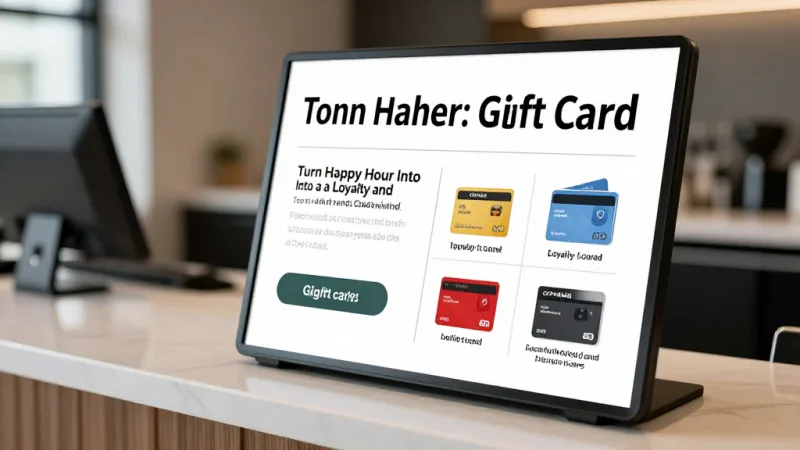
1. Double loyalty points during off-peak hours. Instead of discounting deeper, award 2x loyalty points on every happy hour visit. This steers your best, highest-frequency customers into your slowest daypart at full drink margin, and it costs you nothing until they redeem — by which point they are a proven repeat guest. A points system that lives in the POS means every happy hour tab automatically builds toward a reward with no punch cards and no manual tracking.
2. Run a bonus gift card promotion. "Spend $50 at happy hour, get a $10 e-gift card." The guest gets a deal that feels generous; you lock in a future visit at full margin, and roughly 15% of gift card value is never redeemed at all (industry data on gift-card breakage). You are effectively pre-selling your next slow Tuesday. Digital gift cards are ideal here because they land in the guest's phone instantly at checkout and get shared — turning one happy hour table into three future ones.
3. Capture the customer at checkout. The moment a guest taps to pay is the moment to enroll them. A prompt on the customer-facing screen — "Join our rewards, get your next happy hour drink on us" — converts anonymous walk-ins into known, marketable, repeat customers. Diva Nail Beauty uses the same POS-driven loyalty and membership tooling to turn first-time visits into standing appointments; a bar can do exactly the same with a happy hour crowd.
Fold these together and the economics flip entirely. Happy hour stops being a margin sacrifice and becomes the front door to a full-price relationship: loyalty points pull them back, the gift card guarantees the return trip, and the membership prompt at checkout makes them yours to market to forever.
Common Happy Hour Mistakes (And the Fix)
- Discounting food to the bone. Half-price appetizers give away your highest-margin items. Fix: discount drinks to drive traffic, keep food at or near full price.
- No contribution-margin floor. "Dollar drafts" that lose money on every pour. Fix: set a hard margin floor and price backward from cost.
- Manual on/off switching. Forgotten toggles leak full-price margin for hours. Fix: automatic time-based POS pricing across every terminal.
- Treating it as a cost, not acquisition. No loyalty, no gift cards, no enrollment. Fix: capture every table at checkout with points and a bonus gift card.
- Cannibalizing dinner. A happy hour that runs too late trains guests to wait for the discount. Fix: end it cleanly before your dinner rush and enforce the cutoff automatically.
Want to model your own numbers before you change a single price? Run your traffic and margin assumptions through our restaurant revenue calculator and see what an engineered happy hour is worth for your specific volume.
Why the POS Underneath It All Matters
Every strategy in this guide depends on one thing: a POS that can run time-based pricing, loyalty, gift cards, and checkout capture as one integrated system — not four bolted-on apps that do not talk to each other.
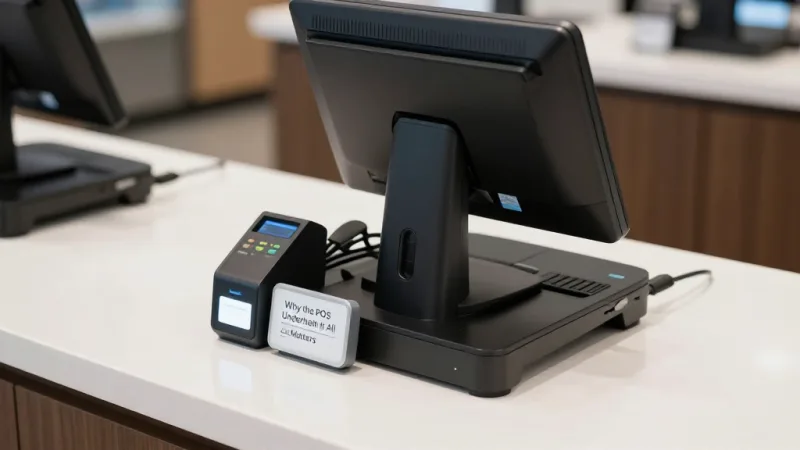
This is where a locked, processor-mandated platform quietly costs you twice. Once on the payment processing markup that eats your hard-won happy hour margin, and again on the rigidity — many legacy systems make daypart pricing clumsy and loyalty an expensive add-on. KwickOS was built the other way: processor-agnostic so you keep your processing revenue, hybrid local+cloud so every terminal runs at 1ms even if the internet drops mid-rush, and all-in-one so happy hour pricing, points, gift cards, and checkout enrollment are the same system. When a bartender rings a discounted cocktail at 4 PM, the loyalty points, the gift-card prompt, and the automatic 5:30 cutoff all fire without anyone thinking about it.
That is the difference between a happy hour you hope makes money and one you can prove makes money — down to the contribution margin on every pour.
Frequently Asked Questions
Does happy hour actually make money, or is it just a loss leader?
Happy hour makes money when it is engineered around contribution margin, not just discounts. Your rent, insurance, and most labor are fixed between 3 and 5 PM whether you serve 10 guests or 100. A $12 cocktail sold at 25% off ($9) still returns about $7 in contribution margin at a 22% pour cost — margin you would earn zero of from an empty bar stool. The mistake most bars make is discounting drinks without pairing them to full-price, high-margin food and add-ons that turn a cheap round into a profitable table.
How deep should happy hour discounts be?
Discount to the point where you still clear your contribution-margin target on every item — typically 20% to 30% off drinks, not 50%. Work backward from cost: if a beer costs you $1.10 and you sell it for $6, dropping it to $5 (about 17% off) still leaves $3.90 in margin. The goal is to be attractive enough to pull traffic into a dead daypart while keeping every pour profitable. Never discount below the point where the item breaks even, and never discount your highest-margin food.
What POS features do I need to run happy hour without pricing mistakes?
You need time-based menu pricing that switches automatically by day and hour, applies to every terminal, kiosk, and online-ordering channel at once, and reverts on schedule with no staff intervention. Manual price changes are where money leaks — a bartender who forgets to turn happy hour off at 5:30 PM gives away full-margin evening drinks at a discount. KwickOS switches happy hour pricing on and off automatically across every terminal and location simultaneously.
Can I use gift cards and loyalty points to make happy hour more profitable?
Yes, and it is one of the most overlooked tactics. Offering a bonus e-gift card during happy hour (spend $50, get a $10 card) locks in a future visit at full margin while the guest is already relaxed and spending. Awarding double loyalty points during off-peak hours steers your best repeat customers into your slowest daypart. Both convert a one-time discount into repeat, full-price traffic — turning happy hour into a customer-acquisition channel rather than a giveaway.
Is happy hour pricing legal everywhere?
Happy hour drink specials are legal in most U.S. states, but a handful restrict or ban discounted alcohol pricing or require that specials run all day rather than for a limited window. Food happy hours, bundle deals, loyalty rewards, and gift-card promotions are legal everywhere. Always confirm your state's alcohol beverage control rules before setting time-limited drink discounts, and use your POS to enforce the exact legal window automatically.
Make Every Daypart Profitable
KwickOS runs time-based happy hour pricing, loyalty points, gift cards, and checkout enrollment as one integrated system — across every terminal and location. See how much your slow hours are really worth.
Get a Free Demo