
 Ming Ye
Your broth has been simmering since midnight. Twelve hours of pork bones splitting open, collagen dissolving into milky white liquid, your entire kitchen smelling like a Tokyo backstreet at 3 AM.
Then lunch hits. Forty-seven tickets in 90 minutes. Every bowl needs to land in under 4 minutes — broth hot, noodles at the right firmness, toppings arranged precisely, not a single order mixed up.
And somewhere between the twelfth and thirteenth bowl, your cashier punches "extra chashu" but forgets the noodle firmness. The ticket hits the kitchen display incomplete. Your noodle cook guesses. The customer gets soft noodles when they wanted firm.
That one mistake costs you a regular. In a ramen shop where 60% of revenue comes from repeat customers, according to restaurant industry data, losing a regular over a firmness error is like burning a $2,000 bill.
Here's the thing: the broth is the hardest part of ramen to master. But it's not what kills your operations. What kills your operations is everything that happens in the 4 minutes between ticket and bowl.
This guide breaks down the operational systems that separate ramen shops doing $800/day from those doing $3,200/day — same square footage, same staff count, same broth recipe. The difference is workflow, station design, and a POS system that doesn't fight you on every modifier.
Broth Batch Management: The 12-Hour Backbone
Broth is your highest-cost, longest-lead-time ingredient. Mess up a batch and you've wasted 12 hours of gas, 40 pounds of pork bones, and potentially an entire day of service. According to restaurant industry data, broth-related waste accounts for a significant share of ramen restaurant losses.
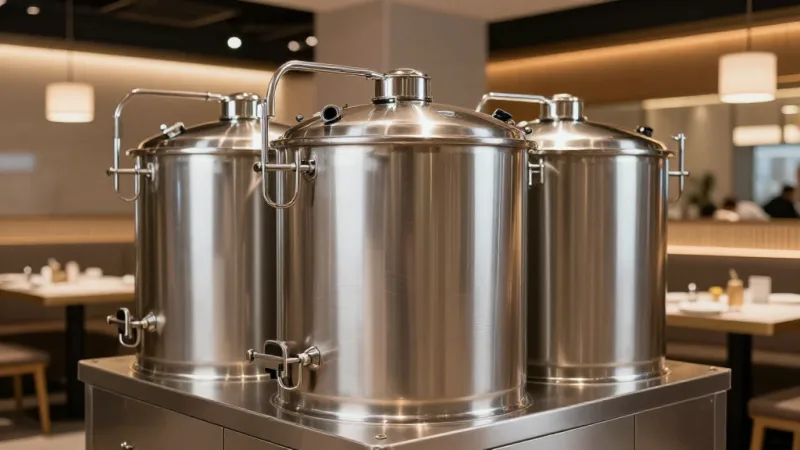
But it gets worse: most ramen shops don't track broth yield at all. They cook, they serve, and they have no idea how many bowls they actually got per batch versus how many they should have gotten.
The Staggered Batch System
The most efficient ramen shops run staggered broth production on a rolling schedule:
- Tonkotsu (12-18 hours): Start at 10 PM for next-day lunch service. One 60-quart stockpot yields approximately 80 bowls. Always have a backup pot starting 6 hours behind the primary.
- Shoyu/Shio (6-8 hours): Start at 5 AM for lunch. Lighter broths are faster but less forgiving — overcooking turns them bitter.
- Miso base: Use a dashi base (2-hour prep) and add miso paste at service time. This extends shelf life and allows portion control on the miso flavor intensity.
Here's the critical part: every batch needs a yield count. Your POS system should track bowls sold per broth type per day. When you know Tuesday's tonkotsu sold 94 bowls and Wednesday's sold 71, you can forecast Thursday and adjust your batch size — or start a half-batch for slow days instead of pouring $180 worth of broth down the drain at closing.
KwickOS tracks this automatically through the inventory module. Every bowl sold deducts from the batch count. When the batch drops below 15% remaining, the KDS flashes an alert. No clipboard. No guessing. No running out of tonkotsu at 1:30 PM on a Saturday.
Topping Station Design: The Assembly Line That Makes or Breaks Speed
A ramen bowl has 8 to 12 components. Every component needs to be within arm's reach of the assembly position. If your chashu is in the walk-in and your menma is on the other side of the prep table, you've already lost 30 seconds per bowl — and during a 47-ticket lunch rush, that's 23 extra minutes of ticket time your customers feel in their stomachs.
And that's not all: topping station layout directly affects consistency. When a cook has to walk for ingredients, they rush. When they rush, they forget the nori. When they forget the nori, the customer notices — because ramen customers are obsessive about every detail.
The Linear Assembly Model
Set up your topping station in the exact order that components go into the bowl:
- Position 1 — Bowl + Tare: Clean bowls stacked, tare (seasoning concentrate) portioned in squeeze bottles. One squeeze = one bowl.
- Position 2 — Broth: Ladle station next to the stockpot or steam table. 350ml per bowl, measured by ladle size (not eyeballed).
- Position 3 — Noodles: Direct from the noodle cooker's drain station. Noodles go in immediately — every second between drain and broth is a second of texture loss.
- Position 4 — Proteins: Chashu (pre-sliced, fanned on sheet trays), chicken, tofu. Kept at 140°F+ in a steam table insert.
- Position 5 — Cold toppings: Scallions (pre-cut), corn, menma, bean sprouts, nori, soft-boiled egg (halved, on ice). These are portioned into 2oz cups during prep so the line cook grabs and dumps — no measuring during service.
- Position 6 — Finishing: Chili oil, garlic oil, sesame, black garlic. These are the flavor customizations that turn a good bowl into the customer's specific bowl.
With this layout, a trained cook should assemble a complete bowl in 45 to 60 seconds from the moment the noodles are drained. The total ticket time including noodle cook (60-120 seconds) and broth ladling comes in under 4 minutes.
Shogun Japanese Hibachi implemented a similar linear station model for their hibachi plates. The result: operator proficiency in under 5 minutes of training. The same principle applies to ramen — reduce decisions, reduce movement, reduce errors.
Noodle Timing: 60 Seconds Between Perfect and Ruined
Noodle firmness is the single most polarizing customization in a ramen shop. Get it wrong and the customer doesn't come back. Get it right and they'll drive 30 minutes past three other ramen shops to sit at your counter.
The window between perfect firmness levels is shockingly narrow:
| Firmness | Japanese Term | Cook Time | Margin of Error |
|---|---|---|---|
| Extra Firm | Bari-kata | 45 seconds | ±5 seconds |
| Firm | Kata | 60 seconds | ±5 seconds |
| Regular | Futsu | 90 seconds | ±10 seconds |
| Soft | Yawaraka | 120 seconds | ±10 seconds |
A 10-second overrun on bari-kata turns it into kata. A 15-second overrun on kata makes it futsu. Your noodle cook has the most time-critical job in the kitchen, and they're managing 4 to 6 baskets simultaneously during peak service.
Now here's where your POS system either helps or hurts. If the firmness modifier is buried in a submenu — or worse, typed as a note — the noodle cook has to read and interpret every ticket. That reading time is where mistakes happen.
A well-configured KDS displays firmness level as a color-coded background on the ticket: red for bari-kata/kata, yellow for futsu, green for yawaraka. The noodle cook glances and knows. No reading required. KwickOS supports custom KDS color coding per modifier group — set it up once and every ticket is instantly visual.
POS Modifier Simplification: Stop Making Cashiers Think
A typical ramen order has 4 to 6 modifier decisions:
- Broth base (tonkotsu, shoyu, shio, miso)
- Noodle firmness (4 levels)
- Spice level (mild, medium, hot, extra hot)
- Protein add-ons (extra chashu, egg, chicken)
- Topping additions or removals
- Richness level (light, regular, rich — for tonkotsu)
If each modifier requires a separate screen tap, that's 6 taps minimum per bowl. During a rush with a line out the door, those taps stack up. But it gets worse: if modifiers aren't logically ordered, cashiers skip them. And skipped modifiers mean the kitchen guesses — or worse, the food runner comes back to ask.
The One-Screen Order Flow
The goal is a single POS screen that captures the entire order in under 15 seconds. Here's how:
- Default the most common options. If 70% of your customers order regular firmness, make it the default. The cashier only taps when the customer deviates.
- Group modifiers visually. Broth selection at top, firmness as a horizontal row of buttons, spice level as another row. All visible at once — no scrolling, no submenus.
- Use large buttons for add-ons. "Extra Chashu +$3" and "Add Egg +$2" should be thumb-sized and right below the main item. These are your highest-margin upsells — don't hide them.
- Include a "Regular" quick button that sets all modifiers to default. For the customer who says "tonkotsu, everything normal," one tap and done.
Tiger Sugar uses a similar modifier simplification for their bubble tea customization — 2 stores, 2 self-ordering kiosks, and the interface guides customers through sugar level, ice level, and toppings with minimal steps. The result: faster orders, fewer errors, and higher add-on attachment because the upsells are built into the natural flow.
And don't forget the checkout itself. Every ramen bowl that goes out the door is a transaction that costs you processing fees. If you're locked into a POS vendor's payment processing at 2.99% + $0.15 per swipe, a $16 bowl nets you only $15.37 after fees. Multiply that by 150 bowls a day and you're paying over $3,400/year in processing fees alone. A processor-agnostic system lets you negotiate interchange-plus rates and keep an extra $1,500 to $2,500 in your pocket annually — enough to cover a month of premium noodle flour.
Speed of Service: The 4-Minute Standard
In ramen, speed isn't just about customer satisfaction — it's about noodle quality. Every minute a bowl sits before the customer starts eating is a minute of noodle absorption. After 3 minutes in broth, thin ramen noodles have already started to soften past their intended firmness. After 6 minutes, a bari-kata order has become futsu. The customer ordered firm noodles and got regular ones — while staring at them.
Here's the thing: this means your speed-of-service problem is actually a food quality problem. Slow service doesn't just frustrate customers. It changes the product they receive.
The Ticket Flow That Hits 4 Minutes
- 0:00 — Ticket fires. POS sends to KDS. Noodle cook sees firmness color. Assembly cook sees broth type and toppings.
- 0:00 to 0:15 — Bowl setup. Assembly cook grabs bowl, adds tare, ladles broth.
- 0:00 to 1:30 — Noodle cook. Running simultaneously. Noodles drop into basket at ticket fire, cook to firmness spec.
- 1:30 to 2:00 — Noodle drain and transfer. Noodles shaken dry (3 sharp shakes — excess water dilutes broth), placed into bowl.
- 2:00 to 2:45 — Topping assembly. Protein, cold toppings, finishing oils. Pre-portioned cups mean grab-and-dump, no measuring.
- 2:45 to 3:00 — Quality check. Visual inspection: toppings arranged, nori upright, egg centered. Bowl to window.
- 3:00 to 4:00 — Delivery. Server or counter pickup. Customer has bowl in hand within 4 minutes of ordering.
This parallel workflow — noodles cooking while the bowl is being prepped — is what compresses a 6-minute sequential process into under 4 minutes. But it only works if the KDS ticket is clear enough that both stations start simultaneously. A muddled ticket with tiny text and buried modifiers forces the assembly cook to wait for the noodle cook to read and confirm, breaking the parallel flow.
Crafty Crab Seafood — 19 stores, 152 terminals — faced a similar parallel workflow challenge with their seafood boil station and sushi prep running simultaneously. Their solution was KwickOS KDS with station-specific ticket routing: each station sees only what it needs, formatted for instant comprehension. The same architecture works for ramen — noodle station sees firmness and quantity, assembly station sees everything else.
Gift Cards and Loyalty: Turning One-Time Slurpers into Regulars
Ramen shops live and die on repeat customers. According to restaurant industry data, the top-performing ramen shops generate over half their revenue from customers who visit at least twice a month. Turning a one-time visitor into a regular is worth far more than acquiring a new customer.
This is where gift cards and loyalty programs become operational necessities, not marketing luxuries.
E-Gift Cards for the Ramen Obsessed
Ramen has a cult following. Your customers don't just like your tonkotsu — they evangelize it. Give them a way to spread the gospel: digital gift cards they can text to friends. "You HAVE to try this place" hits different when it comes with a $25 e-gift card attached.
KwickOS e-gift cards are delivered instantly via text or email, redeemable at checkout with a simple scan. No physical cards to stock, no activation fees to manage. And here's the revenue math: industry data shows that gift card recipients spend an average of 40% more than the card value per visit. A $25 gift card turns into a $35 ticket.
The Ramen Loyalty Stamp Card (Digitized)
The classic "buy 10 bowls, get 1 free" works — but paper stamp cards have a loss rate near 80%, according to restaurant industry data. Digital loyalty through your POS eliminates that problem entirely.
Set up a simple points system: 1 point per dollar spent, 150 points = free bowl. Or go tier-based: "Regular" at sign-up, "Noodle Master" at 20 visits (gets priority seating during rush), "Ramen Sensei" at 50 visits (gets exclusive seasonal specials first). The tier names matter — they create identity, and identity creates loyalty that pure discounts can't match.
KwickOS CRM and loyalty tracks visit frequency, favorite orders, and spending patterns. When a Ramen Sensei walks in, your POS can greet them by name and ask "Tonkotsu kata with extra egg, same as usual?" That recognition is worth more than any discount.
Menu Engineering: Keep It Tight
The biggest operational mistake ramen shops make is offering too many items. Every additional broth base requires its own stockpot, its own prep schedule, and its own waste tracking. Every additional topping requires another insert in the cold station. Complexity multiplies.
The sweet spot for most ramen shops:
- 3-4 broth bases (tonkotsu, shoyu, shio, miso)
- 5-6 signature bowls (pre-configured combinations that represent 80% of orders)
- 8-10 topping add-ons (chashu, egg, corn, butter, nori, bean sprouts, etc.)
- 3-4 appetizers (gyoza, karaage, edamame, rice)
- Drinks (Ramune, beer, matcha — high margin, low complexity)
That's it. A focused menu with 20-25 total items runs faster, wastes less, and actually sells more than a 60-item menu where customers spend 8 minutes deciding and the kitchen juggles 14 different prep workflows.
Use your POS sales mix data to validate. If an item sells fewer than 5 per day, it's costing you more in prep time and waste than it generates in revenue. Cut it. Rotate seasonal specials monthly to keep regulars interested without permanently expanding the menu.
Labor and the Bilingual Kitchen
Many ramen shops operate with bilingual or multilingual teams — often a mix of Japanese, Chinese, Spanish, and English speakers. Kitchen communication breakdowns are one of the top sources of order errors in these environments.
Your POS and KDS need to support this reality. KwickOS runs in English, Chinese, and Spanish simultaneously — the front-of-house cashier works in English while the back-of-house KDS displays in Chinese or the cook's preferred language. Same order, same modifiers, different languages. No translation errors, no miscommunication, no pointing at screens and guessing.
T. Jin China Diner runs exactly this setup across 15 stores and 75 terminals: English on customer-facing screens, Chinese on kitchen displays, with remote management oversight in either language. For a ramen shop with 2-3 terminals, the same architecture scales down perfectly.
And with fingerprint authentication, shift changes are instant. No shared PINs, no buddy punching, no time theft. In a ramen shop where labor is your second-highest cost after ingredients, accurate time tracking directly impacts your bottom line.
Delivery Without Destroying the Bowl
Ramen delivery is inherently challenging — noodles absorb broth during transit, turning a perfect kata into mush by the time it reaches the customer's door. But delivery revenue is too significant to ignore. Industry data suggests that delivery now accounts for a substantial portion of ramen shop revenue in urban markets.
The solution: separated packaging. Broth in a sealed container, noodles in a separate bag, toppings in a third. The customer assembles at home. It's not the same as dine-in, but it's dramatically better than a soggy bowl — and your POS can fire delivery orders with a "DELIVERY" tag that triggers this alternate packaging workflow automatically.
Here's the real operational question: what's delivery costing you in commissions? DoorDash and UberEats take 15-30% per order. On a $18 ramen bowl, that's $2.70 to $5.40 gone before you account for food cost. KwickDriver charges a flat $2 + $6.99 per delivery within 5 miles. On the same $18 bowl, you keep $9.01 instead of potentially as little as $12.60. Over 30 deliveries a day, that's the difference between delivery being profitable and delivery being a loss leader you can't afford.
The Numbers: What a Well-Run Ramen Shop Looks Like
| Metric | Average Ramen Shop | Optimized Ramen Shop |
|---|---|---|
| Average ticket time | 6-8 minutes | 3-4 minutes |
| Bowls per labor hour | 8-10 | 14-18 |
| Broth waste per week | 15-20% | 5-8% |
| Modifier error rate | 8-12% | 1-2% |
| Food cost percentage | 35-40% | 28-32% |
| Repeat customer rate | 30-35% | 55-65% |
The gap between average and optimized isn't about recipes. It's about systems: batch scheduling, station design, POS configuration, and the operational discipline to measure everything.
Want to see how your ramen shop's numbers compare? Use our profit margin calculator to run your own food cost and labor analysis, or compare POS systems to see which platform supports the modifier workflows and KDS features your kitchen actually needs.
Build a Faster Ramen Kitchen
KwickOS gives ramen shops color-coded KDS tickets, one-screen modifier flows, multi-language support, and processor-agnostic checkout. See how it works for your shop.
Get a Free Demo