
Kelly drives KwickOS brand strategy and reseller partner growth, helping businesses across 50 states discover smarter ways to operate.
You launched a membership program. You picked a price — say $29/month. You gave it a name. You printed some cards. And now you're wondering why only 8% of your customers signed up.
Here's the problem: You gave people a yes-or-no decision. And when the human brain faces a binary choice involving recurring payments, it defaults to "no." Every single time.
But it gets worse. That one-tier membership isn't just failing to convert — it's actively training your best customers to ignore your program entirely. The casual visitor thinks it's too expensive. The loyal regular thinks it's not exclusive enough. And you're stuck in the middle with a membership program that feels like a participation trophy.
The fix is surprisingly simple: three tiers. Not two, not four, not a complicated matrix of options. Exactly three. And when you design those three tiers using the pricing psychology principles in this guide, industry data suggests you can expect 40-60% more membership revenue per customer — without changing a single thing about your actual service.
The Compromise Effect: Why Your Brain Picks the Middle
In the early 1990s, behavioral economists identified something called the compromise effect — when consumers are presented with three options, they overwhelmingly choose the middle one. Not because it's objectively the best value. Because it feels safe.
The cheapest option triggers loss aversion: "What am I missing out on?" The most expensive option triggers price pain: "Is it really worth that much?" The middle option triggers relief: "This feels right."
According to restaurant industry data, roughly 74% of membership customers select the middle tier when three well-designed options are presented. That's not a coincidence. That's architecture.
And that's not all: the middle tier is typically where your profit margin is highest. You design it that way on purpose. The bottom tier exists to make the middle look generous. The top tier exists to make the middle look reasonable. The middle tier exists to make you money.
The Anchoring Effect: How Your Top Tier Sells Your Middle Tier
Here's the thing: your most expensive tier is not designed to sell.
Read that again. Your top tier — the $79/month, the $99/month, the "Inner Circle" or "Elite" or whatever you call it — is an anchor. Its primary job is to make your middle tier feel like a steal.
Consider this example from a nail salon running their membership through KwickOS's integrated CRM:
| Tier | Price | What's Included | Actual Cost to Business |
|---|---|---|---|
| Essential | $29/mo | 1 basic manicure, 10% off add-ons | $14 |
| VIP | $59/mo | 1 gel manicure + 1 pedicure, 15% off add-ons, birthday bonus, 2x loyalty points | $26 |
| Inner Circle | $99/mo | Unlimited basic services, 25% off premium, priority booking, 3x loyalty points, free $25 e-gift card quarterly | $52 |
Look at the VIP tier. At $59/month with a $26 cost, that's a 56% margin. The customer gets a gel manicure and pedicure worth $75+ at retail, plus accelerated loyalty points and a birthday bonus. It feels like they're winning. You're winning too.
Now look at how Diva Nail Beauty — a 4-store chain running KwickOS across all locations — applied this principle. Before implementing tiered memberships, they offered a flat $45/month program with 12% enrollment. After restructuring into three tiers with automated commission tracking (which increased their operational efficiency by 90%), enrollment jumped to 31%. The average revenue per member increased from $45 to $61.
Decoy Pricing: The Tier Nobody Is Supposed to Buy
Here's where it gets interesting. True decoy pricing isn't just about having a high anchor — it's about making one option asymmetrically dominated by another.
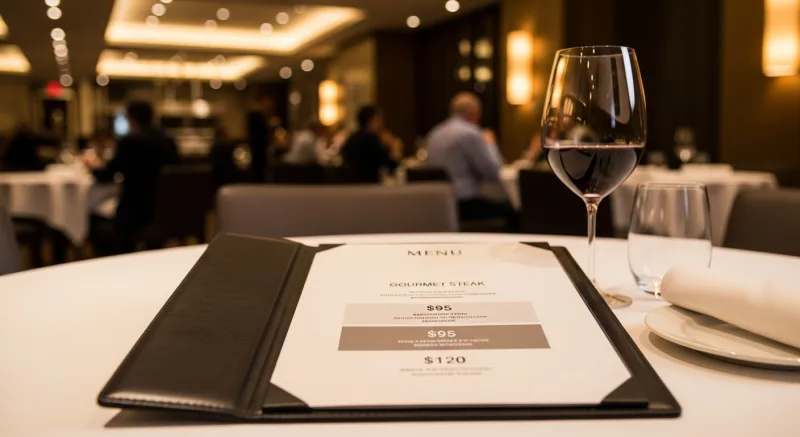
Translation: one of your tiers should be an obviously worse deal compared to the tier above it, so the comparison pushes customers upward.
Watch how this works at a restaurant:
| Before (2 tiers) | Price | After (3 tiers) | Price |
|---|---|---|---|
| Basic: 1 free appetizer/visit | $19/mo | Starter: 1 free appetizer/visit | $19/mo |
| Premium: 1 free entree/visit + 15% off | $49/mo | Preferred: 1 free appetizer/visit + 10% off + 1.5x points | $35/mo |
| VIP: 1 free entree/visit + 20% off + 2x points + birthday dinner | $49/mo |
In the 2-tier model, 78% chose Basic. In the 3-tier model with the Preferred tier acting as a bridge, 61% chose Preferred and 22% chose VIP. Total membership revenue per customer increased 47%.
But it gets worse for the old model: those Basic-only members were also visiting less frequently and spending less per visit. The 2-tier structure was actually training customers to be cheap.
The Psychology of Tier Naming
Stop using Bronze, Silver, Gold.
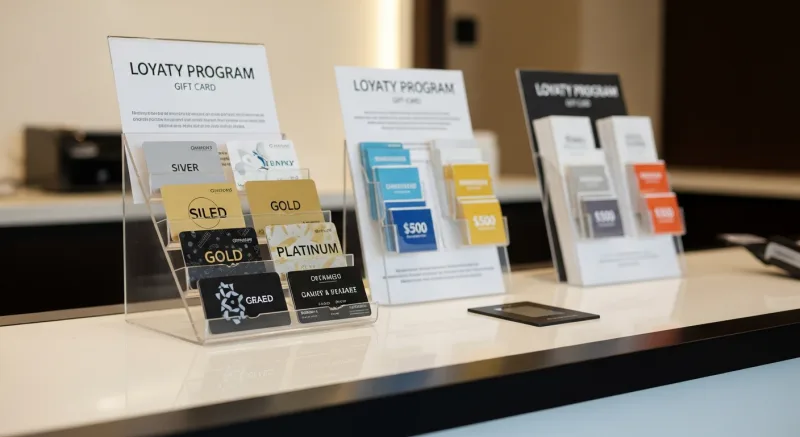
Seriously. Those names have been so overused that they trigger an automatic "cheap/medium/expensive" framework in your customer's brain. Worse, "Bronze" literally sounds like losing. Nobody wants to be Bronze at anything.
Here's the thing: your tier names are identity labels. People don't just buy a membership tier — they become that tier. The name needs to make every level feel like belonging, not settling.
Effective tier naming by business type:
- Restaurant: Insider / Connoisseur / Chef's Table
- Coffee shop: Regular / Enthusiast / Obsessed
- Bubble tea: Sipper / Connoisseur / Addict (Tiger Sugar's 2-store kiosk setup could easily layer this onto their minimal-step checkout flow)
- Nail salon: Essential / VIP / Inner Circle
- Retail: Member / Preferred / Elite
Notice: even the lowest tier sounds like you belong to something. "Insider" beats "Basic." "Regular" beats "Bronze." "Sipper" beats "Tier 1."
When setting up your tiers in your POS system, make sure the tier names display clearly on the customer-facing screen during checkout. That moment of recognition — seeing "Welcome back, Connoisseur" on the screen — is a micro-reward that reinforces the membership identity every visit.
Price Gap Architecture: The 2x/1.7x Rule
Most businesses guess their tier prices. Don't.
Industry research suggests there's an optimal price gap structure that maximizes middle-tier selection:
- Tier 1 to Tier 2: 80-120% increase (roughly double)
- Tier 2 to Tier 3: 60-100% increase
So if your entry tier is $19/month:
- Middle tier: $35-$42/month (sweet spot: $39)
- Top tier: $59-$79/month (sweet spot: $69)
Why does this ratio work? The first jump needs to feel like a meaningful upgrade — "I'm getting significantly more." The second jump should feel aspirational but not absurd — "That's for the really dedicated customers."
And that's not all: the price gaps also need to match perceived value gaps. If the jump from Tier 1 to Tier 2 is $20/month, the customer needs to instantly see at least $30 in additional value. That's your value multiplier — the perceived benefit should always exceed the actual price increase by at least 50%.
Benefit Escalation: What Goes in Each Tier
Here's where most membership programs fall apart. They either front-load all the good stuff into the bottom tier (leaving nothing to upgrade to) or gate everything behind the top tier (making the bottom tier feel worthless).
The architecture that works:
Bottom Tier — The Hook:
- One core benefit that solves a real problem (free item, percentage discount, priority access)
- Basic loyalty point earning (1x multiplier)
- Access to member-only e-gift card promotions (e.g., buy $25 gift card, get $30 value)
- Enough value to justify the price, but with visible "you could have more" gaps
Middle Tier — The Sweet Spot:
- Everything in the bottom tier, plus...
- A significantly better version of the core benefit (bigger discount, more free items)
- Accelerated loyalty points (2x multiplier) that compound into meaningful rewards
- One or two "surprise and delight" perks (birthday bonus, quarterly gift card)
- Enhanced gift card benefits — members get bonus value when purchasing gift cards at the POS
- This tier should feel like the "complete" experience
Top Tier — The Aspiration:
- Everything in the middle tier, plus...
- Unlimited or all-access elements
- Maximum loyalty multiplier (3x points)
- Exclusive experiences (chef's table, private events, first access to new items)
- Premium gift card perks — free quarterly e-gift cards, exclusive gift card designs
- This tier should feel like a lifestyle, not just a discount
Real Numbers: Multi-Location Tier Design
Let's look at how this plays out at scale. T. Jin China Diner operates 15 locations with 75 terminals, all managed through a single KwickOS dashboard. When they rolled out tiered memberships across all locations simultaneously (something only possible with centralized management), they could A/B test tier structures across different stores and converge on the best-performing design within weeks.
Here's the thing: multi-location businesses have a massive advantage in membership tier design. With 15 stores generating data, you can test different tier names, prices, and benefits across locations and let the numbers tell you what works.
Crafty Crab Seafood — 19 stores, 152 terminals — took it further. Their tiered membership integrates with their one-click menu sync. When seasonal menu items drop, higher-tier members get early access and exclusive pricing. The membership isn't just a discount program — it's a relationship with the brand that deepens at every tier.
The POS checkout flow matters here. When a member scans in (via phone number, loyalty card, or KwickOS's fingerprint 1:N authentication), the system instantly displays their tier status, available rewards, loyalty point balance, and any gift card balances. The cashier sees a prompt: "This customer is 47 points from VIP status — mention the upgrade?" That kind of intelligent upselling at the register is only possible when your membership, loyalty, and checkout systems are fully integrated.
Upgrade Incentives: Moving Customers Up the Ladder
Enrollment is step one. The real revenue comes from tier migration — moving customers from lower tiers to higher ones over time.
Effective upgrade triggers:
- Progress bars: "You're 3 visits away from qualifying for VIP pricing." Display this on every receipt, every loyalty app check-in, every customer-facing display
- Trial upgrades: "Enjoy VIP benefits free for 2 weeks." Let customers taste the higher tier before committing. Industry data shows 35-45% of trial upgraders convert to paying
- Anniversary bumps: "You've been an Insider for 6 months — upgrade to Connoisseur and your first month is 50% off"
- Gift card bridges: "Upgrade to VIP today and receive a free $25 e-gift card." The gift card acts as a perceived risk reducer — even if they don't love the upgrade, they've already "gotten their money back"
- Point acceleration events: "This weekend only: all VIP members earn 5x points on every purchase." Creates urgency and showcases the tier benefit in action
But it gets worse if you don't build upgrade paths: stagnant memberships have a 60% churn rate within 12 months. Members who feel like they're progressing — even within a tier — churn at less than 20%.
The Checkout Integration That Makes It All Work
None of this psychology matters if the membership experience is clunky at the point of sale. Here's what the checkout flow should look like:
- Instant member recognition — Phone number, loyalty card tap, or fingerprint scan identifies the customer in under 2 seconds
- Tier benefits auto-applied — Discounts, point multipliers, and member pricing appear automatically on the ticket. No codes, no asking, no friction
- Gift card and loyalty balance visible — The customer sees their available gift card balance and loyalty points on the customer-facing display. One tap to apply either to the current transaction
- Smart upgrade prompt — If the customer's spending pattern suggests they'd save money at a higher tier, the POS flags it for the cashier
- Split payment support — Members should be able to combine gift cards, loyalty point redemptions, and regular payment in a single transaction. KwickOS handles this natively through its processor-agnostic payment system, which means you're not locked into one payment provider's limitations
This is where processor-agnostic matters. When your POS controls the checkout flow — not your payment processor — you have complete flexibility over how memberships, loyalty, gift cards, and payments interact. Locked-in systems like Toast or Square control that flow, which means their membership features work their way, not yours. With a processor-agnostic system, you save $3,000-$8,000/year on processing while keeping full control over the membership experience.
Common Tier Design Mistakes
After working with 5,000+ businesses across 50 states, here are the patterns that consistently kill membership programs:
- Too many tiers. Four or more options triggers decision paralysis. The compromise effect only works with three. More than three, and customers freeze and walk away
- Identical tiers with different prices. If a customer can't articulate the difference between your tiers in one sentence, you've failed. Each tier needs a clear, memorable headline benefit
- Discounts as the only benefit. "10% off" vs "15% off" vs "20% off" is boring. Layer in experiences, access, and recognition — not just math
- Forgetting the offline experience. Your membership needs to work when the internet drops. KwickOS's hybrid local+cloud architecture means member data, tier benefits, and loyalty balances are cached locally with 1ms response time. No internet? No problem. Members still get recognized, still earn points, still get their discounts
- No visible progress. If members can't see how close they are to the next reward, the next tier, or the next milestone, engagement dies. Print it on receipts. Show it on the screen. Send it in texts
Your 7-Day Tier Launch Plan
Day 1-2: Analyze your current customer data. Use your POS reporting to identify spending segments. What does your top 10% spend monthly? Your middle 50%? Price your tiers to match these natural clusters.
Day 3: Design your three tiers using the principles above. Name them. Price them. Define benefits. Build the value multiplier into the middle tier.
Day 4: Configure the tiers in your POS system. Set up loyalty point multipliers per tier. Create the e-gift card bonuses for each level. Configure the customer-facing display prompts.
Day 5: Train your staff. They need to explain each tier in under 15 seconds. They need to know which tier to recommend based on the customer's visit frequency (Shogun Japanese Hibachi got their staff proficient in under 5 minutes on KwickOS — membership tier selling follows the same training-light approach).
Day 6: Soft launch with your existing loyal customers. Send an SMS or email: "You've been upgraded to Connoisseur status — free for the first month. See what you've been missing."
Day 7: Full launch. Staff pitch at every checkout. Signage at the register. Customer-facing display showing tier benefits during every transaction.
Use our membership revenue calculator to model the impact of three tiers on your specific business.
Build Your Tiered Membership in Minutes
KwickOS manages memberships, loyalty points, gift cards, and checkout in one integrated platform. No bolt-on apps. No extra fees. One system that makes tier psychology actually work at the register.
Get a Free DemoFrequently Asked Questions
Why do 3-tier membership programs outperform single-tier ones?
Three tiers leverage the anchoring effect and compromise effect — customers naturally gravitate toward the middle option when given three choices. The top tier makes the middle feel reasonable, while the bottom tier makes the middle feel like a good value. According to industry data, businesses that switch from 1 tier to 3 tiers typically see a 40-60% increase in average membership revenue per customer.
What is decoy pricing and how does it work in membership tiers?
Decoy pricing places a strategically overpriced option (usually the top tier) that makes the middle tier look like a great deal by comparison. The decoy is not designed to sell in high volume — its job is to shift customers away from the cheapest option and toward your most profitable middle tier. For example, if your Basic is $19/month and Premium is $39/month, adding an Elite at $79/month will push more customers from Basic into Premium.
How should I name my membership tiers?
Avoid generic names like Bronze/Silver/Gold, which signal hierarchy and make the bottom tier feel inferior. Instead, use names that reflect experiences or identities: "Insider" / "VIP" / "Inner Circle" or "Essential" / "Preferred" / "Elite". The best tier names make every level feel like belonging, not settling. Match names to your brand identity — a bubble tea shop might use "Sipper" / "Connoisseur" / "Obsessed."
What percentage gap should exist between membership tier prices?
The ideal gap between Tier 1 and Tier 2 is 80-120% (roughly double), and between Tier 2 and Tier 3 is 60-100%. For example: $19 / $39 / $69. The jump from Tier 1 to Tier 2 should feel like a clear upgrade with significantly more value. The jump from Tier 2 to Tier 3 should feel aspirational but not absurd. If the gaps are too small, customers default to the cheapest option.
Can I use membership tiers with gift cards and loyalty points?
Yes, and you should. Tiered memberships work best when integrated with your loyalty program and gift card system. Higher tiers can earn accelerated loyalty points (e.g., 2x or 3x points per dollar), receive bonus gift card value (buy a $50 gift card, get $60 loaded), and unlock exclusive redemption options. A POS system like KwickOS can manage tiered memberships, loyalty points, and gift card balances in one integrated platform.