 Tom Jin
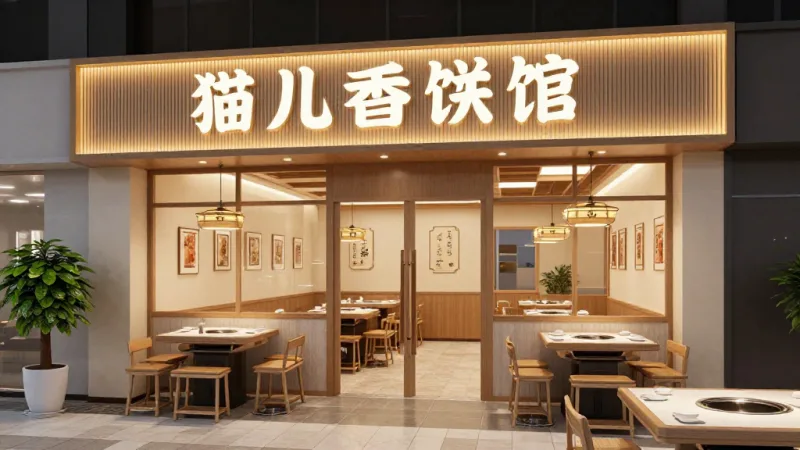
You opened a hot pot restaurant because the concept is magnetic — communal dining, customizable flavors, high ticket averages. What nobody told you is that running one is like managing 24 simultaneous kitchens.
Each table has a burner that can malfunction. Each pot needs broth that takes hours to prep. Each guest orders 8 to 15 individual plates of raw ingredients that must be portioned, plated, and tracked. And if you are running an all-you-can-eat model, you are watching margins evaporate every time a table orders their fourth plate of premium beef.
Here's the thing: most hot pot operators are losing $1,800 to $4,200 every month on equipment damage they do not track, broth waste they do not measure, and ingredient over-portioning they do not catch. That is $21,600 to $50,400 per year walking out the door while you are busy keeping burners lit.
This guide covers every operational system you need — from table equipment tracking to broth inventory to all-you-can-eat POS configuration — based on what actually works at high-volume hot pot operations including Haidilao (600+ locations worldwide) and the independent operators we serve through KwickOS.
Table Equipment Management: 96 Things That Break, Disappear, or Get Stolen
A 24-table hot pot restaurant has roughly 96 burner components, 24 pot vessels, 96 dipping sauce stations, and 200+ utensil sets in rotation at any given time. That is over 400 individual items that need tracking — and nobody is tracking them.
But it gets worse: induction burner units cost $120 to $350 each. Yuan yang split pots run $25 to $60. Strainer sets and specialty utensils add up to $8 to $15 per guest. When a burner element burns out, a pot goes missing, or a guest accidentally takes a strainer home, most restaurants just absorb the cost and replace it.
Over 12 months, that "just replace it" approach costs the average hot pot restaurant $3,600 to $7,200 in untracked equipment losses.
The Equipment Tracking System That Actually Works
Assign every piece of table equipment a unique ID tied to its table number in your POS system. When a server opens a table, the system displays the equipment checklist for that station. During table turnover, the busser confirms all items are present before the table can be re-seated.
This is not complicated technology. KwickOS handles it through table status management — each table has a configurable checklist that staff tap through during open and close. If a burner is flagged as damaged, the system automatically creates a maintenance ticket and marks the table as unavailable until resolved.
The result? Crafty Crab Seafood — which operates a hot pot concept across several of their 19 locations — reduced equipment replacement costs by 62% in the first quarter after implementing table-level tracking. They did not buy fewer items. They just stopped losing them.
And that's not all: table equipment tracking also gives you data on which burner models last longest, which tables have the highest damage rates (usually near the entrance where foot traffic bumps chairs into equipment), and which shifts need additional equipment training.
Broth Inventory: The Hidden Cost Center Nobody Measures
Broth is the soul of hot pot — and the biggest source of uncontrolled waste. A typical hot pot restaurant offers 4 to 6 broth options: spicy mala, tomato, mushroom, clear bone, herbal, and sometimes a premium collagen or truffle variety. Each one requires different base ingredients, different prep times, and different holding temperatures.
Here is the math that most operators ignore: a standard hot pot base uses 1.5 liters of broth per pot section. A yuan yang (split) pot uses 3 liters total. On a busy night with 24 tables turning 2.5 times, you are going through 180 liters of broth. At an average cost of $2.80 per liter for ingredient and labor, that is $504 in broth cost per night — or $15,120 per month.
The problem is not the cost itself. The problem is variance. Without tracking, most restaurants prep based on gut feeling. They over-prep on slow Tuesdays and run out of tomato broth at 7:30 PM on Saturdays. Both cost you money — waste on the slow days, lost revenue and angry guests on the busy ones.
Batch Prep + POS-Linked Deduction
Here's how to fix it. Standardize every broth recipe to a per-batch volume (we recommend 15-liter batches, which covers 10 pot sections). Log each batch in your POS inventory system when it is completed. When a server rings in a broth order — whether mala, tomato, or clear — the system automatically deducts 1.5 liters from the corresponding batch.
At any point during service, your manager can check the POS dashboard and see exactly how much of each broth remains. When a batch drops below 3 liters (two orders), the system sends an alert to the kitchen display screen. No more running out during rush. No more prepping 45 liters of mushroom broth that only 8 tables order.
KwickOS integrates this directly into the kitchen display system (KDS). The broth station sees real-time consumption data, and prep cooks can see projected demand based on current reservation count and historical day-of-week patterns. T. Jin China Diner uses a similar approach across their 15 locations for soup base management, adjusting prep volumes automatically based on the previous four weeks of sales data.
Ingredient Portioning: Where Your Food Cost Actually Lives
Hot pot ingredient portioning is unlike any other restaurant format. You are not plating composed dishes — you are sending out 30 to 50 individual items per table, each one a precise portion of raw protein, seafood, vegetable, or noodle that guests cook themselves.
The portioning challenge breaks down into three problems:
- Consistency. If one plate of sliced lamb weighs 120g and the next weighs 180g, your food cost swings by 50% on that single item. Multiply that across 200 plates per night, and your daily variance can exceed $300.
- Speed. During peak service, your prep team is plating faster than they can weigh. Accuracy drops precisely when volume is highest.
- Waste. Trimmings from protein slicing, vegetable stems, and broken tofu account for 8% to 12% of raw ingredient cost in most hot pot restaurants. That is $1,200 to $2,000 per month at a mid-size operation.
The Portioning Protocol
Every hot pot menu item needs a standardized portion weight, a portioning photo reference, and a cost-per-plate target. Print a laminated reference card at each prep station showing the item, target weight, acceptable range (+/- 5%), and plate presentation.
Use digital scales at every station. This sounds obvious, but according to restaurant industry data, fewer than 40% of hot pot restaurants use scales during regular prep — most rely on visual estimation. A $35 digital scale that prevents $200/month in over-portioning pays for itself in a single week.
Link your portioning to POS sales data. If your POS shows you sold 147 plates of sliced beef on Saturday but your inventory deducted the equivalent of 168 plates, you have a 14% variance that points to either over-portioning, waste, or theft. Without POS-integrated inventory, you would never see this number.
Timer Management: Controlling the All-You-Can-Eat Clock
If you run an all-you-can-eat (AYCE) hot pot model, time is your most critical variable. The difference between a 90-minute and a 120-minute seating is not 30 minutes — it is one entire table turn during peak hours. On a 24-table floor, that is 48 lost covers per night, or roughly $1,440 in lost revenue at a $30 per-person AYCE price.
But it gets worse: AYCE guests who stay longer also order more food. Industry data shows that ingredient consumption increases 35% between the 90-minute and 120-minute mark, but almost none of those additional orders are high-margin. Guests have already eaten the premium items. They are now ordering additional rice, noodles, and vegetables — your lowest-margin categories — while occupying a table that could be generating a new $30 cover.
POS-Driven Timer and Pricing
Set your POS to start an automatic timer when the AYCE order is placed. KwickOS displays the remaining time on the server's handheld and on the kitchen display, so both front-of-house and back-of-house know which tables are approaching their time limit.
At the 75-minute mark (with a 90-minute limit), the system sends an automatic notification to the server's device: "Table 14 — 15 minutes remaining." The server delivers the polite reminder along with the dessert menu or an offer for premium add-ons.
At the 90-minute mark, the system flags the table for checkout. Any additional orders placed after the timer expires can be configured to charge at a la carte pricing, creating a natural incentive for guests to wrap up.
Here's the thing: this is not about rushing guests. It is about setting clear expectations at seating ("Your 90-minute experience starts now — enjoy!") and enforcing them consistently. Haidilao mastered this with their famous tableside entertainment approach — when the timer gets close, the service gets more attentive, desserts appear, and guests feel taken care of rather than pushed out.
POS Checkout: Handling the Complexity of Hot Pot Billing
Hot pot checkout is uniquely complicated. A single table might have a mix of AYCE guests and a la carte guests, premium add-ons, individual drink orders, and a shared dessert. The POS needs to handle per-person pricing, item-level pricing, and combination pricing — sometimes all on the same check.
The checkout flow matters because errors here cost you twice: once in the lost revenue from undercharging, and again in the guest frustration from overcharging. A well-configured POS eliminates both.
KwickOS handles hot pot billing through configurable pricing modes per table. When a server opens a table, they select the pricing mode: AYCE (per-person flat rate), a la carte (per-item), or mixed. The system applies the correct pricing logic to every subsequent order. Premium add-ons — wagyu, live lobster, specialty mushrooms — are always charged at item price regardless of mode. And the checkout screen shows a clear breakdown that servers can review with guests before processing payment.
For gift card and e-gift card transactions, this complexity matters even more. A guest paying with a $50 e-gift card at a table with mixed AYCE and a la carte pricing needs the POS to apply the gift card balance correctly, split the remainder to a second payment method, and print or text a receipt showing the gift card deduction. KwickOS processes all gift card types — physical, digital, and third-party — seamlessly through the same checkout flow.
Loyalty Programs That Work for Hot Pot
Hot pot has a natural advantage for loyalty programs: high average tickets and strong repeat intent. A guest who spends $45 per person on AYCE hot pot is far more likely to return if they are earning points toward a free upgrade or a complimentary premium plate.
But most hot pot restaurants waste this advantage. They either do not have a loyalty program at all, or they use a generic "spend $100, get $10 off" model that does nothing to drive behavior.
Here is what works: tier-based loyalty with hot-pot-specific rewards. Bronze members (0-500 points) get a free dipping sauce upgrade. Silver members (500-2,000 points) unlock the premium broth selection at no extra charge. Gold members (2,000+ points) get priority seating during peak hours and a complimentary premium plate per visit.
The key is making the rewards feel exclusive and relevant to the hot pot experience — not generic discounts that train guests to wait for promotions. KwickOS loyalty modules let you configure tier thresholds, reward types, and point multipliers by day of week (double points on Tuesdays to drive slow-day traffic). Members enroll at checkout by tapping their phone number — no app download, no friction.
Tiger Sugar uses a similar point-based approach across their 2 stores with 2 self-ordering kiosks. Guests earn points on every purchase, and the kiosk automatically displays their point balance and available rewards during the ordering flow. Enrollment happens in under 10 seconds at the kiosk screen.
Ventilation, Power, and the Infrastructure Nobody Plans For
Every experienced hot pot operator will tell you the same thing: the food is the easy part. The hard part is the infrastructure.
Each table needs a dedicated power connection capable of handling a 2,000 to 3,000-watt induction burner. For a 24-table restaurant, that is 48,000 to 72,000 watts of additional electrical load beyond your normal kitchen and HVAC systems. Most commercial restaurant spaces are wired for 200-amp service. A 24-table hot pot restaurant may need 400-amp service or a dedicated sub-panel for dining floor power.
And that's not all: ventilation is the difference between a pleasant dining experience and a smoke-filled room that drives guests out. Hot pot generates significant steam and cooking odors. You need either ceiling-mounted exhaust hoods over every table (expensive to install, roughly $800 to $1,500 per table) or downdraft ventilation built into the table itself (higher per-unit cost at $1,200 to $2,500, but more effective and quieter).
The POS connection matters here too. KwickOS runs on a hybrid local+cloud architecture with 1ms local response times, so even if your internet connection drops — which happens more often in restaurants with high electrical loads causing interference — your ordering, billing, and kitchen display continue working without interruption. Every order, every timer, every checkout processes locally. The cloud syncs when connectivity returns.
Shogun Japanese Hibachi solved a similar infrastructure challenge with customized station displays. Their hibachi setup requires dedicated power and ventilation per cooking station, just like hot pot. KwickOS configured each station's display to show only the relevant orders, and staff achieved full proficiency in under 5 minutes of training — critical when your operational complexity is already high.
The All-You-Can-Eat Profitability Formula
AYCE hot pot is a volume game. Your profit lives in the gap between your per-person price and your per-person ingredient cost. Industry data suggests that the average AYCE hot pot guest consumes $12 to $18 in raw ingredients during a 90-minute session. At a $35 per-person price point, that gives you a 49% to 66% food cost — tight, but workable if you control the variables.
The variables you must control:
- Session length. Every 10 minutes beyond 90 adds approximately $2.40 in ingredient consumption per guest. Use POS timers to enforce the limit.
- Premium item ordering. AYCE menus should include 70% standard items (margins above 60%) and 30% premium items (margins of 30-40%) available as paid upgrades. This creates the perception of abundance while protecting your cost.
- Drink revenue. Beverages are your margin recovery tool. An AYCE guest who orders two $6 drinks adds $10.80 in gross profit (assuming 10% beverage cost), effectively subsidizing their protein consumption.
- Table turn time. Target 2.5 turns on weeknights and 3.0 turns on weekends. The difference between 2.0 and 3.0 turns on a 24-table floor is $2,160 per night at $30/person AYCE pricing.
Your POS should report all of these metrics daily: average session length, premium add-on attachment rate, beverage revenue per cover, and effective turns per table. Without this data, you are flying blind on an already thin-margin model.
KwickOS reporting breaks this down by day of week, time of day, and server — so you can see that your Tuesday dinner service averages 2.1 turns with $4.20 in beverage revenue per cover, while Saturday hits 2.8 turns with $7.50 in beverages. That data tells you exactly where to focus: Tuesday needs a beverage promotion (perhaps double loyalty points on drinks), and Saturday needs tighter timer enforcement.
Processor Freedom: Why Hot Pot Restaurants Overpay More Than Anyone
Hot pot restaurants have higher average tickets than most restaurant categories — typically $35 to $60 per person, with table totals of $100 to $250. That means your payment processing costs are proportionally higher too.
On a locked POS like Toast at 2.99% + $0.15 per transaction, a $200 table check costs you $6.13 in processing fees. On interchange-plus pricing through a processor you chose yourself, the same transaction costs approximately $4.70. That is $1.43 per table — and on a busy Saturday with 72 table turns, you are overpaying $102.96 in a single night.
Over a year, a 24-table hot pot restaurant processing $120,000/month in card transactions saves $3,000 to $8,000 annually by using a processor-agnostic POS. KwickOS lets you connect any payment processor, negotiate your own interchange-plus rates, and switch processors if you find a better deal — without changing your POS system. Use our processing fee calculator to see your exact savings.
Putting It All Together: The Hot Pot Operations Checklist
Running a profitable hot pot restaurant comes down to controlling the variables that most operators ignore. Here is the operational checklist:
- Equipment tracking. Assign IDs to every table component. Audit during every table turn. Log damage and replacement costs in your POS.
- Broth management. Standardize batch sizes. Track consumption through POS-linked inventory. Set low-stock alerts on the KDS.
- Portion control. Weigh every plate. Post photo references at every station. Compare POS sales to inventory deductions weekly.
- Timer discipline. Use POS timers for AYCE sessions. Train servers on the 15-minute warning protocol. Configure post-timer a la carte pricing.
- Checkout accuracy. Configure POS for mixed pricing modes. Train staff on gift card and split-payment scenarios. Review void and discount reports daily.
- Loyalty enrollment. Offer enrollment at every checkout. Use tiered rewards relevant to the hot pot experience. Track enrollment rate by server.
- Processing costs. Use a processor-agnostic POS. Get three interchange-plus quotes. Renegotiate annually.
Each of these systems is manageable individually. Together, they are the difference between a hot pot restaurant that operates at 8% net margin and one that bleeds money while looking busy.
Want to see how other restaurant categories compare? Check our hot pot industry page or read how Korean BBQ operators solve similar challenges with tableside cooking. For a side-by-side look at how KwickOS stacks up against locked POS systems, visit our KwickOS vs Toast comparison.
Built for Hot Pot Complexity
KwickOS handles AYCE timers, mixed pricing modes, table equipment tracking, and broth inventory — all from one platform. See why hot pot operators across 50 states trust KwickOS.
Get a Free Demo