 Kelly Ho
Your average drive-thru customer waits 6 minutes and 22 seconds from speaker box to pickup window. That's the industry average, according to restaurant industry data collected in late 2025.
Now here's the part that should keep you up at night.
The top-performing chains — the ones investing in AI ordering and license plate recognition — have cut that number to under 3 minutes. Some are hitting 2 minutes flat. And every second you're slower than the competition is a customer who drives past your entrance tomorrow and pulls into theirs.
But it gets worse: those faster chains aren't just stealing your customers with speed. Their AI systems are upselling 22% more effectively than human cashiers, their license plate cameras are pulling up loyalty profiles before the car reaches the menu board, and their digital screens are swapping promotions in real time based on weather, time of day, and inventory levels.
You're not just competing against other restaurants anymore. You're competing against technology that never calls in sick, never forgets to suggest a drink, and processes orders in 4 seconds.
This guide covers every drive-thru technology that matters in 2026 — what it does, what it costs, and whether the ROI justifies the investment for your operation. No hype. Just the numbers.
AI Voice Ordering: The Cashier That Never Takes a Break
AI voice ordering is the single biggest disruption in the drive-thru since the invention of the intercom speaker. Here's how it works: a customer pulls up to the speaker, talks naturally — "I want a number three combo, no onions, large Coke" — and the AI confirms the order on a screen within seconds. No human involved.
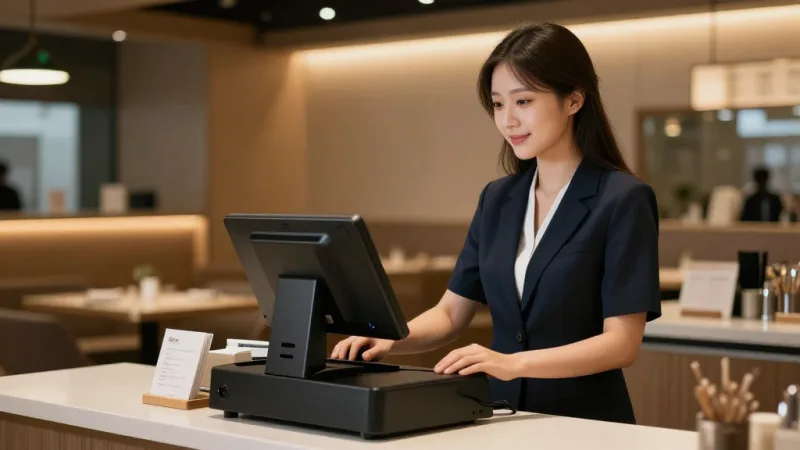
The order goes straight to the POS system and kitchen display simultaneously. The kitchen starts making the food before the car even reaches the payment window.
Here's the thing: AI doesn't just match human cashier performance. It exceeds it in every measurable category.
| Metric | Human Cashier | AI Voice Ordering |
|---|---|---|
| Average order time | 45-90 seconds | 15-25 seconds |
| Order accuracy | 85-89% | 93-97% |
| Upsell attempt rate | 30-50% of orders | 100% of orders |
| Upsell success rate | 8-12% | 15-25% |
| Availability | Requires staffing | 24/7/365 |
| Language support | Limited to staff | English, Spanish, Chinese+ |
That upsell number deserves a closer look. If your average drive-thru ticket is $11.50 and AI ordering successfully upsells 20% of orders by an average of $3.40, that's $0.68 per car in additional revenue. At 300 cars per day, you're looking at $204/day — or $74,460 per year in incremental revenue from a single lane.
And that's not all: because AI processes orders faster, you can serve more cars per hour. A lane that served 80 cars/hour with a human cashier can serve 100+ with AI. During peak lunch rush, that 25% throughput increase is the difference between a line that wraps around the building and one that moves.
What About Accuracy in Noisy Environments?
This was the early knock on AI ordering systems — wind, engine noise, kids screaming in the back seat. The 2026-generation systems handle this remarkably well. Modern noise-cancellation algorithms isolate the speaker's voice from background noise, and the AI confirms every order on a customer-facing screen before moving the car forward.
When the AI can't understand a request — and it happens about 3-5% of the time — it seamlessly transfers to a human operator. The customer rarely notices the handoff.
Multilingual Ordering Without Multilingual Staff
In markets with significant Spanish-speaking or Chinese-speaking populations, AI voice ordering eliminates a persistent staffing challenge. The system detects the customer's language automatically and responds accordingly. KwickOS supports English, Chinese, and Spanish natively across all POS and ordering interfaces, making it a natural fit for multilingual drive-thru operations.
License Plate Recognition: Your Drive-Thru Knows Who You Are
License plate recognition (LPR) cameras do something no cashier can: they identify your customer before a word is spoken.
Here's the flow. A camera captures the plate as the car enters the drive-thru lane. The system matches it against your loyalty database. By the time the car reaches the speaker box, the AI already knows:
- The customer's name and loyalty tier
- Their last 10 orders and most frequent item
- Available loyalty points, rewards, or gift card balances
- Any active promotions tied to their membership level
- Whether they've opted into mobile payment for contactless checkout
"Welcome back, Maria. Would you like your usual — a number five combo with extra ranch? You have 840 loyalty points, enough for a free drink upgrade."
That's not a hypothetical. That's what the drive-thru experience looks like in 2026 when LPR connects to your POS, loyalty, and gift card system.
But here's where it gets really interesting for operators: LPR gives you data you've never had before.
- Visit frequency tracking — Know exactly how often each customer visits without requiring them to scan a card or app
- Lapsed customer detection — Identify regulars who haven't visited in 30+ days and trigger re-engagement offers
- Daypart behavior — Discover which customers visit for breakfast vs. lunch vs. dinner
- Order prediction accuracy — After 5 visits, the system predicts the correct order 78% of the time
And that's not all: when LPR integrates with your loyalty and points program, customers earn and redeem rewards without pulling out a phone, scanning a QR code, or even telling the cashier their phone number. The experience is frictionless — and frictionless loyalty programs see 3x higher engagement rates than programs that require manual check-in.
Privacy Considerations
LPR systems store plate-to-profile associations only for customers who opt in through your loyalty program. Non-enrolled customers are processed anonymously. Make sure your opt-in language is clear and your data handling complies with your state's privacy regulations. A good POS platform will handle this compliance layer for you.
Digital Menu Boards: The Screen That Sells for You
Static menu boards are dead. If you're still using backlit printed panels at your drive-thru, you're leaving money on the table every single day.
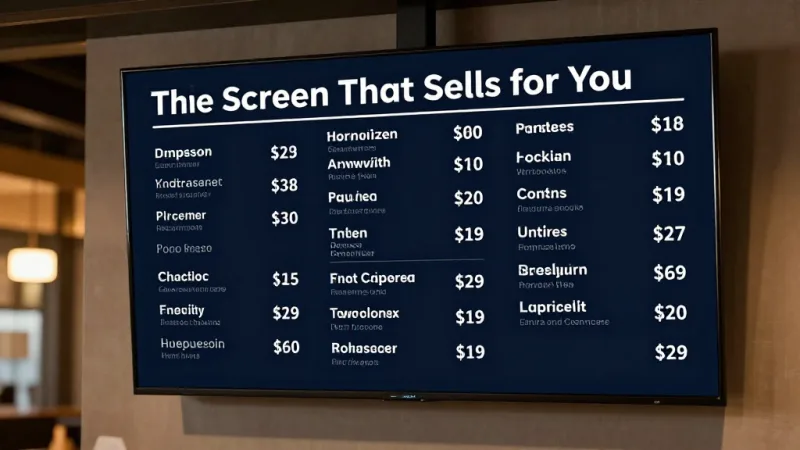
Digital menu boards cost $3,000-$8,000 per screen (outdoor-rated, high-brightness models), and they pay for themselves within months. Here's why:
Daypart automation. Breakfast menu at 5 AM, lunch at 10:30 AM, dinner at 4 PM, late-night at 10 PM — automatic transitions without a crew member walking outside to swap panels. This alone eliminates the "sorry, we stopped serving breakfast" frustration that costs you customers.
Dynamic promotions. It's 95 degrees outside? The screen pushes frozen drinks and ice cream. Raining? Hot coffee and soup move to position one. This weather-responsive merchandising, according to restaurant industry data, lifts impulse purchases by 8-12%.
Inventory-aware displays. When your POS system knows you're running low on chicken tenders, the drive-thru board can de-emphasize that item and promote the fish sandwich instead. No 86'd items at the speaker. No disappointed customers.
Here's the thing: the ROI compounds when digital boards connect to your e-gift card and loyalty program. Picture this: the board detects a loyalty member via LPR and displays a personalized "Your points balance: 1,200 — Redeem for a free combo?" message. Or during the holidays, it promotes gift card bundles: "Buy a $50 gift card, get a $10 bonus card free — perfect for holiday gifting." That kind of targeted, real-time promotion on a POS-integrated digital signage system is impossible with static boards.
Outdoor Screen Durability
Drive-thru screens need to survive direct sunlight, rain, snow, and temperature extremes. Look for screens rated at 2,500+ nits brightness (standard TVs are 300-500 nits), IP65 or higher weather protection, and operating temperature ranges of -30°F to 130°F. Budget $5,000-$8,000 per outdoor-rated screen. Indoor pre-sell boards can use standard commercial displays at $1,500-$3,000.
Dual-Lane and Tandem Drive-Thru Design
If you serve more than 150 cars per hour at peak, one lane isn't enough. Dual-lane drive-thrus — where two speaker stations merge into a single payment and pickup window — increase peak throughput by 40-60%.
But dual lanes introduce a problem: order accuracy at the merge point.
When two lanes of orders funnel into one kitchen and one pickup window, getting the right bag to the right car becomes exponentially harder. This is where technology makes or breaks the operation.
Order-tracking displays. Each order is tagged to a vehicle position, and the kitchen display system (KDS) shows both the order and the vehicle sequence. When Shogun Japanese Hibachi implemented customized KDS station displays with KwickOS, their operators were proficient in under 5 minutes — that same simplicity applies to drive-thru order tracking.
Vehicle detection sensors. Magnetic loop detectors or cameras at key points in the lane track vehicle position. The system knows which car is at the payment window and which is at pickup, preventing bag mix-ups.
Bag confirmation screens. A small screen at the pickup window shows the order summary for the current vehicle. The crew member confirms visually before handing out the bag. This one step reduces errors by 60-70% in dual-lane setups.
The speed-of-service optimization guide covers throughput strategies in more detail, but the hardware investment for a dual-lane conversion runs $25,000-$75,000 depending on whether you're adding a physical lane or just a second speaker point on the existing lane.
Mobile Pickup Integration: The Drive-Thru Without the Wait
Here's where the entire drive-thru model gets flipped on its head.
Mobile order-ahead lets customers order and pay from their phone, then pull into a designated pickup spot — or a dedicated mobile lane — and grab their food without ever speaking to anyone or waiting in the main drive-thru line.
For the operator, mobile orders are the most profitable drive-thru transactions you can process:
- Zero labor at the speaker — the order is placed digitally
- Zero labor at payment — already paid via app
- Higher average ticket — mobile orders average 15-20% higher than speaker orders because customers browse the full menu without time pressure
- Predictable kitchen timing — the POS receives the order minutes before arrival, smoothing kitchen load
And that's not all: mobile ordering naturally drives loyalty enrollment and gift card adoption. To place a mobile order, the customer creates an account — which means they're automatically enrolled in your points program. They can load e-gift cards into their mobile wallet for faster payment. They receive push notifications for promotions, bonus point events, and birthday rewards. Every mobile order strengthens the relationship.
The POS checkout flow matters here. When a mobile pickup order arrives at the kitchen, it needs to integrate seamlessly with drive-thru and dine-in orders on the same KDS. KwickOS handles this with hybrid local+cloud architecture — the order hits the local POS at 1ms latency for instant kitchen display, while syncing to the cloud for the customer's mobile tracking screen. Even if your internet drops, the local system keeps processing. Toast's fully cloud-dependent system can't offer that reliability.
The Integration Problem: Why Your POS Choice Matters More Than Any Single Technology
Here's the biggest mistake operators make with drive-thru technology: they buy each piece separately and expect it all to work together.
AI voice ordering from one vendor. LPR from another. Digital menu boards from a third. Mobile ordering from a fourth. And a POS system that barely talks to any of them.
The result? A Frankenstein tech stack where:
- LPR can't pull up loyalty data because the POS doesn't share customer profiles via API
- AI ordering can't check real-time inventory because the POS won't expose menu availability
- Digital boards can't show personalized offers because there's no data pipeline from the CRM
- Mobile orders create a separate ticket stream that confuses the kitchen
This is the processor-agnostic, open-architecture argument applied to drive-thru technology. A closed POS system like Toast or Square dictates which add-ons you can use — and charges you for the privilege. A platform like KwickOS, which is processor-agnostic and built on open APIs, lets you connect the best AI ordering system, the best LPR vendor, and the best digital signage solution — all flowing through one unified POS, one KDS, one loyalty program.
T. Jin China Diner runs 15 stores on 75 KwickOS terminals with real-time remote monitoring. When you're evaluating drive-thru tech for a multi-location operation, that kind of centralized visibility — seeing every lane's speed, every order's accuracy, every location's throughput from one dashboard — is the difference between managing by gut feeling and managing by data.
For a detailed comparison of how different POS platforms handle third-party integrations, see our KwickOS vs Toast comparison.
What Drive-Thru Technology Costs (Real Numbers)
Let's put real numbers on everything we've discussed. These are 2026 market rates for a single drive-thru lane:
| Technology | Upfront Cost | Monthly Cost | Annual ROI Range |
|---|---|---|---|
| AI voice ordering | $0-$5,000 setup | $1,000-$3,000 | $40,000-$80,000 |
| License plate recognition | $2,000-$5,000 | $200-$500 | $15,000-$30,000 |
| Digital menu boards (2 screens) | $8,000-$16,000 | $50-$150 (CMS) | $12,000-$25,000 |
| Vehicle detection sensors | $1,500-$3,000 | $0 | Error reduction |
| Mobile ordering integration | $0-$2,000 | Varies by platform | $20,000-$50,000 |
| Timer/speed tracking system | $3,000-$6,000 | $100-$300 | Throughput gains |
A full technology refresh for a single lane runs $15,000-$35,000 upfront plus $1,500-$4,000/month in recurring costs. But here's where loss aversion should kick in: you're already paying the cost of not having this technology. Every slow order, every missed upsell, every customer who drives past your location — that's money you're losing today.
Consider this: if your drive-thru does $1.2 million in annual revenue and AI ordering plus LPR-driven loyalty increases revenue by just 8%, that's $96,000 in additional annual revenue against roughly $35,000 in technology costs. The math isn't close.
And if you're still locked into a POS that charges 2.99% + $0.15 on every one of those transactions, you're paying an extra $3,000-$8,000/year in processing fees compared to a processor-agnostic setup. That wasted money could fund your entire drive-thru technology upgrade.
The Gift Card and Loyalty Angle in Drive-Thru
Drive-thru customers are your highest-frequency visitors. They come back 2-3x more often than dine-in customers. That makes them the most valuable audience for your loyalty program and gift card strategy.
When LPR automatically identifies loyalty members, you can:
- Award points without asking — no app scan, no phone number recitation
- Apply member-exclusive pricing at the speaker board
- Promote e-gift cards on the digital menu board during holiday seasons — "Buy $50 in gift cards at the window, get $10 free"
- Track lifetime customer value per vehicle
Rockin' Rolls Sushi Express runs 3 stores with 49 iPad self-ordering stations on KwickOS. Their loyalty integration across self-service touchpoints shows how the same points and membership system that works at a kiosk works identically in a drive-thru lane — one platform, one customer profile, no matter how they order.
For operators who haven't launched a loyalty program yet, the QSR industry page covers how KwickOS loyalty works for fast-food and drive-thru operations specifically.
Implementation Roadmap: Where to Start
You don't need to deploy everything at once. Here's the order that delivers the fastest ROI:
Phase 1: Digital menu boards + speed timers (Month 1-2). Replace static boards with dynamic screens connected to your POS. Install drive-thru timers to establish baseline speed metrics. Cost: $10,000-$20,000. Impact: 3-5% revenue lift from dynamic promotion, plus the data foundation you need for everything that follows.
Phase 2: Mobile ordering + loyalty integration (Month 3-4). Launch mobile order-ahead with a dedicated pickup spot or lane bypass. Tie it to your loyalty points and gift card system so every mobile user is enrolled. Cost: $2,000-$5,000. Impact: 10-15% of orders shift to mobile within 90 days, reducing lane congestion and increasing average ticket.
Phase 3: AI voice ordering (Month 5-6). Deploy AI at the speaker with human backup for edge cases. Start with lunch peak only, then expand to full-day coverage as accuracy data confirms performance. Cost: $1,000-$3,000/month. Impact: 20-30% reduction in order time, 15-25% upsell lift.
Phase 4: LPR + personalization (Month 7-8). Add license plate cameras and connect them to your CRM and loyalty database. This is the capstone that ties everything together. Cost: $3,000-$5,000 + $300/month. Impact: Frictionless loyalty experience that drives repeat visits and lifetime value.
Need help deciding which POS platform supports all four phases? Use our POS comparison calculator to see how KwickOS stacks up against your current system, or visit the partner page to connect with a local reseller who specializes in drive-thru installations.
Ready to Upgrade Your Drive-Thru?
KwickOS is the open-platform POS that integrates with any drive-thru technology — AI ordering, LPR, digital signage, and mobile pickup. No vendor lock-in. No processing markups.
Get a Free Drive-Thru AssessmentFrequently Asked Questions
How does AI voice ordering work at a drive-thru?
AI voice ordering uses natural language processing to take customer orders through the drive-thru speaker. The system recognizes speech, suggests upsells, handles modifications, and sends the order directly to the POS and kitchen display in under 4 seconds. It works 24/7 without breaks and can handle multiple languages simultaneously.
What is license plate recognition (LPR) in a drive-thru?
License plate recognition cameras automatically identify returning customers by their vehicle plates. When linked to a loyalty program or POS system, LPR can pull up the customer's order history, apply loyalty points, suggest their usual order, and process payment — all before they reach the pickup window.
How much does drive-thru AI ordering cost to implement?
AI voice ordering systems typically cost between $1,000 and $3,000 per month per lane depending on the provider and features included. However, most operators recoup the cost within 2-3 months through reduced labor needs, higher order accuracy (reducing remakes), and increased upsell rates of 15-25%.
Can drive-thru technology integrate with existing POS systems?
Integration depends on your POS system. Processor-agnostic platforms like KwickOS support open API connections for AI ordering, LPR, digital menu boards, and mobile pickup. Closed systems like Toast or Square may require proprietary add-ons or lack integration entirely, limiting your drive-thru technology options.
Do digital menu boards increase drive-thru sales?
Yes. According to restaurant industry data, digital menu boards increase drive-thru sales by 3-5% on average through daypart-specific promotions, dynamic pricing, and animated item highlights. They also reduce perceived wait time by displaying engaging content and allow instant menu updates without printing new boards.