 Kelly Ho
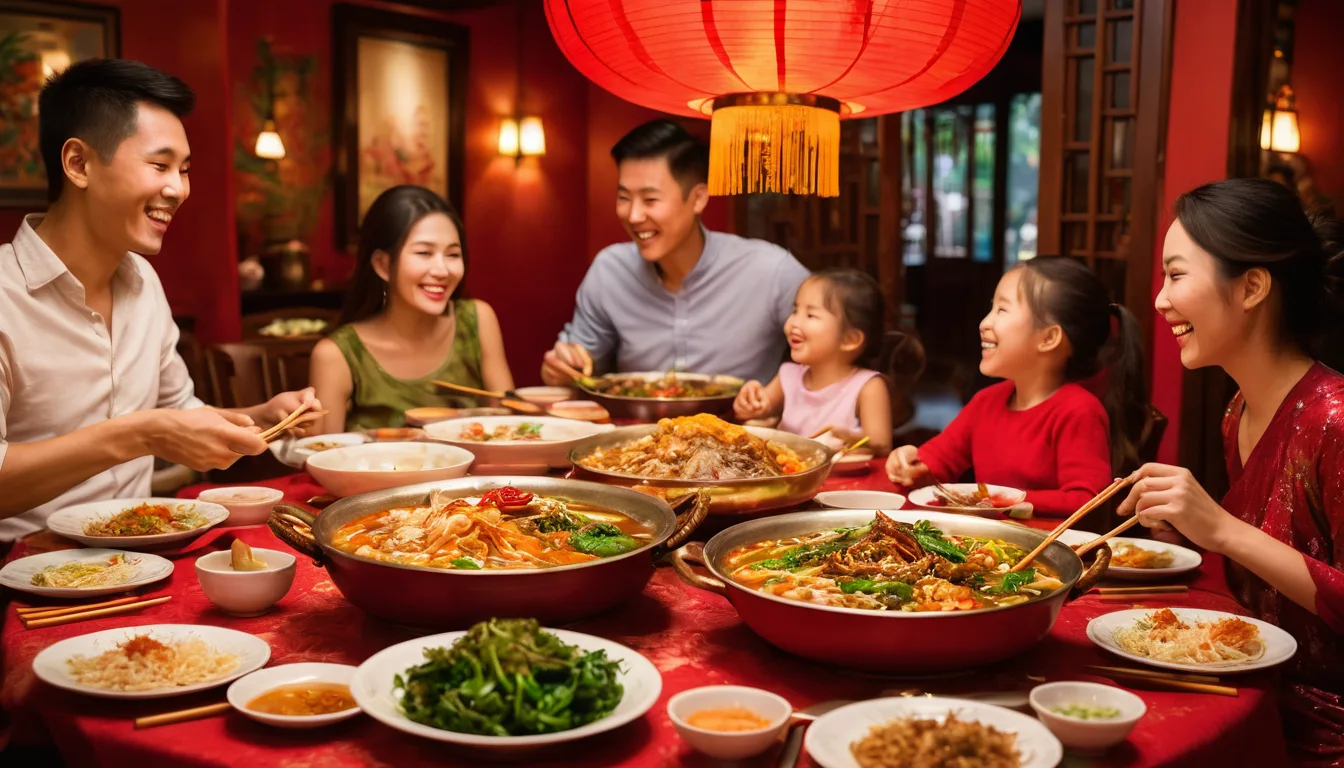
A 12-table Chinese New Year banquet should bring in $8,000 to $10,000 in a single evening. Instead, most restaurant owners walk away from these events exhausted, confused about whether they actually made money, and swearing they will never do it again.
The kitchen sent the lobster course to the wrong table. Three guests showed up unannounced, and nobody adjusted the food count. The host's uncle paid for two tables with a personal check, another table wanted to split across four credit cards, and the deposit from three months ago was tracked on a sticky note that someone threw away.
Here's the thing: banquet chaos is not a kitchen problem. It is a systems problem. Restaurants that run profitable, stress-free banquets have one thing in common — they built the process into their POS before the first guest sat down.
This guide covers exactly how to set up banquet operations from initial booking through final checkout, with the systems, pricing, and kitchen workflow that turn high-stress events into your most reliable revenue stream.
Why Banquets Are the Most Profitable (and Most Mismanaged) Revenue Channel
A typical Chinese restaurant generates $150 to $250 per table during regular dinner service. A banquet table generates $388 to $888 — two to four times regular revenue, with lower food cost percentages because you are buying and prepping in bulk.
According to restaurant industry data, banquet food costs typically run 22-28%, compared to 30-35% for a la carte service. The per-guest revenue is higher, the waste is lower, and the labor is more predictable because you know exactly how many people are coming.
But it gets worse: most restaurants leave 15-25% of banquet revenue on the table through operational failures. Missed deposits, untracked add-ons, incorrect guest counts, and billing errors compound into thousands of dollars lost per event.
A restaurant running just two banquet events per month at 10 tables each, averaging $500 per table, generates $120,000 in annual banquet revenue. If operational failures cost you even 15% of that, you are losing $18,000 per year — not because the food was bad, but because the process was broken.
Building Your Banquet Menu Packages: The Pricing Psychology That Drives Higher Bookings
The foundation of profitable banquet management is a structured menu package system. You are not selling individual dishes — you are selling an experience at a per-table price point.
The Three-Tier Structure
Every Chinese banquet menu should offer exactly three tiers. This is not arbitrary — according to restaurant industry data, three-tier pricing consistently drives customers toward the middle option, which should be your highest-margin package.
- Fortune Package ($388-$488/table of 10): 8-course menu with standard proteins (chicken, pork, fish, shrimp). Cold appetizer platter, hot appetizers, soup, four main courses, fried rice, and dessert. This is your anchor — priced to make the premium tier look like a better value.
- Prosperity Package ($588-$688/table of 10): 10-course menu adding premium proteins (whole steamed fish, Peking duck, crab). This is your target tier — highest margin because the cost difference from Fortune is about $40 per table, but you are charging $200 more.
- Imperial Package ($788-$888+/table of 10): 12-course menu with luxury items (lobster, abalone, bird's nest soup, Wagyu beef). Includes premium tea service and a complimentary dessert platter. This tier exists to make Prosperity look reasonable.
Notice the pricing uses numbers ending in 8. This is not coincidence — the number 8 (八, bā) sounds like "prosperity" (發, fā) in Chinese, making these price points culturally resonant with your clientele. And that's not all: culturally aligned pricing has been shown to increase booking rates in Chinese-American dining contexts.
Your POS system needs to store these packages as preset menus that can be applied to a table with a single selection. In KwickOS, banquet packages are configured as menu groups with fixed per-table pricing, so the server selects "Prosperity Package × 12 tables" and the system calculates $8,256 instantly — no manual math, no errors.
Add-Ons That Boost Revenue 20-30%
The real margin in banquet service comes from add-ons that guests request after confirming the base package:
- Beverage packages: Open bar ($15-$25/person), beer and wine only ($10-$15/person), or consumption-based billing
- Extra courses: Additional dishes at $80-$150 per table
- Specialty items: Whole roast pig ($350-$500), oversized lobster ($market price), live seafood selection
- Dessert upgrades: Custom cake, fruit carving display, sweet soup station
- Decor packages: Table centerpieces, red envelope station, photo backdrop ($200-$500)
Here's the critical part: every add-on must be tracked in your POS as a modifier on the banquet order. If add-ons are tracked on paper or in someone's memory, you will forget to bill at least one per event. On a 12-table banquet with $150 in average add-ons per table, a single missed table costs you $150 in pure profit.
Deposit Management: Stop Losing Money Before the Event Starts
Deposit mismanagement is the number one reason Chinese restaurants lose money on banquets. The booking happens weeks or months in advance, and by the time the event arrives, nobody remembers what was paid, what was agreed, and what the final numbers should be.
The Deposit Structure That Protects Your Revenue
- At booking: Collect 30-50% of the estimated total. For a $6,000 banquet, that is $1,800-$3,000 upfront. Process this through your POS as a deposit payment linked to the banquet order.
- 7 days before: Confirm final guest count and collect the remaining balance minus a $500 hold for add-ons and overages.
- Day of event: Settle the final balance including all add-ons, extra beverages, and adjustments.
For peak dates — Chinese New Year, Lunar New Year Eve, Mid-Autumn Festival, wedding season — increase the deposit to 50% and set a stricter cancellation policy (no refund within 14 days).
And this is where your POS system matters more than you think. When deposits are processed through the POS rather than taken as cash and tracked on paper, you get an automatic paper trail. KwickOS tracks partial payments with timestamps and payment methods, so when the host arrives on event night and says "I already paid $2,000," you can pull up the exact transaction in seconds.
Because KwickOS is processor-agnostic, you are processing these large deposit transactions at your negotiated interchange-plus rate instead of a locked flat rate. On a $3,000 deposit, the difference between 2.99% + $0.15 (locked) and 2.2% (negotiated interchange-plus) saves you $23.70 on that single transaction. Across 24 banquet events per year, deposit processing alone saves $500-$800 annually.
Table Assignment and Floor Plan Management
Chinese banquet seating is not random. The host table (主桌) faces the entrance or stage. VIP tables are closest to the host. Each table is numbered, and guests often receive table assignments in advance.
Your POS floor plan needs to reflect the actual banquet layout, not your regular dining setup. In KwickOS, you can create a separate banquet floor plan with custom table arrangements — round tables of 10 or 12, configured with table numbers that match the physical tent cards.
Why does this matter for operations? Because every course is fired by table. When the KDS shows "Fire Course 3 — Tables 1-12," the kitchen knows exactly how many portions to plate. When the expo calls "Table 7, course 4 ready," the server knows exactly where to go. Without a digital floor plan tied to the order, you are relying on verbal communication in a kitchen running at full capacity — and verbal communication fails when 120 guests need their lobster course simultaneously.
T. Jin China Diner, which operates 15 locations with 75 terminals on KwickOS, uses the banquet floor plan feature to manage events across multiple private dining rooms. Their managers can monitor course progress for each room from a single dashboard, ensuring that a wedding reception in Room A does not delay a birthday banquet in Room B because the kitchen lost track of which room was on which course.
Course Pacing: The Kitchen Workflow That Makes or Breaks the Event
A 10-course Chinese banquet should last 90 to 120 minutes. Each course has a specific window, and the kitchen must pace delivery across all tables simultaneously.
The Standard Banquet Course Timeline
| Course | Timing | Kitchen Notes |
|---|---|---|
| Cold appetizer platter | Pre-set before arrival | Prep 2-3 hours ahead, cover and refrigerate |
| Hot appetizers (2 items) | 15 min after seating | Fire when host signals guests are seated |
| Soup | 30 min after seating | Pre-portioned in tureens, hold at temp |
| Seafood course | 40-45 min | High-priority, highest-cost item |
| Poultry course | 50-55 min | Can overlap with seafood clear |
| Meat course | 60-65 min | Stagger with vegetable course |
| Vegetable course | 70-75 min | Quick-fire, wok station |
| Fried rice / noodles | 80-85 min | Signals approaching end of meal |
| Dessert | 90-100 min | Sweet soup or pastry platter |
| Fruit platter | 100-110 min | Pre-cut, cold hold |
The challenge is not cooking the food — your kitchen handles these dishes every day. The challenge is synchronizing 10 courses across 12 tables when each table starts toasting and eating at a different pace.
This is where a KDS with course-fire controls transforms banquet operations. Instead of the kitchen guessing when to start the next course, the floor manager taps a "Fire Next Course" button on the POS when they see that 80% of tables have finished the current course. The KDS displays the next course with table counts, and the kitchen fires exactly what is needed.
Shogun Japanese Hibachi customized their KDS display to show station-specific views — a concept that applies equally to Chinese banquet kitchens. Your wok station sees only wok-fired courses. Your steamer station sees only steamed items. Your cold prep station sees only platters and desserts. This prevents the chaos of every station trying to read the same order screen during a 120-guest event.
Handling Special Requests Without Losing Control
Every banquet comes with special requests. Table 3 has two vegetarians. The host's mother-in-law is allergic to shellfish. Table 8 wants extra chili oil on everything. The groom's family wants no pork.
Here's the thing: special requests handled verbally get forgotten. Special requests tracked in the POS follow the order to the kitchen.
When the banquet is booked, every special request should be entered as a modifier on the specific table's order. KwickOS supports per-table modifiers within a banquet group, so Table 3's vegetarian substitutions appear on the KDS only when Table 3's courses are fired. The kitchen does not need to remember which table has the allergy — the system tells them on every course.
For multi-language kitchens — common in Chinese restaurants where kitchen staff may read Chinese more fluently than English — multilingual KDS displays ensure that special requests are understood by every cook on the line. KwickOS natively supports English, Chinese, and Spanish, so "No Shellfish — Table 3" also appears as "无贝类 — 桌3" on the kitchen screen.
Gift Cards, E-Gift Cards, and Loyalty: The Banquet Revenue Multiplier
Banquets bring 100+ guests into your restaurant at once — many of whom have never visited before. This is the single best opportunity to convert banquet guests into regular customers, and the tools that make it happen are gift cards and loyalty enrollment.
Gift Card Strategy for Banquets
Offer the host a $50 gift card for every table booked above 8 tables. A 12-table banquet earns 4 gift cards worth $200 — a tiny cost relative to the $6,000+ event total, but it drives future visits and repeat banquet bookings.
Even more powerful: place a $10 e-gift card inside each red envelope at the guest's place setting. For a 120-guest banquet, that is $1,200 in distributed gift cards. According to restaurant industry data, gift card recipients spend 20-40% more than the card value when they redeem. Those $10 cards generate $12-$14 in average spend per redemption, bringing 120 new or returning customers through your door in the weeks after the event.
Your POS needs to handle bulk gift card generation for this to work efficiently. KwickOS lets you batch-create e-gift cards with custom denominations and expiration dates, then print QR codes on branded cards or send them digitally via text — no manual activation required.
Loyalty Enrollment at Scale
Place a table tent or card at each setting with a QR code that enrolls guests in your loyalty program. Offer an incentive: "Scan to join — get 500 bonus points (worth $5 off your next visit)." At a 120-guest banquet, even a 30% scan rate gives you 36 new loyalty members in a single evening.
Those 36 members, if they visit just twice in the following year at $35 per visit, generate $2,520 in trackable revenue directly attributed to the banquet. That is revenue you would never have captured without the loyalty enrollment touchpoint.
Checkout: Settling a $8,000+ Bill Without Chaos
Banquet checkout is where most systems fail. The host wants to pay for 10 tables. Uncle Chen insists on paying for 2 tables himself. Auntie Wang wants to put her table on a gift card she received last month. Two tables want to split across multiple credit cards.
If your POS cannot handle split payments across a banquet group, you are doing manual math on a calculator while 120 people wait to leave. That is not a checkout experience — it is a liability.
The Checkout Workflow That Works
- Pull up the banquet order with all tables, add-ons, and beverage charges consolidated.
- Apply the deposit automatically — the POS shows the remaining balance after subtracting all prior payments.
- Split by table if needed — individual tables can be separated from the group and settled independently.
- Accept mixed payment methods — cash, credit card, gift card, and digital payment on the same transaction.
- Generate bilingual receipts — English and Chinese, showing the itemized banquet package, add-ons, and payment breakdown.
Crafty Crab Seafood, with 19 locations and 152 terminals running on KwickOS, processes banquet checkouts across their private dining rooms using split-bill functionality that handles up to 10 payment methods on a single order. Their general managers report that banquet checkout time dropped from 25 minutes to under 8 minutes after switching from their previous system.
And because KwickOS runs on a hybrid local+cloud architecture with 1ms local processing latency, even complex split-payment calculations happen instantly. There is no spinning wheel, no timeout, no "system is slow tonight" — which matters enormously when you are settling a $8,000 check with a roomful of guests watching.
The Technology Stack for Banquet-Ready Operations
Not every POS system can handle banquet operations. Most cloud-only systems were designed for individual table service and bolt on "event" features as an afterthought. Here is what your technology stack needs:
- Preset menu packages with per-table pricing and tiered options
- Deposit tracking with partial payment history and automatic balance calculation
- Configurable floor plans that can switch between regular and banquet layouts
- Course-fire KDS controls for synchronized multi-table service
- Per-table modifiers for dietary restrictions and special requests
- Split billing across tables and multiple payment methods
- Multilingual support for receipts, KDS, and customer-facing displays
- Bulk gift card generation for event promotions
- Loyalty program integration with QR-code enrollment
- Processor-agnostic payments to minimize fees on large transactions
- Offline capability so a WiFi hiccup does not freeze checkout for 120 guests
KwickOS handles every item on this list natively. It was built for the operational complexity of Chinese, Asian, and multi-concept restaurants — not retrofitted for it. The POS checkout flow supports banquet packages as first-class order types, and the fingerprint authentication system ensures that only authorized managers can modify banquet orders, apply discounts, or process refunds on high-value events.
Marketing Your Banquet Program: Fill Every Weekend
Once your operations are solid, the next step is filling your banquet calendar consistently. Most Chinese restaurants wait for customers to call and ask about banquets. The restaurants that run 2-3 banquets per weekend actively market the program.
- Create a dedicated banquet page on your website with package details, photos of past events, and an inquiry form.
- Partner with wedding planners and event coordinators in your area. Offer a 5% referral fee per booking — it costs you $300 on a $6,000 event but fills a weekend that might otherwise be empty.
- Target corporate events — holiday parties, retirement dinners, team celebrations. Corporate clients book larger events and pay without negotiating. Use your KwickOS reseller network to cross-promote to business owners in your area.
- Use KwickDriver for banquet delivery — some clients want banquet-style catering delivered to their venue. At $2 flat fee + $6.99 per delivery instead of the 15-25% commission charged by third-party platforms, you keep the margin on off-premise banquets.
- Leverage your loyalty data — segment customers who have spent $200+ in a single visit and send them a targeted banquet promotion. These high-value customers are your most likely banquet hosts.
Putting It All Together: The $120,000 Banquet Revenue Playbook
Here is the math that makes banquet management worth optimizing:
| Metric | Before Optimization | After Optimization |
|---|---|---|
| Banquet events per month | 1-2 | 3-4 |
| Average tables per event | 8 | 10 |
| Average revenue per table | $450 | $580 (with add-ons) |
| Add-on capture rate | 40% | 85% |
| Deposit collection rate | 60% | 100% |
| Annual banquet revenue | $54,000 | $162,400 |
| Processing fee savings | — | $3,200/year (processor-agnostic) |
| New loyalty members from banquets | 0 | 400+/year |
The difference between $54,000 and $162,400 is not better food. It is better systems — structured packages that drive higher per-table spend, deposit management that eliminates no-shows and disputes, course-fire controls that let you run larger events without kitchen chaos, and checkout workflows that capture every add-on and process every payment method without delay.
Want to see how your restaurant compares? Use our restaurant revenue calculator to model your banquet potential, or explore how other Chinese restaurants are using KwickOS in our Chinese restaurant solutions guide.
Ready to Run Banquets That Actually Make Money?
KwickOS is the all-in-one restaurant platform built for high-volume Chinese restaurant operations — banquets, dim sum, multi-location management, and everything in between.
Get a Free Demo