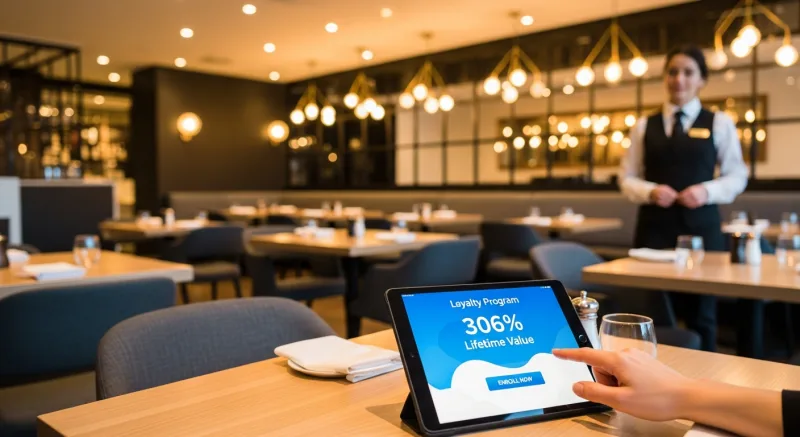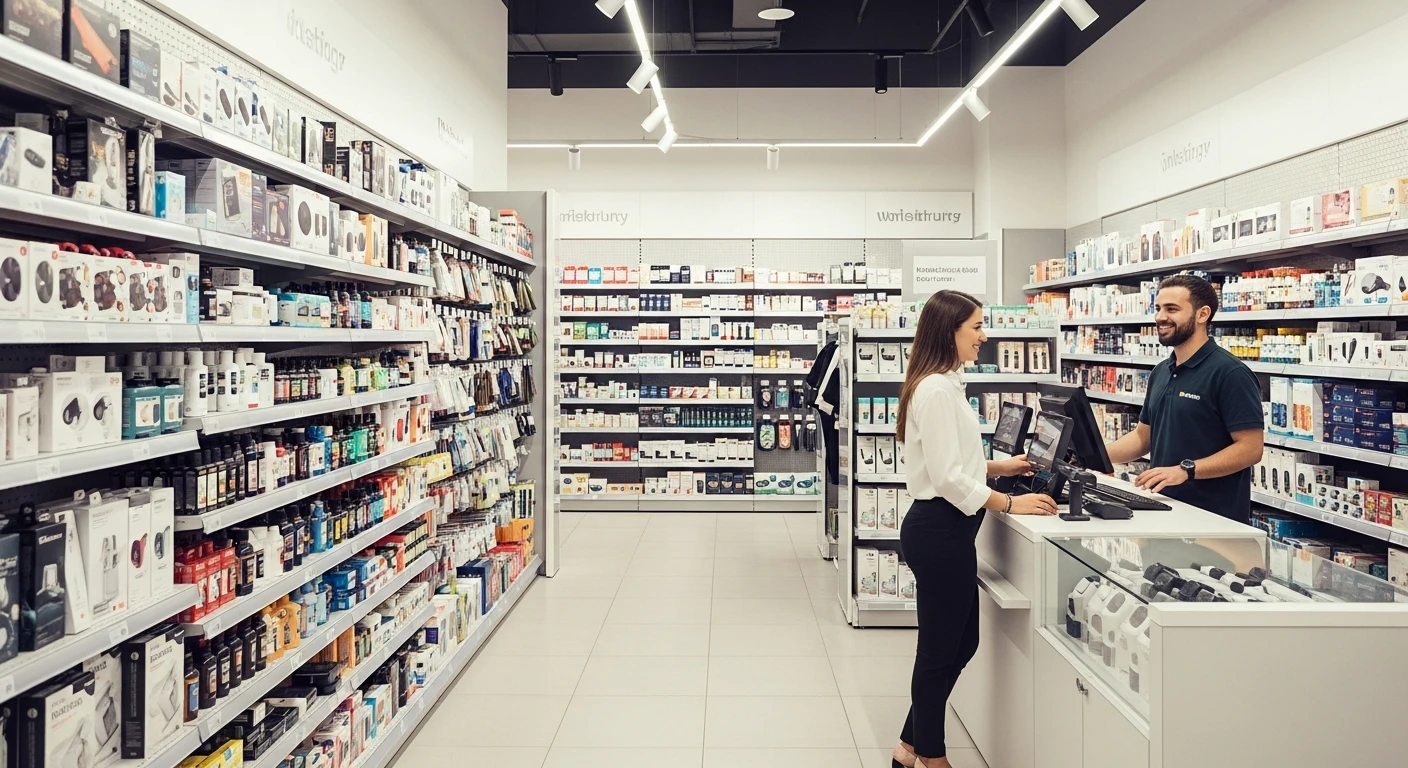
Independent retail faces an existential loyalty challenge. Amazon Prime has 200 million members. Target Circle has 100 million. Sephora Beauty Insider has 34 million. These massive loyalty programs create gravitational pull that independent retailers struggle to overcome. But here is what the data actually shows: customers who join a local retailer's loyalty program visit that retailer 35% more frequently and spend 20-25% more per visit than before enrollment. The key is having a program — any program — because the psychological commitment effect is powerful regardless of scale.
Baked Cravings demonstrates this at the smallest scale. Running a self-serve kiosk on a KwickOS PaxA35 terminal at Lego Land, they use the built-in loyalty system to capture tourist customers — people who would otherwise be one-and-done visitors. Phone number enrollment at the kiosk takes 5 seconds, and the follow-up marketing drives online reorders from customers who first discovered them at the theme park. That is retail loyalty at its simplest and most effective: capture, reward, re-engage.
Retail Loyalty Dynamics: Why They Differ From Food Service
Variable purchase frequency. Retail visits are far less predictable than restaurant visits. A customer might visit a boutique monthly, a hardware store quarterly, and a specialty food shop weekly. The loyalty program must accommodate all frequencies without making infrequent visitors feel excluded.
Higher average tickets, wider variance. Retail transactions range from $15 (convenience purchase) to $500+ (major purchase). Points systems need to reward both proportionally without making the small purchase feel pointless or the large purchase feel insufficiently rewarded.
Product discovery drives loyalty. Unlike restaurants (where customers reorder favorites), retail loyalty is driven by discovery — new arrivals, limited editions, seasonal collections. The loyalty program should incentivize browsing and trying new products, not just repeat purchasing of the same items.
Inventory integration matters. The loyalty system should know what a customer has purchased before, so it can recommend complementary products, alert them when related items arrive, and avoid offering rewards on items they would buy anyway.
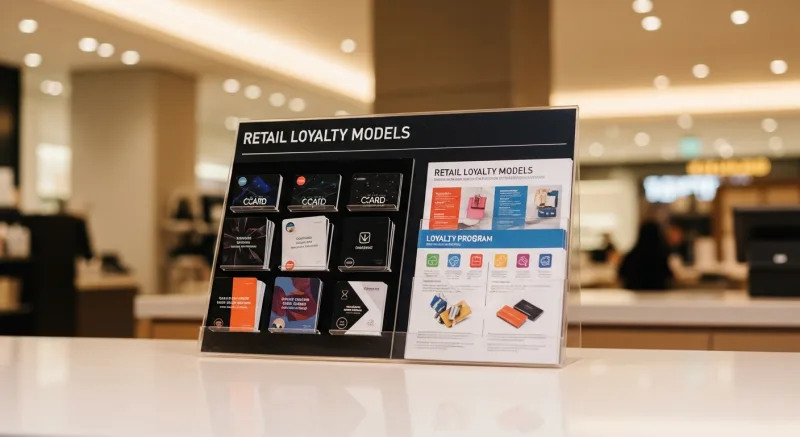
6 Retail Loyalty Models
1. Points-Per-Dollar With Category Bonuses
Award 10 points per dollar on all purchases. Add category multipliers to drive strategic goals:
- Full-price items: 1x points (baseline)
- New arrivals (first 2 weeks): 2x points (drives early adoption)
- Overstock/clearance: 0.5x points (still moves inventory, reduced reward cost)
- Store-brand/private-label: 1.5x points (drives highest-margin products)
Redemption schedule:
- 500 points = $5 off any purchase
- 1,000 points = $12 off (better per-point value, rewards higher engagement)
- 2,500 points = $35 off
- 5,000 points = $75 off or free product (up to $75 value)
2. Tiered VIP Membership
- Member: 10 points/dollar, birthday reward, early sale access (1 day before public)
- Silver ($500+/year): 12 points/dollar, free shipping on online orders, exclusive member-only products, birthday gift (curated product worth $15-25)
- Gold ($1,500+/year): 15 points/dollar, free expedited shipping, personal shopper service, birthday gift ($40-50 value), annual "Gold Member Only" shopping event with 25% off everything
The annual shopping event for Gold members is brilliant retention psychology. A Gold member who knows they get 25% off everything once per year will time their largest purchases for that event — and they will maintain their Gold status specifically to access it.
3. Early Access and Exclusivity
Retail loyalty members value early access more than discounts, according to consumer research. "You get to see and buy new arrivals 48 hours before the public" costs the retailer nothing but creates genuine excitement and a sense of insider status. For limited-edition or seasonal products, this early access can drive significant pre-launch revenue.
4. Birthday and Anniversary Rewards
Retail birthday rewards should be product-based, not discount-based. "Choose a free gift from our birthday collection" (curated items worth $10-20) feels more personal and generous than "$10 off your next purchase." The birthday reward email open rate in retail is 42%, with a 30% redemption rate. Each redemption visit generates an average of $45 in additional purchases.
5. Gift Cards as Growth Engine
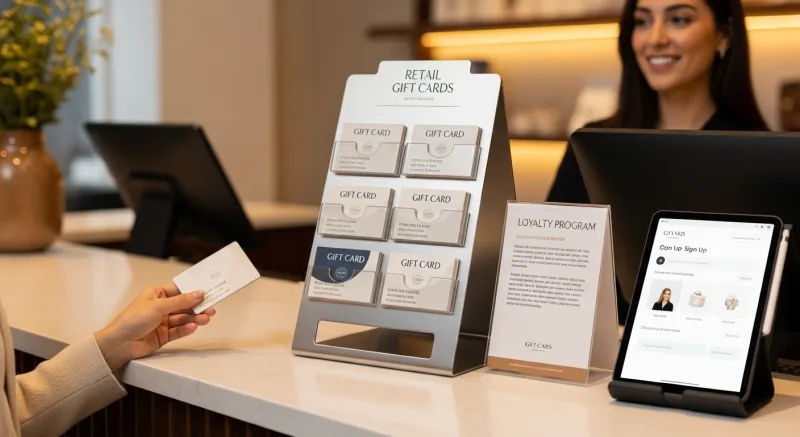
Retail gift cards are the most versatile loyalty tool. Customers who receive gift cards spend 20-40% beyond the card value. Gift cards also function as customer acquisition — every gift card given as a present brings a new potential customer through your door.
For independent retailers, gift cards solve the "what to give someone who has everything" problem. Stock physical cards in $25, $50, $100, and $200 denominations. Promote digital e-gift cards for online sales. Run a holiday promotion: "Buy $100 in gift cards, get a $15 bonus card" — this generates upfront cash and creates two store visits.
6. Referral Program
Retail referrals are powerful because they come with built-in product recommendations. "My friend told me about this store" is the highest-trust customer acquisition channel. Reward both parties: 500 bonus points for the referrer, $10 off the first purchase for the new customer. Track by unique codes or shareable links.
Software Comparison for Retail
| Platform | Loyalty Cost | Inventory Integration | E-commerce Sync |
|---|---|---|---|
| Shopify | $49-199/month (third-party apps) | Via plugins | Native |
| Square | $45/month | Basic | Square Online |
| Lightspeed | $69-199/month | Good | Yes |
| KwickOS | $0 (built-in) | Full native | KwickMenu integration |
KwickOS provides a unified retail platform: POS with inventory tracking, built-in loyalty with points/tiers/gift cards, CRM with purchase history, and integration with KwickMenu for online ordering. Retailers currently stitching together Shopify (e-commerce) + a loyalty plugin + a separate POS can consolidate into a single system that costs less and works seamlessly.
Retail Loyalty ROI
For a retail store doing $800,000/year in revenue:
- Loyalty enrollment: 35% of customers
- Visit frequency increase: 35%
- Spend increase per visit: 20%
- Incremental revenue from loyalty: $196,000
- Reward cost (5% of incremental): $9,800
- Net incremental revenue: $186,200
The 306% lifetime value increase comes from compounding: loyal customers visit more, spend more, and stay longer. A customer who shops with you for 5 years at $200/month ($12,000 lifetime) versus one who shops for 14 months at $100/month ($1,400 lifetime) represents the difference between a thriving business and one struggling to replace churned customers.
Implementation Timeline
Week 1: Configure points, tiers, and category multipliers. Set up gift card program. Train staff: "Would you like to join our rewards program? You'll earn points on every purchase and get early access to new arrivals."
Week 2: Soft launch with existing customers. Focus on enrolling your regulars — they are your foundation tier.
Week 3: Full launch. Window signage, checkout counter cards, social media. Launch birthday and referral programs.
Month 2: First "members-only" event: early access to a new collection or a members-only 20% off day. This creates urgency for non-members to enroll and gives existing members their first taste of exclusivity.
Month 3: Analyze data. Which customers are approaching tier upgrades? Send them targeted messages: "You're $80 away from Gold status — and Gold members get 25% off our annual shopping event." That $80 spend is almost guaranteed.
Build a 306% Lifetime Value Loyalty Program
KwickOS includes loyalty, inventory tracking, gift cards, CRM, and e-commerce integration — all in one platform at no extra monthly cost. See how retail businesses are competing with the big chains.
Book Your Free Demo