 Kelly Ho
Picture your busiest Saturday. A four-top sits down and starts asking, in Mandarin, whether the whole fish is fresh today and if the chef can do it Cantonese-style. Two tables over, an English-speaking couple wants to know what's in the mala sauce and whether it's gluten-free. In the kitchen, your head chef is calling out modifiers in Fujianese.
One server bridges all three of those conversations. When that person is on the floor, service is seamless. When they're not, orders get missed, guests feel unseen, and your average check quietly drops.
Here's the uncomfortable part: industry hiring data suggests bilingual front-of-house staff earn roughly 20–23% higher tips in restaurants serving a mixed-language clientele — not because they work harder, but because they build trust in two directions at once. A guest who is understood in their own language spends more, orders the specials, and comes back. That tip gap is a direct readout of revenue you're either capturing or leaving on the table.
But it gets harder: the candidates who can do this are the single most-competed-for hire in the entire Asian restaurant segment. Every restaurant on the block wants them, and the good ones rarely stay unemployed for more than a few days.
This guide breaks down exactly where to find bilingual staff, how to write requirements that are both legal and effective, how to train across a language gap, and — the part most owners overlook — how the right technology can shrink the size of the problem in the first place.
Why Bilingual Staff Are Worth More Than You're Paying Them
Let's put a number on it before we talk about sourcing, because the number is what justifies everything that follows.
A bilingual server does four things a monolingual one can't:
- They upsell across the language line. The specials board, the premium fish, the private banquet package — none of it sells if the guest can't understand the pitch. A server who explains your $88 Peking duck in a guest's native language closes it far more often.
- They defuse problems before they become reviews. Most one-star reviews from Asian restaurants trace back to a miscommunication, not bad food. A bilingual employee catches the confusion in real time.
- They connect the front and the back. When the server can relay a modifier to the kitchen accurately, ticket errors drop and comps drop with them.
- They sell your recurring-revenue programs. Gift cards, memberships, and loyalty points only get sold when staff can explain them comfortably. More on that below — it's bigger than it sounds.
Here's the thing: because those four contributions are hard to see on a schedule, owners chronically underpay for them and then act surprised when the person leaves for a competitor offering fifty cents more. If you treat bilingual capability as a premium skill — and pay for it like one — you'll win the retention battle before it starts.
Want to know what a single turnover event actually costs you in recruiting, training, and lost productivity? Run the math with our employee cost calculator before you decide a raise is "too expensive." It almost never is.
Where to Actually Find Bilingual Candidates
Here's the mistake nearly everyone makes: posting on Indeed and ZipRecruiter and then wondering why the applicants can't hold a conversation in Mandarin. Mainstream job boards optimize for the mainstream. Bilingual candidates live in community-specific channels, and that's where you have to go.
Community-Specific Digital Channels
This is the highest-yield source, full stop. The candidates are already there, they're already talking to each other, and a referral inside these networks carries real weight.
- WeChat groups and Moments — Local Chinese community WeChat groups (工作群) are where restaurant jobs actually circulate in Chinese-speaking communities. Get invited into a few, post respectfully, and let word travel.
- Xiaohongshu (RED) — Increasingly where younger bilingual candidates, especially recent graduates and students, look for part-time and hospitality work.
- Korean and Vietnamese community forums — Sites and Facebook groups organized around specific communities (e.g., regional Korean church networks) often have active job threads.
- KakaoTalk and Zalo groups — The Korean and Vietnamese equivalents of the WeChat strategy above.
In-Person and Community Outreach
Don't underestimate physical presence. The candidates who aren't scrolling job apps are often the most reliable long-term hires.
- Ethnic grocery store bulletin boards — A flyer at 99 Ranch, H Mart, or a local Vietnamese market reaches exactly the right people for the cost of a printout.
- Community centers and cultural associations — Many have job boards and newsletters, and they're delighted to help local businesses hire from within the community.
- Community college culinary and hospitality programs — Bilingual students who want restaurant experience are a renewable pipeline. Build a relationship with one program coordinator and you'll get referrals for years.
- Places of worship — Temples, churches, and mosques serving specific immigrant communities are trusted hubs. A quiet word with the right person opens doors no ad can.
The Channel That Beats All Others: Referrals
Your existing bilingual staff know other bilingual workers. That's not a coincidence — these communities are tight, and talent clusters. A referral bonus of $200–$500 paid after the new hire completes 90 days is the cheapest, highest-quality recruiting you will ever do. The referrer has already vetted the candidate's character and language ability for you, and they have social skin in the game to help them succeed.
Tiger Sugar, the international dessert brand running kiosks across two U.S. locations, staffs almost entirely through community referral networks — and their minimal-step, personalized service model depends on staff who can read customers across languages instantly.
How to Write Language Requirements That Are Legal AND Effective
This is where good intentions get owners into legal trouble, so read carefully. You can absolutely hire for language skills — but how you write and apply the requirement is what keeps you on the right side of the law.
Under Title VII, language requirements are lawful when they're a genuine business necessity tied to actual job duties. They become illegal when they're used as a proxy for national origin. The difference is everything.
| Defensible (tie to the job) | Risky (proxy for origin) |
|---|---|
| "Must communicate order modifiers to a Mandarin-speaking kitchen team." | "Must be Chinese." |
| "Conversational Cantonese required to serve our primarily Cantonese-speaking guests." | "Prefer someone from Hong Kong." |
| "Bilingual English/Vietnamese to handle phone reservations from our community." | "No accent when speaking English." (almost always unlawful) |
Three rules keep you safe:
- Tie every requirement to a specific duty. If you can't name the task that needs the language, you can't require the language.
- Apply it consistently. If Mandarin is required for servers, it's required for all servers — not just the ones you're inclined to hire.
- Never police accents or "English-only" on breaks. Blanket English-only rules and accent complaints are among the fastest ways to draw a discrimination claim.
Write the job post around the work — "You'll take orders from a Mandarin-speaking kitchen and serve a mix of English- and Chinese-speaking guests" — and you'll attract exactly the right candidates while staying firmly on solid legal ground.
Training Across a Language Gap
You've hired a great candidate whose English is still improving. Now what? The old answer was "sink or swim," and it cost restaurants their best hires in the first two weeks. Here's the better way.
Dual-Language Everything
Your training materials — the menu guide, the allergen chart, the opening and closing checklists — should exist in both languages. It's a one-time translation cost that pays off with every new hire. A server who can study the menu in their own language walks the floor confident instead of guessing.
The Two-Week Mentor Pairing
Pair every new bilingual hire with an experienced bilingual mentor for their first two weeks. The mentor handles the nuance no manual can — how your regulars like things, how to read a table, how to pace a banquet. This is exactly how Shogun Japanese Hibachi gets new operators fully proficient in under five minutes on the technical side, and comfortable on the floor shortly after: the system is simple, and a person who already knows it walks the new hire through it.
Let the Technology Carry the Language Load
And that's not all: the single biggest accelerator is a point-of-sale system that speaks your employee's language. When the POS interface, the kitchen display, and the order screens all render in English, Chinese, or Spanish per user, a new server doesn't have to master English terminology before they can ring in an order. The screen carries the language load that the person otherwise would.
This is where KwickOS changes the hiring math entirely. Because English, Chinese, and Spanish are built into the platform — not bolted on — you can hire for hospitality, warmth, and reliability instead of screening out every candidate whose English isn't yet fluent. The employee logs in, the checkout screen appears in their language, and they're productive on day one. Fingerprint 1:N sign-in means they clock in and access their register with a touch, no memorized codes in a second language required.
T. Jin China Diner runs 15 stores on 75 terminals across a workforce that spans several dialects and languages. The reason a new hire in one location can be trained the same way as a new hire in another is that the interface — not the individual's English level — is what standardizes the work.
The Revenue Multiplier Everyone Forgets: Checkout, Gift Cards, and Loyalty
Here's the connection almost no one makes when they think about bilingual staffing: your recurring-revenue programs live or die at the moment of checkout, and checkout is a language event.
Think about what happens at the register. A guest is paying. In those fifteen seconds, a well-equipped server can:
- Sell a gift card or e-gift card — "Buy $100 in gift cards, get a $20 bonus card." That pitch only works if the guest understands it. A bilingual server explaining it in the guest's language sells dramatically more, and every gift card sold is cash in your pocket today for a meal served later — plus the meaningful share of balances that are never redeemed at all, which flows straight to profit.
- Enroll the guest in loyalty — When the KwickOS checkout screen prompts for loyalty enrollment and shows the points balance in the customer's own language, the server closes it naturally instead of skipping it because explaining it in English felt awkward.
- Upgrade them to a membership — "Members get 10% off every visit and a free dessert on your birthday." A recurring-revenue program that turns a one-time diner into a monthly regular — but only if it's explained in a language that lands.
This is the hidden compounding effect of bilingual staff plus a multilingual POS: every transaction becomes a chance to convert a walk-in into a member, a one-timer into a points-earning regular, and a casual guest into someone holding a prepaid gift card balance. Tiger Sugar's electronic receipts tie directly into loyalty at the kiosk for exactly this reason — the personalization and the loyalty hook happen in the same effortless step.
A monolingual operation skips these upsells constantly, not out of laziness but because the conversation is too hard to have. A bilingual team on a multilingual system has the conversation every time — and that's tens of thousands of dollars a year in gift card float and loyalty-driven repeat visits.
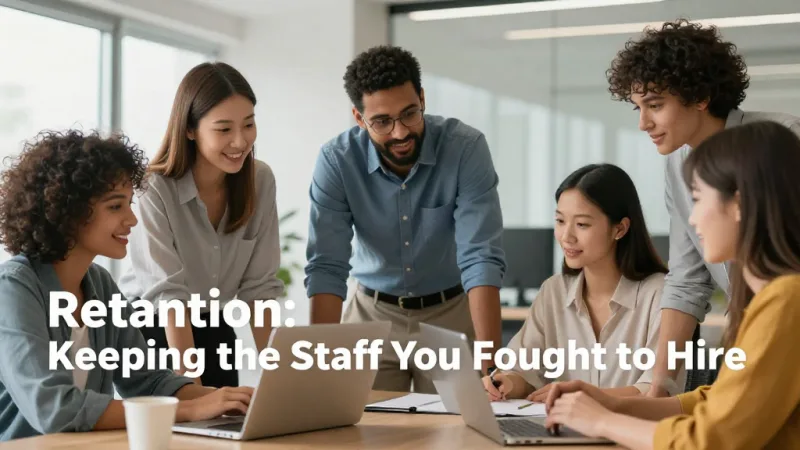
Retention: Keeping the Staff You Fought to Hire
Finding bilingual staff is half the battle. Keeping them is the war, because everyone else wants them too. A few moves that punch above their weight:
- Pay the premium openly. Recognize bilingual capability as a paid skill, not an unspoken expectation. Even a modest language differential signals that you see the value they add.
- Create a growth path. Bilingual staff often become your best shift leads and trainers precisely because they can bridge the whole team. Show them the ladder.
- Reduce friction with good tools. Nothing burns out a great employee faster than fighting clunky systems in a second language. A POS that works in their language, a scheduling system that's fair and predictable, and fingerprint clock-in that just works all say "we respect your time."
- Build the community inside your walls. The same tight networks that helped you hire will help you retain — when your restaurant is known in the community as a good place to work, referrals and loyalty both compound.
Plan your labor around retention, not just coverage. Use a scheduling template that gives staff predictable shifts, and keep an eye on your labor cost percentage so you can afford the language premium without blowing your margins. The restaurants that keep their bilingual teams aren't the ones that pay the most in raw wages — they're the ones that make the job sustainable.
Hire for Hospitality, Not for Perfect English
KwickOS is built multilingual from the ground up — English, Chinese, and Spanish on the POS, kitchen display, and online ordering, with fingerprint sign-in and built-in gift card + loyalty tools. Widen your hiring pool, shorten training, and turn every bilingual interaction into recurring revenue.
Explore KwickOS for Restaurants KwickOS vs Toast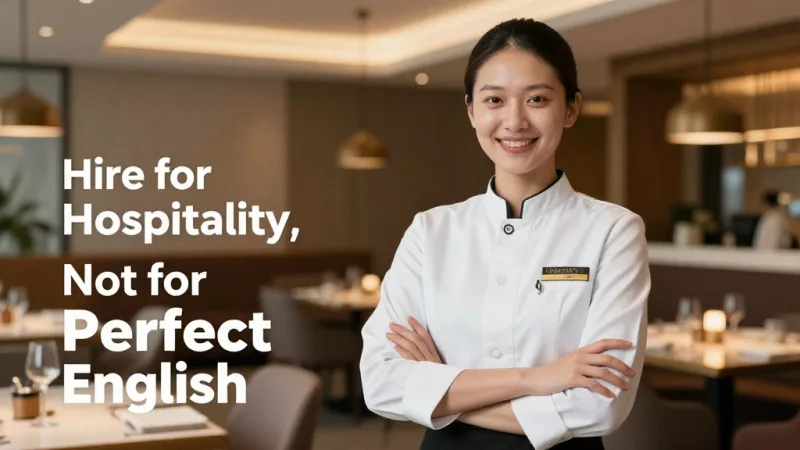
Helping restaurant owners solve staffing and language challenges is exactly what our resellers do every day. Learn about the KwickOS partner program.
Frequently Asked Questions
Is it legal to require bilingual skills when hiring restaurant staff?
Yes, if the language is a genuine business necessity for the role. Requiring Mandarin or Cantonese for a position that communicates with kitchen staff, vendors, or a largely Chinese-speaking clientele is generally defensible. The key is to tie the requirement to actual job duties, apply it consistently, and never use it as a proxy for national origin — which is what turns a legitimate qualification into illegal discrimination under Title VII.
Where do Asian restaurants find bilingual employees?
The best channels are community-specific: WeChat and Xiaohongshu groups, Korean and Vietnamese community center job boards, ethnic grocery store bulletin boards, culinary programs at community colleges, and employee referral bonuses. Mainstream boards like Indeed rarely surface fluent bilingual candidates, so the highest-yield strategy is going directly to where your target community already gathers.
How do you train staff who speak different languages?
Use dual-language training materials, pair new hires with a bilingual mentor for their first two weeks, and lean on a POS system that displays the interface in the employee's own language. When KwickOS shows the checkout screen in English, Chinese, or Spanish per user, a new server can be productive on day one even while their spoken English is still improving — the technology carries the language load the person otherwise would.
Does a multilingual POS really reduce hiring pressure?
Significantly. When your POS, kitchen display, and online ordering all operate in multiple languages, you can hire for hospitality and reliability instead of screening out every candidate whose English isn't perfect. That widens your applicant pool dramatically, shortens training time, and reduces order errors — which is why multi-language support built into the platform is one of the most underrated hiring advantages an Asian restaurant can have.
How do gift cards and loyalty programs fit into bilingual service?
A bilingual server who can explain your e-gift card and loyalty program in a guest's native language sells far more of both. When the POS prompts for loyalty enrollment and gift card offers in the customer's language at checkout, staff close the upsell naturally instead of skipping it because it's awkward to explain. That turns every bilingual interaction into recurring revenue through points, memberships, and prepaid gift card balances.