 Kelly Ho
A 16-ounce prime ribeye costs you about $18 from your distributor. You sell it for $62. That is a 244% markup — and your guest does not blink.
The steakhouse down the street buys the same cut from the same distributor. They charge $48. Their dining room is half-empty on Saturdays.
The difference is not the steak. It never was.
The difference is 14 experience details that your guest cannot articulate but absolutely feels. When those details are present, $60 feels like a deal. When they are missing, $48 feels like a ripoff.
Here's the thing: most steakhouse owners think "experience" means expensive renovations, celebrity chefs, or Wagyu on the menu. It does not. The 14 details in this guide cost almost nothing to implement — but they change how guests perceive every dollar they spend.
Let's break down what separates a $60 steakhouse that is fully booked from a $48 steakhouse begging for reservations.
Detail #1: The 30-Second Greeting Window
Industry research suggests that a guest who waits more than 60 seconds for acknowledgment rates the entire dining experience 22% lower — regardless of how good the food is. In a steakhouse where the average check is $85-$140 per person, that first impression gap translates directly to whether they come back.
The fix is absurdly simple. Every guest gets eye contact, a smile, and a verbal greeting within 30 seconds of walking through the door. Not seated — just acknowledged. "Welcome to [name], we'll have you seated in just a moment" costs nothing and prevents the most common complaint in fine dining: feeling invisible.
But it gets worse: guests who feel ignored at the door leave negative reviews at 3x the rate of guests who received poor food. Your host stand is your highest-ROI employee station. Staff it accordingly.
Detail #2: Temperature Guarantee (And the Script That Goes With It)
Every steakhouse promises a perfect cook. Very few make it a named policy. The ones that do convert that promise into repeat business.
Here is the script: "We guarantee your steak exactly as you ordered it. If anything isn't right, we'll fire a new one immediately — no questions, no charge." Your servers should say this when taking the steak order, not after a complaint happens.
The psychology here is loss aversion in reverse. The guest is about to spend $60 on a steak. Their biggest fear is that it arrives overcooked and the server argues about it. Eliminating that fear before it forms makes the $60 feel safe.
And that's not all: with a KDS (kitchen display system) that shows temperature modifiers in color-coded text — red for rare, pink for medium-rare, gray for well-done — your kitchen reduces refire rates. Shogun Japanese Hibachi implemented custom KDS station displays with KwickOS and got new cooks proficient in under 5 minutes. The same principle applies to a steakhouse grill station: clear visual indicators mean fewer mistakes.
Detail #3: The Steak Knife Moment
This is one of the cheapest upgrades with the highest perceived value. When the steak arrives, it should be accompanied by a branded or high-quality steak knife — not the same knife used for the appetizer course.
The knife swap signals "something important just arrived." It is a pattern interrupt that resets your guest's attention to the plate in front of them. Industry data shows that restaurants using dedicated steak knives score 15-20% higher on "attention to detail" in guest surveys.
Cost: $8-$15 per knife, used for years. Impact: immeasurable.
Detail #4: Hot Plates, Always
A $60 steak on a cold plate loses temperature in under 3 minutes. The guest's last few bites are lukewarm. They do not consciously think "the plate was cold." They think "the steak was just okay."
Plate warmers cost $200-$400. They protect every $60 plate you send out. There is no rational argument against this investment, yet according to restaurant industry data, fewer than half of independent steakhouses use them consistently.
Here's the thing: your POS system can help enforce this. Add a "plate warmer check" prompt to the KDS expeditor screen. When the ticket fires for the grill station, the expo sees a reminder. It takes 2 seconds to configure and prevents a $60 disappointment.
Detail #5: Tableside Presentation
Do not drop and walk. The steak course deserves a 10-second presentation: identify the cut, confirm the temperature, mention any finishing (butter, salt crust, au poivre), and ask if they would like fresh pepper or steak sauce on the side.
This micro-interaction does three things. It confirms accuracy (preventing refire waste). It educates the guest on what makes their steak special (justifying the price). And it creates a moment — a memory anchor that the guest associates with your restaurant specifically.
Crafty Crab Seafood uses KwickOS across 19 locations with 152 terminals and found that standardizing tableside presentation scripts increased customer satisfaction scores measurably. Steakhouses running structured checkout and service flows see the same pattern: consistency in the small details drives repeat visits.
Detail #6: Lighting That Shifts With the Evening
Steakhouse lighting should be 30% dimmer than casual dining. But here is the detail most owners miss: lighting should shift during the evening. Slightly brighter at 5:30 PM when early diners arrive. Gradually warmer and dimmer by 8:00 PM when the prime seating fills. This creates an unconscious sense of exclusivity — the restaurant literally transforms as the evening progresses.
Smart lighting systems (Lutron, Philips Hue commercial) can automate this for $500-$1,500 per dining room. Even manual dimmer switches handled by the manager on a schedule achieve 80% of the effect. The key is intention: your lighting should feel deliberate, not accidental.
Detail #7: The Wine List as a Confidence Builder
Most steakhouse wine lists intimidate guests. A 200-bottle list with no guidance makes the average diner anxious — and anxious diners order by price (second cheapest) instead of pairing quality.
Fix this with three changes. First, add a "Steakhouse Favorites" section with 8-10 bottles that pair well with every cut. Second, include a one-line food pairing note for each: "Bold with ribeye. Smooth with filet." Third, train servers to recommend one specific wine with each steak order, not ask "would you like to see the wine list?"
And that's not all: the upsell math is significant. A guest who orders a $12 glass of wine at your suggestion instead of a $7 iced tea just added $5 to your check — and your wine margin is 70-80%. Across 100 covers per night, that is $500 in additional daily revenue from a two-sentence script.
Detail #8: The Sides Strategy
Steakhouse sides are the most underutilized revenue lever in the restaurant. A $14 lobster mac and cheese costs you about $3.50 to make. A $12 truffle creamed spinach costs $1.80. Yet many steakhouses treat sides as an afterthought — listed on the back of the menu in small type.
Move your sides to a dedicated section. Give each one a name (not "creamed spinach" but "Slow-Roasted Garlic Cream Spinach"). Train servers to recommend two sides per table as a shared experience: "Most of our guests love sharing the Lobster Mac and the Truffle Spinach — they're made in-house and they're generous portions."
This single change can add $18-$28 to a table of four. Over a year, that is $150,000+ in additional revenue for a steakhouse doing 200 covers per night.
Detail #9: The Birthday and Anniversary Protocol
Every steakhouse celebrates birthdays. But most do it badly — a sad candle in a generic dessert, an awkward song, and a check that arrives too quickly afterward.
Here is a protocol that creates lifelong customers. When a reservation is made for a birthday or anniversary, flag it in your POS system. When the party arrives, the manager greets them by name: "Happy birthday, Mr. Rodriguez — we have your table ready." A complimentary amuse-bouche arrives before the first course with a handwritten card. At dessert, a composed plate — not a thrown-together slice — arrives with a candle and a photo offer.
The cost is about $8-$12 per celebration. The return is a guest who tells 15 people about the experience and books their next celebration at your restaurant. Your POS CRM tracks these dates automatically — KwickOS stores guest profiles with birthday and anniversary fields so you never miss the opportunity.
Detail #10: The Check Presentation (Not an Afterthought)
The check is the last physical interaction your guest has with your restaurant. It should not be a crumpled paper receipt dropped face-down on a wet table.
Use a check presenter — leather, branded, clean. Include a mint or chocolate. Present the check only when requested or after a natural pause following dessert. Process payment tableside if possible, so the guest never loses sight of their card.
But it gets worse: many steakhouses lose the entire evening's goodwill at the POS terminal. A 45-second card processing delay, a clunky tip screen, a server fumbling with a tablet — these friction points undo hours of careful service. Your checkout flow should be as polished as your steak presentation.
KwickOS processes transactions with 1ms local latency because it runs a hybrid local+cloud architecture. That means your payment goes through instantly — no spinning wheels, no awkward waiting. And because KwickOS is processor-agnostic, you are not paying Toast's 2.99% + $0.15 on every $140 check. On a $40,000/month steakhouse, that processor freedom saves $3,000-$8,000 per year.
Detail #11: Gift Cards as a Revenue Engine
Steakhouses are natural gift card destinations. Father's Day, anniversaries, corporate client appreciation, holiday gifts — a steakhouse gift card says "I value you" in a way that a casual dining card simply cannot.
Here is what the data shows: the average steakhouse gift card purchase is $125, compared to $35 at casual dining. And 72% of gift card recipients bring at least one additional paying guest when they redeem. That $125 gift card typically generates $180-$220 in total table revenue.
But most steakhouses only sell physical gift cards at the host stand. That is leaving money on the table — literally. E-gift cards allow last-minute purchases (40% of gift cards are bought within 48 hours of the occasion), corporate bulk orders, and social media gifting.
Run a "Buy $100, Get $25 Bonus" promotion in November and December. According to restaurant industry data, these promotions generate 30-40% more gift card revenue than standard pricing. The bonus cards typically redeem in January and February — your slowest months — bringing traffic when you need it most.
KwickOS handles both physical and e-gift cards with real-time balance tracking across all terminals. Your guest can buy an e-gift card on their phone at 11 PM on Father's Day eve and the recipient can use it at lunch the next day.
Detail #12: The Loyalty Program That Fits Fine Dining
Here is where most steakhouse owners push back: "Loyalty programs feel cheap. My guests don't want to carry a punch card." They are right — about the punch card. Wrong about the loyalty program.
Fine dining loyalty works differently. It is invisible, automatic, and rewarded with experiences rather than discounts. Here is a tiered structure that works:
- Bronze (0-$499 annual spend): Birthday dessert, priority email for special events
- Silver ($500-$1,499): Complimentary appetizer quarterly, early access to holiday reservations
- Gold ($1,500+): Chef's table invitation annually, manager greeting by name, priority seating on peak nights
The key is that guests never "redeem points" at the table. The rewards appear automatically — the server simply says "As one of our Gold members, we have a complimentary appetizer for your table tonight." The guest feels recognized, not transactional.
Your POS tracks all of this silently. When the guest's credit card is swiped, their profile loads, their tier is visible to the server, and any pending rewards trigger automatically. T. Jin China Diner manages loyalty across 15 stores and 75 terminals with remote monitoring — the same infrastructure scales whether you have one steakhouse or ten.
Detail #13: Music as an Experience Layer
Background music in a steakhouse should be curated, not algorithmic. A Spotify playlist on shuffle is the audio equivalent of fluorescent lighting — it says "we didn't think about this."
Invest in a curated music service (Rockbot, Soundtrack Your Brand, or a local DJ who builds monthly playlists). The tempo should match your desired pace: slightly upbeat during early seating (to turn tables), slower and jazzier during prime time (to encourage wine orders and dessert). Volume should allow conversation without raising voices — typically 65-70 decibels.
And that's not all: your digital signage system can display wine features, seasonal specials, and event promotions on screens near the bar and waiting area, reinforcing the premium atmosphere while guests wait for their table.
Detail #14: The Follow-Up That Brings Them Back
The experience does not end when the guest leaves. A follow-up within 24-48 hours — via email or text — completes the loop. "Thank you for celebrating with us last night. We hope every bite was worth it. Your next visit, enjoy a complimentary glass of champagne on us."
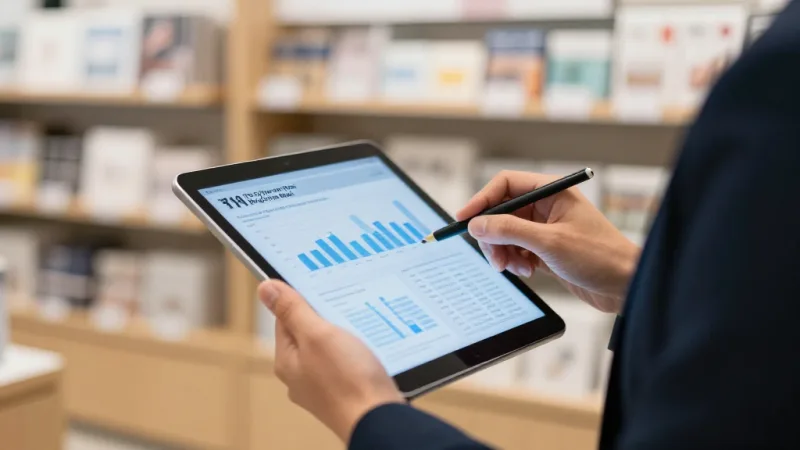
This costs nearly nothing (the champagne runs $3-$5 per glass at your cost) but creates a reason to return. More importantly, it signals that you noticed them as an individual, not just a check number.
Your POS CRM automates this entirely. When a guest's check closes, the system can trigger a personalized follow-up based on their visit history, spending tier, and occasion. No manual effort, no forgetting, no inconsistency.
Putting It All Together: The $60 Steak Math
Let's add up the cost of all 14 details:
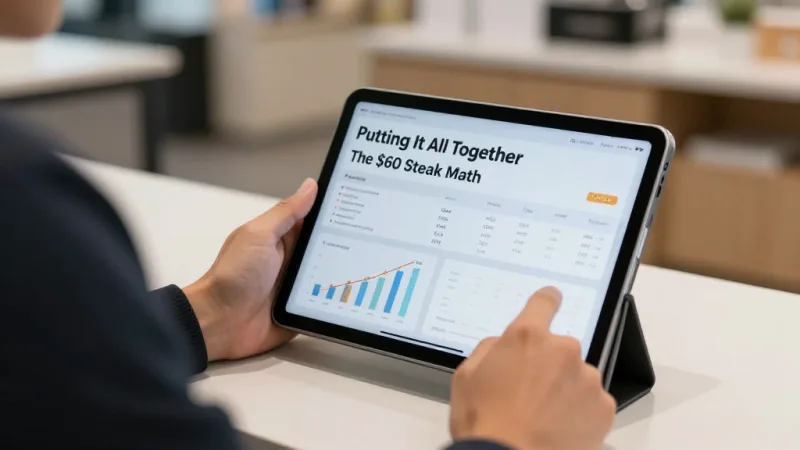
| Detail | Implementation Cost | Revenue Impact (Annual) |
|---|---|---|
| 30-second greeting protocol | $0 (training only) | Reduces negative reviews |
| Temperature guarantee script | $0 (training only) | Increases repeat visits |
| Branded steak knives | $400-$800 one-time | Higher perceived value |
| Plate warmers | $200-$400 one-time | Better last-bite experience |
| Tableside presentation script | $0 (training only) | Fewer refires, higher satisfaction |
| Lighting automation | $500-$1,500 one-time | Premium ambiance |
| Wine list restructure | $0-$200 (printing) | +$150,000/year in wine revenue |
| Sides strategy | $0 (menu restructure) | +$150,000/year in sides revenue |
| Birthday/anniversary protocol | $8-$12/celebration | Lifetime customer value |
| Check presentation upgrade | $300-$500 one-time | Positive last impression |
| Gift card program (physical + e-gift) | $0 with KwickOS | +$30,000-$80,000/year |
| Loyalty program (tiered) | $0 with KwickOS | +15-25% repeat visit rate |
| Curated music service | $30-$50/month | Longer dwell time, more wine orders |
| Automated follow-up | $0 with POS CRM | 12-18% redemption driving returns |
Total upfront investment: approximately $1,400-$3,400. Annual revenue impact: conservatively $200,000+ in additional revenue and dramatically higher guest retention.
That is the math behind a $60 steak. The steak itself is $18. The experience around it is worth 3x the price — and costs a fraction of what most owners think.
The Technology That Makes It Consistent
Here is the uncomfortable truth: any restaurant can deliver a flawless experience on a good night. The difference between a great steakhouse and a legendary one is delivering that experience every night, at every table, with every server.
That requires systems. Your POS is not just a cash register — it is the backbone of your guest experience. Coursing ensures appetizers fire before steaks. KDS color-coding prevents temperature mistakes. CRM stores guest preferences so the server knows Mr. Chen always wants his ribeye medium-rare with extra au jus. Loyalty tracking triggers rewards without the guest asking. Gift card management handles a $500 corporate order as smoothly as a single $100 purchase.
KwickOS runs all of this on a single platform. No bolt-on loyalty app. No separate gift card vendor. No third-party CRM that does not talk to your POS. One system, all modules, every detail tracked.
And because KwickOS uses a hybrid local+cloud architecture, your steakhouse never goes dark. If your internet drops during Saturday prime time, every terminal keeps processing orders, running loyalty, and accepting gift cards on the local network. When connectivity returns, everything syncs automatically. That 1ms local response time means your servers never wait on a spinning screen while a guest watches.
Your staff authenticates with fingerprint — 1:N fingerprint matching means no PINs to forget, no cards to lose, and no buddy-punching on the time clock. In a steakhouse where labor is your second-highest cost, accurate time tracking across every shift matters.
Make Every Detail Count
KwickOS gives your steakhouse the POS, loyalty, gift cards, KDS, and CRM you need — in one platform. See how 5,000+ businesses deliver consistent experiences.
Book a Free Demo