 Tom Jin
Stand outside any busy bubble tea or drink shop during a Saturday afternoon. Count how many people glance at the line, check their phone, and walk away.
Now count the ones who stay, order, and then spend the next 8 minutes shifting their weight from foot to foot, watching other customers get served, wondering if their drink was forgotten.
That wait is costing you more than you think. According to restaurant industry data, every additional minute of wait time beyond 4 minutes reduces customer return rate by approximately 7%. An 8-minute average wait means you're losing roughly 28% of potential repeat visits compared to a shop that serves in 3 minutes.
Here's the thing: most drink shop owners blame slow service on not having enough staff. They hire another person for peak hours. Labor cost goes up. Speed barely improves. So they hire another. And another.
The problem was never headcount. The problem is workflow.
After spending 20 years in the restaurant industry and helping build the systems that now power 5,000+ businesses across 50 states, I can tell you that speed of service is a systems problem, not a people problem. The shops that serve drinks in 3 minutes aren't working harder. They're working through a fundamentally different workflow — one that eliminates the bottlenecks most owners don't even realize exist.
The 5 Bottlenecks Killing Your Speed
Before we fix anything, let's diagnose what's actually slowing you down. I've walked through hundreds of drink shop operations, and the same five bottlenecks appear in nearly every one.
Bottleneck 1: The POS line. A single register with a single cashier. During peak hours, customers wait 2-3 minutes just to place an order — before any drink making begins. That's 2-3 minutes of pure waste that produces nothing.
Bottleneck 2: The ticket handoff. Cashier takes the order, prints a ticket, walks it to the drink station, or shouts it across the counter. The drink maker reads the ticket, interprets the customizations, and then starts. In a bubble tea shop with 200+ possible combinations, this interpretation step alone adds 15-30 seconds per drink.
Bottleneck 3: The single-station problem. One prep area. One blender. One sealing machine. Every drink, regardless of complexity, flows through the same physical space in the same sequence. A simple iced tea and a complex blended drink with 5 toppings compete for the same hands and the same equipment.
But it gets worse:
Bottleneck 4: The ingredient hunt. Tapioca pearls need to be cooked fresh every 3-4 hours. Syrups run out mid-rush. Fruit needs to be cut. When prep runs out during peak hours, the entire line stops while someone restocks — and every order behind that one stalls.
Bottleneck 5: The pickup chaos. Finished drinks sit on a counter. Customers hover. Names get called out. Wrong customers grab wrong drinks. Remakes eat time. The pickup zone becomes a traffic jam that backs up into the ordering area.
Sound familiar? Here's the good news: every one of these bottlenecks has a specific, proven fix.
Fix 1: Kill the Register Line with Multi-Channel Ordering
The fastest way to reduce wait time is to eliminate the time customers spend waiting to order. If 40% of your orders are placed before customers even reach the counter, your counter staff can focus entirely on the remaining 60% — and your drink makers start working on pre-orders the moment they come in.
Three channels that eliminate the register bottleneck:
- Mobile pre-ordering. Customers order from their phone while walking to your shop or sitting at a table. The order routes directly to your KDS. When they arrive, the drink is already being made — or already done. KwickOS integrates with KwickMenu for first-party online ordering at a flat fee, not the 25-30% commission that third-party apps charge.
- Self-ordering kiosks. Tiger Sugar runs 2 self-ordering kiosks across their locations. Customers customize their drinks with minimal steps — sweetness, ice level, toppings — and the order fires directly to the drink station. No cashier needed. No verbal miscommunication. Tiger Sugar designed their kiosk flow to get customers through in under 60 seconds, even with full customization.
- QR code table ordering. For shops with seating, a QR code at each table lets customers browse the menu, customize, pay, and submit — all without standing in line. The drink appears at a pickup counter or gets delivered to their table.
And that's not all: when your POS system routes these orders intelligently — separating mobile orders from walk-in orders on the kitchen display — your drink makers never have to guess which channel an order came from. They just make what's on their screen.
Rockin' Rolls Sushi Express deployed 49 iPad self-ordering stations across 3 locations and saw immediate throughput increases. The same principle applies to drink shops: remove the human bottleneck at the register, and the entire operation speeds up.
Fix 2: Route Orders to Stations, Not People
This is where most drink shops fail hardest. They have one prep area. One display. One person reading all tickets and making all drinks in sequence.
High-volume drink shops operate differently. They split the operation into stations, and the POS routes each order component to the correct station automatically.
Here's what a 3-station setup looks like:
| Station | What It Handles | Equipment | KDS Shows |
|---|---|---|---|
| Station A: Base | Tea brewing, milk mixing, coffee shots | Brewers, espresso, milk dispensers | Drink type, size, sugar, ice |
| Station B: Blend/Shake | Blended drinks, shaken tea, smoothies | Blenders, shaker, ice machine | Recipe, blend time, fruit additions |
| Station C: Top/Seal | Toppings, sealing, final assembly | Sealing machine, topping containers | Toppings list, seal type, pickup name |
When a customer orders a taro milk tea with boba and coconut jelly, here's what happens:
- The POS sends "taro milk tea, 50% sugar, less ice" to Station A's KDS screen.
- Simultaneously, "boba + coconut jelly" appears on Station C's screen.
- Station A makes the base. Station C pre-portions the toppings into a cup.
- The base arrives at Station C. Toppings get added. Cup gets sealed. Done.
Two stations working in parallel instead of one person working sequentially. That alone cuts 30-40% off per-drink time.
Shogun Japanese Hibachi uses a similar principle — customized station displays that show only what each person needs to see. Their staff achieved proficiency in under 5 minutes because each screen is focused and uncluttered. The same clarity works for drink stations.
The key is a POS with intelligent order routing. KwickOS lets you define routing rules per menu item: which station sees which order components, in what sequence, with what level of detail. No manual ticket sorting. No shouting across the counter.
Fix 3: Prep Batching — The 80/20 Rule for Drink Shops
Here's a number that should change how you think about prep: in most drink shops, 80% of orders use the same 6-8 base ingredients. Black tea. Green tea. Oolong. Milk. Tapioca pearls. Simple syrup. Fruit purees.
If you're brewing tea to order, cooking boba to order, or cutting fruit to order during peak hours, you are building a car from raw steel when you should be assembling pre-manufactured parts.
The prep batching system:
- Tea bases: Brew in 5-liter batches every 2 hours. Keep at serving temperature in insulated dispensers. A single brew batch serves 40-50 drinks. Brewing per-order takes 3-4 minutes; pouring from a dispenser takes 5 seconds.
- Tapioca pearls: Cook on a timed schedule — every 3.5 hours during service (they start degrading at 4 hours). Use your POS sales data to predict how many batches you need per shift. A shop selling 200 drinks/day with 60% boba orders needs roughly 120 servings, which is 3-4 batches.
- Toppings: Pre-portion into small containers during the morning prep shift. Pudding, jelly, red bean, coconut — all measured and ready to dump into cups without scooping during rush.
- Syrups and purees: Batch-blend fruit purees daily. Pre-mix signature syrups. Label everything with prep time so nothing gets served past its quality window.
The result? Per-drink active preparation time drops from 3-4 minutes to 60-90 seconds for standard drinks. Your staff is assembling, not cooking.
Now here's the pattern interrupt you need to hear: prep batching only works if you can predict demand. And you can only predict demand if your POS tracks it.
KwickOS gives you hourly sales breakdowns by menu item. You know that last Saturday between 2 PM and 4 PM, you sold 47 taro milk teas, 31 brown sugar bobas, and 28 fruit teas. That data tells you exactly how much tea to brew, how much boba to cook, and how much taro to mix — before the rush starts.
Fix 4: The Dedicated Pickup Zone
You've seen the chaos: finished drinks on a counter, customers crowding, names being called, wrong drinks grabbed. This is not a minor annoyance. Remakes from pickup errors cost an average drink shop 3-5% of daily revenue, according to industry data — and each remake takes a drink maker off new orders for 2-3 minutes.
The fix is physical and digital:
- A separate pickup counter — physically distinct from the ordering area. Customers who have already ordered move to this area and stay out of the ordering line's path.
- Order number display — a screen showing which order numbers are ready. No name-calling. No confusion. The customer sees their number, grabs their drink from the numbered slot, and leaves.
- Drink labeling — every cup gets a label with the customer name, order number, and drink details. Even if two people ordered the same drink, the label prevents mix-ups.
KwickOS prints cup labels directly from the order system — customer name, drink specs, order number — so the person at the sealing station slaps the label on and places the cup in the numbered pickup slot. Zero verbal communication needed.
This also integrates with your loyalty and membership program. When a loyalty member places an order, their name and points status appear on the label and the pickup screen. That small touch — seeing their name and tier displayed — reinforces the membership experience. Members who feel recognized visit 2-3x more frequently than anonymous customers.
Fix 5: Gift Cards and Mobile Payment Speed the Checkout
Here's a bottleneck most owners overlook: payment time. The average cash transaction takes 25-35 seconds. Card dipping takes 8-12 seconds. But a prepaid gift card or stored-value account takes 2-3 seconds — tap and done.
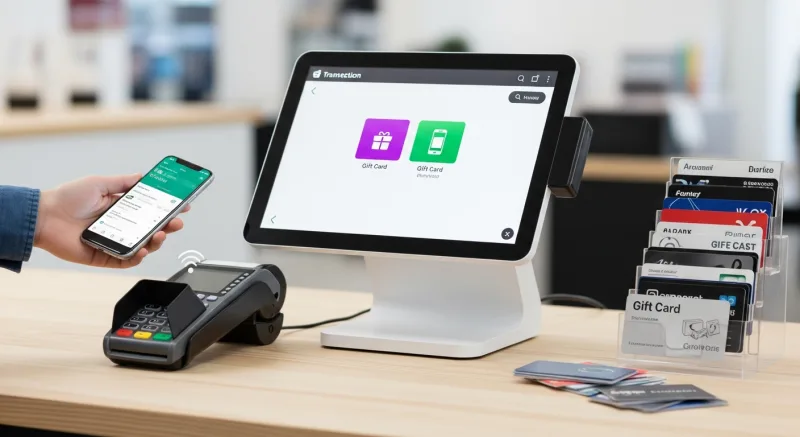
This is why smart drink shops push e-gift cards and prepaid accounts hard. Not just for the obvious revenue benefit (prepaid customers spend 23% more than their loaded balance on average), but for the speed benefit at checkout.
Consider the math:
| Payment Method | Average Time | 200 Transactions/Day |
|---|---|---|
| Cash | 30 seconds | 100 minutes |
| Credit card (chip) | 10 seconds | 33 minutes |
| Tap / NFC / Gift card | 3 seconds | 10 minutes |
If you shift 50% of your transactions from cash and chip to tap or gift card, you save roughly 40 minutes of register time per day. That's 40 more minutes your cashier can spend on other tasks — or 40 more customers you can serve.
KwickOS supports e-gift cards, physical gift cards, stored-value prepaid accounts, and all major digital wallets. And because KwickOS is processor-agnostic, you're not locked into one payment processor's rates. You choose the processor with the best tap-to-pay rates for your volume, saving $3,000 to $8,000 per year compared to locked platforms like Toast or Square.
Fix 6: Stagger Online and Walk-In Order Flow
Mobile ordering is a double-edged sword. It eliminates the register line — but if mobile orders and walk-in orders compete for the same prep station, you just moved the bottleneck downstream.
The solution: time-slot throttling and separate queue routing.
KwickOS lets you set maximum orders per 15-minute window for mobile ordering. If your shop can make 40 drinks per 15-minute window, you cap mobile orders at 15 per window. The remaining 25 slots stay available for walk-ins. When a window fills up, mobile customers see the next available slot — "Ready in 15 minutes" instead of "Ready in 5 minutes."
This prevents the nightmare scenario where 30 mobile orders flood in at 2:00 PM and walk-in customers face a 20-minute wait because the kitchen is buried in pre-orders.
And here's a revenue bonus: customers who pre-order via mobile spend 18-22% more per order than walk-in customers, according to industry data. They browse the full menu, see photo-driven upsell suggestions, and add toppings or size upgrades without feeling rushed by a line behind them.
Through KwickMenu, your online ordering portal shows real-time drink photos, modifier options, and even suggests popular add-ons — all for a flat $2 + $6.99 per delivery order instead of the 25% commission platforms like DoorDash charge. That pricing difference alone can save a busy drink shop $3,000-$5,000 per month in delivery fees.
Putting It All Together: The 3-Minute Drink Shop
Let's trace a single order through the optimized workflow:
- 0:00 — Customer scans QR code at the counter or taps on the kiosk. Selects brown sugar boba milk, 70% sugar, less ice, add pudding. Pays with their stored-value account. Total ordering time: 45 seconds.
- 0:45 — Order fires to Station A (KDS shows: brown sugar milk, 70% sugar, less ice) and Station C (KDS shows: boba + pudding, cup label printing).
- 0:50 — Station C grabs a pre-portioned boba cup, adds pre-portioned pudding. Label prints and gets applied. Waiting for base.
- 1:15 — Station A pours pre-brewed milk tea base from dispenser, pumps brown sugar syrup (3 pumps for 70%), adds pre-measured ice. Passes to Station C.
- 1:45 — Station C combines, seals, places in pickup slot #14.
- 2:00 — Pickup screen shows: "#14 Ready." Customer grabs drink.
Total time from order to pickup: 2 minutes.
Compare that to the old way: wait 2 minutes in line, order verbally, cashier writes a ticket, hands it to the drink maker, drink maker brews tea from scratch, cooks boba if the batch ran out, assembles, calls the name, wrong person grabs it, remakes. Total: 8-12 minutes.
The difference isn't magic. It's systems.
Real Results: What Speed Does to Revenue
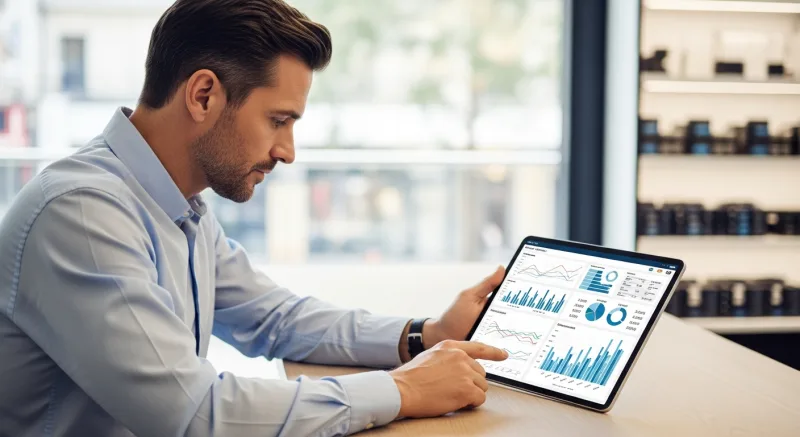
Speed isn't just about customer satisfaction. It directly impacts your revenue capacity.
| Metric | 8-Min Average | 3-Min Average | Difference |
|---|---|---|---|
| Drinks per hour (peak) | 45 | 90 | +100% |
| Walk-away rate | ~18% | ~4% | -14 points |
| Daily revenue (200 drinks avg) | $1,200 | $1,540 | +$340/day |
| Monthly impact | $36,000 | $46,200 | +$10,200/mo |
That $10,200 per month isn't from raising prices, adding menu items, or spending on marketing. It's from serving the customers who are already showing up — but currently walking away or never coming back because of the wait.
Crafty Crab Seafood saw similar throughput gains when they implemented KwickOS's one-click menu sync and station-based KDS routing across their 19 locations and 152 terminals. The technology that powers a 19-store seafood operation works just as well for a single-location drink shop.
The Technology That Makes It Work
Every fix described above requires one thing: a POS system that can handle multi-station routing, real-time KDS, mobile ordering integration, and intelligent order management — all without the system itself becoming a bottleneck.
This is where architecture matters. KwickOS runs on a hybrid local+cloud system — drink orders process locally with 1ms latency, not the 20ms+ of pure cloud systems. When your internet drops during Saturday peak hours (and it will), your POS keeps taking orders, your KDS keeps displaying, and your printers keep printing. Zero downtime.
For drink shops with multiple employees per shift, KwickOS's fingerprint 1:N authentication means staff clock in with a finger tap — no PINs to forget, no buddy punching, no time wasted at shift change. One less friction point in an operation where every second matters.
And because the entire system is multilingual (English, Chinese, Spanish), your staff works in whatever language is fastest for them. In drink shops where staff often speak different primary languages, this eliminates communication delays that silently add seconds to every order.
Use our labor cost calculator to see how speed improvements translate to labor savings at your volume. And check how KwickOS stacks up against your current system on our comparison page.
Your Customers Won't Wait 8 Minutes
KwickOS gives drink shops the station routing, KDS integration, and mobile ordering tools to serve every drink in under 3 minutes. See it in action.
Book a Free Demo