
 Kelly Ho
You sell a classic brown sugar milk tea for $6.50. You calculated the ingredient cost once — tapioca, tea, milk, sugar, cup, straw — and landed on $0.83. You smiled. That's an 87% margin.
But here's the thing: that $0.83 was calculated the day you opened. Since then, tapioca pearl costs went up 18%. Your staff is scooping toppings by feel instead of by weight. You're throwing away three batches of cooked boba every night because nobody tracks the 4-hour shelf life. And that fresh mango drink you added last summer? The fruit costs doubled in winter, but the price stayed at $7.25.
You're not running on 87% margins. According to industry research, bubble tea shops that don't actively track ingredient costs operate on margins 15-22 percentage points lower than they think. On $30,000/month in sales, that's $4,500 to $6,600 in profit you believe exists but doesn't.
And that's not all: your competitors who do track this — the ones with POS-integrated inventory systems — they know their real cost on every single drink, every day, in real time. They're repricing seasonal items weekly. They're adjusting prep quantities based on sales data. They're catching overpouring before it becomes a monthly pattern.
This guide shows you exactly how to build the same ingredient costing system, starting today.
The Anatomy of a Bubble Tea Cup: Where Every Cent Goes
Before you can track costs, you need to know what you're tracking. A standard bubble tea has more ingredient components than most restaurant menu items — and each one has a different cost trajectory.
Here's the real breakdown of a brown sugar boba milk tea (16 oz):
| Ingredient | Amount | Cost |
|---|---|---|
| Black tea (brewed) | 200ml | $0.06 |
| Whole milk | 120ml | $0.14 |
| Brown sugar syrup | 30ml | $0.08 |
| Tapioca pearls (cooked) | 60g | $0.12 |
| Ice | 100g | $0.02 |
| Cup + lid + straw | 1 set | $0.18 |
| Sealing film | 1 piece | $0.03 |
| Total (theoretical) | $0.63 | |
| Total (actual with waste) | $0.83 |
That $0.20 gap between theoretical and actual? That's your waste factor. And it's optimistic. Without systematic tracking, that gap widens every week.
Now compare this to a fresh fruit tea with mango and passion fruit:
| Ingredient | Summer Cost | Winter Cost |
|---|---|---|
| Fresh mango (diced) | $0.38 | $0.72 |
| Passion fruit pulp | $0.22 | $0.41 |
| Green tea base | $0.05 | $0.05 |
| Simple syrup | $0.04 | $0.04 |
| Cup + lid + straw | $0.18 | $0.18 |
| Total | $0.87 | $1.40 |
Same drink. Same price on the menu. But your margin just dropped from 88% to 78% because the season changed and nobody updated the recipe cost card. Over a month of selling 25 mango teas a day, that's $397 in margin you didn't know you lost.
The 5 Biggest Cost Leaks in Bubble Tea Shops
After working with bubble tea operators across the KwickOS platform — including Tiger Sugar with 2 locations and self-service kiosks — we see the same five cost leaks everywhere.

1. Cooked Boba Waste (The Silent Killer)
Raw tapioca pearls are cheap. But once cooked, they have a 4-hour window before they harden and become unsellable. Most shops cook in large batches and throw away 20-35% of what they prepare.
Here's the math that hurts: if you cook 5 kg of raw boba daily (about $12.50 in raw cost), and waste 30%, you're throwing away $3.75/day. That's $1,368/year in tapioca alone.
But it gets worse: the labor to cook, strain, and sugar-coat that wasted boba adds another $2.10/day. Now you're at $2,135/year — on one ingredient.
The fix? Batch in smaller quantities based on hourly sales data. A POS system that tracks boba consumption by hour tells you exactly when to start your next batch and how much to cook. Tiger Sugar's 2 kiosk locations reduced boba waste by 40% after switching to data-driven prep schedules through their KwickOS integration.
2. Inconsistent Portioning
Your recipe says 60g of tapioca per cup. Your morning barista scoops 55g. Your afternoon barista scoops 75g. Neither measures — they eyeball it.
A 15g variance on tapioca alone doesn't sound like much. But across 200 cups/day, that inconsistency creates a $4.80/day variance — $1,752/year. Scale that across every ingredient and you're looking at $5,000-$8,000 in annual cost variance from portioning alone.
3. Seasonal Fruit Price Spikes (Untracked)
Fresh fruit drinks are your highest-margin items — in summer. In winter, the same mango that cost $1.50/lb jumps to $3.80/lb. If you're not repricing or substituting, your "high margin" drinks become your biggest margin destroyers.
4. Supplier Creep
Your tapioca supplier raised prices 3% six months ago. Your syrup vendor added a fuel surcharge. Your cup supplier switched to a thinner lid but kept the same price. These small changes add up to 8-12% annual cost inflation that most operators don't catch until they do end-of-year accounting.
5. Free Topping Upgrades
Staff giving friends extra toppings. Baristas adding an extra pump of syrup when a customer asks nicely. A scoop of pudding that didn't ring through the register. Without POS-level topping tracking, these "gifts" are invisible — but they cost $2,000-$4,000/year in a typical 2-location operation.
Building Your Ingredient Costing System (Step by Step)
Here's the thing: you don't need a complicated spreadsheet empire. You need a system that tracks three numbers per recipe, updates when supplier costs change, and alerts you when actual usage exceeds theoretical usage.
Step 1: Create Recipe Cost Cards for Every Drink
Every drink on your menu needs a recipe card that lists each ingredient, the exact quantity used, and the cost per unit. Include waste multipliers — tapioca gets a 1.3x multiplier (30% cooking waste), fresh fruit gets 1.2x (peeling and trim loss).
A POS system with recipe costing (like KwickOS) lets you build these digitally. When you update a supplier price, every recipe that uses that ingredient recalculates automatically. No spreadsheet formulas to maintain, no manual updates to forget.
Step 2: Set Target Cost Percentages by Category
Not all drinks should hit the same cost target. Here are the benchmarks that successful bubble tea operators use:
| Drink Category | Target Ingredient Cost | Target Margin |
|---|---|---|
| Classic milk tea | 12-15% | 85-88% |
| Fruit tea (in-season) | 13-17% | 83-87% |
| Fruit tea (off-season) | 18-24% | 76-82% |
| Specialty/signature | 16-20% | 80-84% |
| Toppings (add-on) | 20-30% | 70-80% |
When any drink crosses its target cost threshold, your POS should flag it. That's your signal to reprice, substitute ingredients, or temporarily remove the item.
Step 3: Track Theoretical vs Actual Usage Daily
This is where most shops fail — and where a POS-integrated inventory system becomes non-negotiable. Here's why:
Your POS knows you sold 180 cups of brown sugar boba today. At 60g per cup, you should have used 10.8 kg of cooked tapioca. You actually used 14.2 kg. That 3.4 kg variance is either waste, overportioning, or theft — and you need to know which one.
KwickOS tracks this automatically with its hybrid local+cloud architecture. Inventory deductions happen in real time at the local terminal (1ms latency — no delays during the afternoon rush), while variance reports sync to the cloud for multi-location comparison. Even if your internet drops during peak hours, every transaction and every ingredient deduction is recorded locally and synced when connectivity returns.
Step 4: Implement Weekly Cost Reviews
Set a 30-minute weekly meeting with yourself (or your manager). Pull three reports from your POS:
- Cost of Goods Sold (COGS) by drink category — are any categories over their target?
- Variance report — which ingredients show the biggest gap between theoretical and actual usage?
- Waste log — how much cooked boba, brewed tea, and prepped fruit went to waste?
This 30-minute habit will save you more money than any other operational change you can make.
Supplier Management: Getting Better Prices Without Sacrificing Quality
Your ingredients come from somewhere, and where you source them matters as much as how you track them.
Here's what smart bubble tea operators do:
- Dual-source your top 3 ingredients. Have two approved suppliers for tapioca, milk, and your most-used fruit. When one raises prices, you have immediate leverage — and a backup.
- Lock seasonal fruit pricing. For high-volume seasonal items, negotiate fixed quarterly pricing with your fruit supplier before the season starts. You'll pay slightly more than spot price in peak season but dramatically less in off-season.
- Negotiate on volume across locations. If you have multiple locations — like Tiger Sugar's 2 stores — consolidate purchasing for volume discounts. A centralized ordering system through your POS saves 8-15% on bulk ingredients.
- Track supplier price history. When a supplier raises prices, you need data to push back. Your POS purchase order history shows exactly what you paid 3, 6, and 12 months ago.
Multi-location operators on KwickOS use centralized purchasing to place orders from one dashboard, automatically splitting deliveries across locations. Crafty Crab Seafood uses this system across 19 stores — the same approach works for bubble tea chains at any scale.
Gift Cards and Loyalty: The Ingredient Cost Cushion You're Ignoring
Here's a pattern interrupt most bubble tea operators miss: gift cards and loyalty programs directly impact your ingredient cost math — in your favor.
Industry data shows that gift card holders spend 20-30% more per visit than cash customers. They also buy more premium drinks with higher-margin toppings. When a customer pays with a $25 gift card, they typically spend $31 — that extra $6 is almost pure margin.
E-gift cards are even more powerful for bubble tea shops. Your demographic skews young — 65% of bubble tea customers are under 35. They send digital gift cards via text and social media. Each one brings a new customer who spends the full card value plus extra, at zero customer acquisition cost.
On the loyalty side, a points-based membership program creates predictable repeat traffic. When you know that 400 loyalty members visit an average of 3.2 times per month, you can forecast ingredient needs with far greater accuracy — which means less waste, better purchasing, and tighter margins.
KwickOS builds gift cards (physical and digital) and loyalty programs directly into the POS checkout flow. A customer earns points automatically at checkout. Redeeming rewards is one tap on the terminal. No separate app, no third-party integration fees. This seamless checkout experience keeps the line moving during the 2-4 PM rush when every second counts.
The POS Checkout Connection: How Transaction Data Drives Ingredient Accuracy
Your POS checkout process is the source of truth for ingredient tracking. Every customization a customer makes at checkout — extra boba, less sugar, substitute oat milk, add pudding — must correctly deduct from your ingredient inventory.
This is where most generic POS systems fail bubble tea shops. They treat modifiers as labels, not inventory events. When a customer adds extra tapioca, the receipt says "extra boba" but no additional tapioca is deducted from inventory. Over hundreds of orders, your theoretical and actual usage diverge wildly.
KwickOS handles this differently. Every modifier is tied to an ingredient quantity. "Extra boba" = +30g tapioca. "Oat milk sub" = -120ml whole milk, +120ml oat milk. "70% sugar" = -30% sugar syrup portion. These deductions happen at the POS terminal in real time, giving you accurate theoretical usage numbers to compare against your physical counts.
For shops using self-ordering kiosks — like Tiger Sugar's setup with 2 KwickOS kiosks — the accuracy is even higher because customers select their own customizations digitally. No verbal miscommunication, no barista interpretation. The kiosk captures exactly what was ordered, and the POS deducts exactly what was needed.
Seasonal Strategy: When to Raise Prices, When to Swap Ingredients
You have two choices when seasonal ingredients spike: raise the price or change the recipe. The best operators do both — strategically.
When to raise prices: If the drink is a signature item that drives traffic (your mango slush, your strawberry cloud), raise the price $0.50-$1.00 during off-season and communicate it as "premium seasonal pricing." Most customers won't blink — they're paying for the experience, not the mango.
When to swap ingredients: For non-signature drinks where the fruit is interchangeable, swap to what's in season. Replace off-season strawberry with in-season citrus. Sub expensive passion fruit for more affordable pineapple. Your POS recipe costing system shows you instantly which swaps keep you within margin targets.
When to pull from the menu: If a drink's ingredient cost exceeds 25% and you can't raise the price enough to compensate, take it off the menu temporarily. Create scarcity. When it comes back in season at a better cost, customers treat it as an event. This is how Tiger Sugar's seasonal limited-edition strategy works — and it drives lines around the block.
Use your POS sales mix data to make these decisions. If a drink represents less than 2% of total sales and operates below target margins, it's not worth carrying. If it represents 15% of sales, it's worth repricing or reformulating to protect margins.
Multi-Location Ingredient Management
Running 2 or more bubble tea locations introduces a whole new layer of cost complexity. Each location has different sales volumes, different waste patterns, and potentially different supplier relationships.
Here's where a centralized POS system becomes essential:
- Unified recipe management. When you update a recipe or adjust a supplier cost, it pushes to all locations simultaneously. No more Location B running on last month's cost cards while Location A has the updated numbers.
- Cross-location variance comparison. If Location A wastes 18% of cooked boba and Location B wastes 32%, you have a training or process problem at Location B. Without cross-location data, you'd never know.
- Consolidated purchasing. Order tapioca for all locations from one dashboard. Your combined volume gives you negotiating power that individual locations can't match.
- Transfer tracking. When Location A runs low on taro powder and borrows from Location B, both inventories need to update. KwickOS handles inter-location transfers automatically with its integrated inventory module.
T. Jin China Diner manages 15 stores and 75 terminals through KwickOS's centralized dashboard. The same real-time remote monitoring that tracks their restaurant ingredient costs works identically for bubble tea operations — every location's numbers visible from one screen, anywhere.
Technology That Makes It All Work
You can do ingredient costing with a spreadsheet. You'll just never keep it updated. The moment things get busy — and in bubble tea, that moment is every afternoon from 2 to 6 PM — manual tracking breaks down.
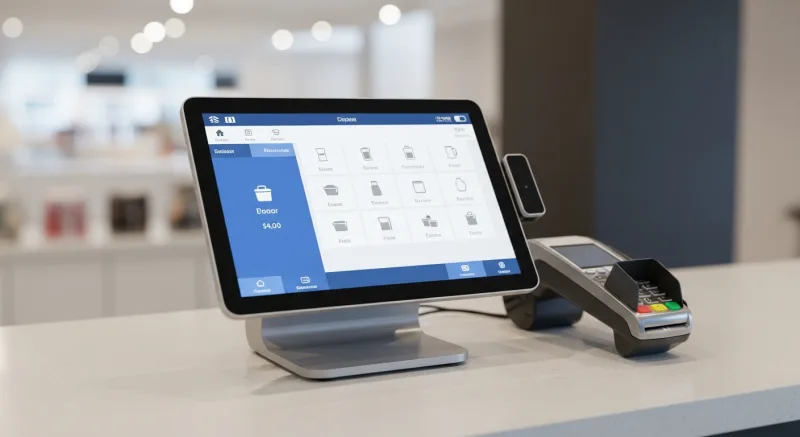
What you actually need is a POS system that does four things:
- Modifier-level inventory tracking. Every customization deducts the right ingredients in the right quantities.
- Recipe costing with auto-recalculation. Update one supplier price and every recipe recalculates.
- Variance reporting. Theoretical vs actual, by ingredient, by day, by location.
- Works when the internet drops. Your busiest hour is not the time for a cloud POS to buffer. KwickOS's hybrid architecture processes everything locally at 1ms latency and syncs when connectivity returns.
Processor-agnostic hardware means you're not locked into overpriced payment processing, either. A bubble tea shop processing $25,000/month in card transactions saves $3,000-$5,000/year just by choosing its own payment processor — money that goes straight to your bottom line. Compare that to locked-in POS systems on our comparison page.
Employee authentication matters too. KwickOS supports fingerprint 1:N and 1:1 verification, which means you know exactly who made each drink and who opened the register. When a variance shows up in tapioca usage during a specific shift, you know which staff member to retrain — or investigate.
And because KwickOS supports English, Chinese, and Spanish, your multilingual staff can navigate the system in their preferred language. For bubble tea shops with diverse teams, this eliminates training friction and reduces input errors that corrupt your ingredient data.
Your Action Plan: This Week
Don't try to build a perfect system overnight. Start with these three actions this week:
- Cost your top 5 drinks. Calculate the actual ingredient cost for your five best sellers. Use today's supplier prices, not the ones from when you opened. Include waste multipliers.
- Weigh your boba. For one full day, have your baristas weigh tapioca portions instead of scooping. Compare the actual weight to your recipe spec. The gap will shock you.
- Calculate your waste. At close tonight, weigh all discarded cooked boba, unused brewed tea, and prepped fruit that didn't sell. Multiply by 365. That annual number is what a proper costing system would save you.
Once you see those numbers, the case for POS-integrated ingredient tracking makes itself. Use our free business calculators to model the ROI, or explore how other bubble tea operators have optimized their operations.
Track Every Ingredient, Protect Every Margin
KwickOS gives bubble tea shops real-time ingredient costing, modifier-level inventory tracking, and multi-location management — all in one platform. See what your real costs are.
Get a Free Demo